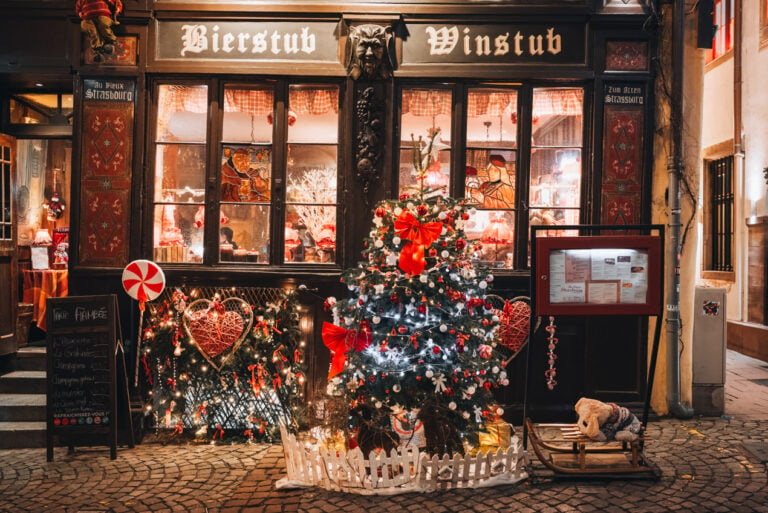
The first winter I ever spent here, I walked home through Strasbourg with my hands wrapped around a Christmas mug full of mulled wine. The half-timbered houses glowed under strings of fairy lights, and I remember thinking: so this is what everyone means.
That was when I first moved to the region in 2019. Every winter since, I’ve watched this region transform into something out of a storybook, and I’ve learned exactly how it works, crowds and all.
So let me be honest with you. Winter is Alsace at its most magical, but it’s also its most crowded and its coldest. The Christmas markets get packed, restaurants book out weeks ahead, and the cold is often damp. Nobody warned me about the damp part.
That’s exactly why I wanted to write this. I’m sharing the famous spots that are worth braving the crowds, the quieter corners most visitors walk right past, and the little local tricks that make a winter trip so much better.
And here’s the thing: it’s not all Christmas markets. There’s skiing and snowshoeing up in the Vosges, cozy wine cellars, and hearty comfort food. Consider this your local’s guide to all of it.
This post contains affiliate links, meaning I may earn a commission if you make a purchase by clicking on a link (at no extra cost to you). Disclosure Policy
Know Before You Go
Short, punchy, bolded sub-points (mirror the Strasbourg December format):
- Christmas market season: Roughly late November through December 24, with a few markets stretching into early January. Dates shift yearly, so double-check before booking.
- Best time to go: Early December is far calmer than the week before Christmas. Weekdays beat weekends, mornings beat afternoons. January is the quietest month of the year.
- After Christmas: A note on late December to February, when the markets close but the region gets quiet, snowy, and cheap. It’s worth visiting, but you’ll need to plan.
- Weather reality check: Cold, often just above freezing, frequently damp. Snow is likely in the Vosges but not guaranteed in the towns. Pack layers, waterproof shoes, and a real coat.
- Getting around: Trains connect the main towns; a car and public buses help for the wine route and mountains. Note the winter-only ski shuttles.
- Book early: Hotels and restaurants in Colmar and Strasbourg sell out months ahead for December.
My Favorite Things to Do in Alsace in Winter
1. Wander the Christmas Markets: Classics and Hidden Gems
The Christmas markets are what put Alsace on the winter map, and honestly, they live up to the hype. My best advice? Treat them as one glowing, cinnamon-scented experience rather than a checklist to race through.
Start with the icons. Strasbourg runs France’s oldest market, dating back to 1570, and standing beneath the giant tree in Place Kléber never gets old. Then there’s Colmar, where La Petite Venise glows after dark, and the canals catch every light. Both are magical. Both are packed.
Villages like Riquewihr, Kaysersberg, and Eguisheim are also cute, but I think they are too busy in the afternoons and on weekends.
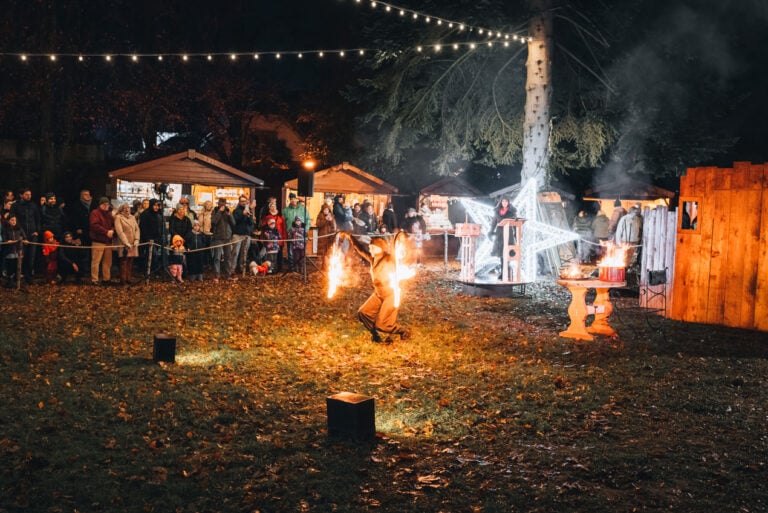
For something quieter, I keep going back to Wissembourg’s Christmas market. It leans into the legend of Hans Trapp, complete with fire shows and theatrical performances, and almost none of the elbow-to-elbow crowds you’ll find elsewhere.
I’ve written a lot more on this, so if markets are your main reason for visiting, check out my full guide to the Christmas markets in Alsace and my 5-day Christmas market itinerary for the deep dive.
2. Go Skiing or Snowshoeing at Champ du Feu
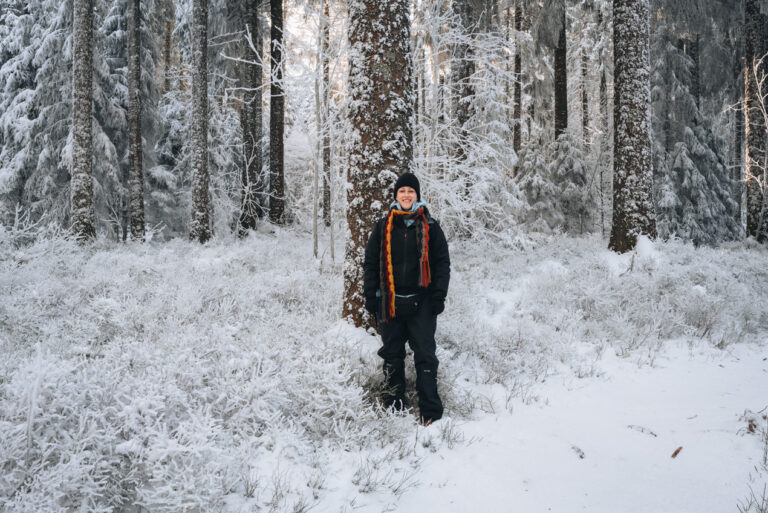
I’ve been up to Champ du Feu in both seasons, and I can tell you: winter is when this place becomes something else entirely. Plus, it’s only an hour from Strasbourg.
There’s more to do here than you might expect.
You can ski the gentle slopes, which are perfect if you’re just starting or traveling with kids. You can strap on snowshoes and head into the forest at your own pace. Or you can grab a sled and let gravity do the work.
And if you didn’t pack for any of it, don’t worry, equipment rental is available on-site.
But my favorite part isn’t the activity itself. It’s the quiet. After days of weaving through crowded Christmas markets, elbow to elbow and buzzing with noise, there’s nothing like standing among snow-covered fir trees with nobody else around.
Helpful Tip: I used the winter-only Navettes des Neiges bus to get to Champ du Feu. It’s the easiest way to reach the snow without stressing over icy mountain roads.
3. Do a Winter Wine Tasting Along the Wine Route
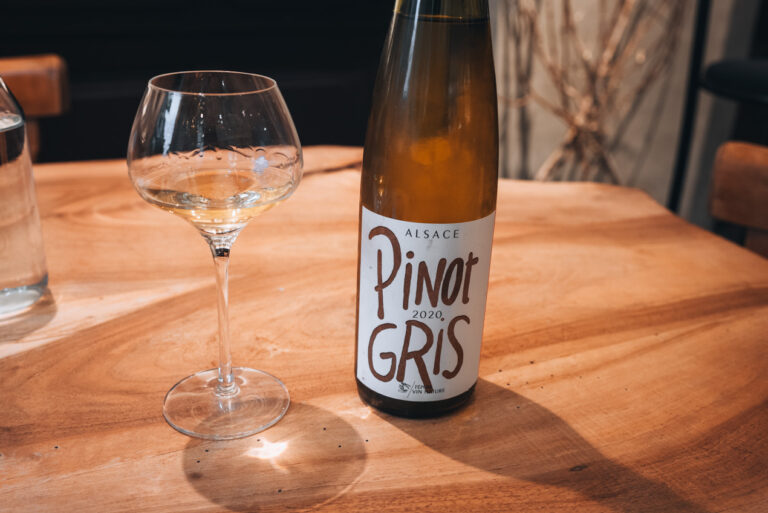
The wine route in winter is a revelation, but the timing matters. During the Christmas market season, the prettiest villages are still busy, especially places like Riquewihr and Eguisheim.
But once the markets close, everything changes. The tour buses disappear, the streets go quiet, and the tasting rooms are far more relaxed.
I felt this firsthand when I visited Domaine Martin Jund in Colmar on a rainy January afternoon. I was the only person there, and it completely changed the experience.
Instead of moving through a tasting with a crowd, I got to ask a ton of questions and ended up trying a few extra wines simply because it was just me.
My advice is to mix it up. Pair a popular town like Riquewihr or Colmar with a quieter one like Turckheim, Bergheim, or Niedermorschwihr. The famous villages give you the beauty. The lesser-known ones give you the conversations.
Helpful Tip: After December, there are so few visitors that some wineries only open for people with a reservation.
5. Soak in a Beer Bath at Taaka Beer Spa
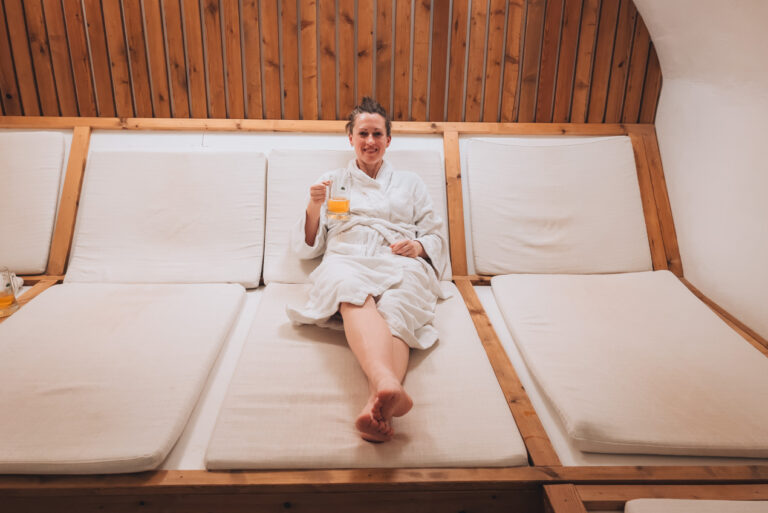
This is easily the most unusual thing I’ve done in Alsace, and honestly, there’s no better time for it than winter.
Taaka Beer Spa in Strasbourg is France’s first beer spa, and after a full day out in the cold, it’s nice to step inside and do something this warm.
What I remember most is sinking into a hot wooden tub infused with malt, hops, and brewer’s yeast, with a beer tap right at my elbow after hours of walking in the cold.
It sounds gimmicky on paper, but in the moment, it just works.
6. Spend a Cozy Afternoon at a Ceramic Café
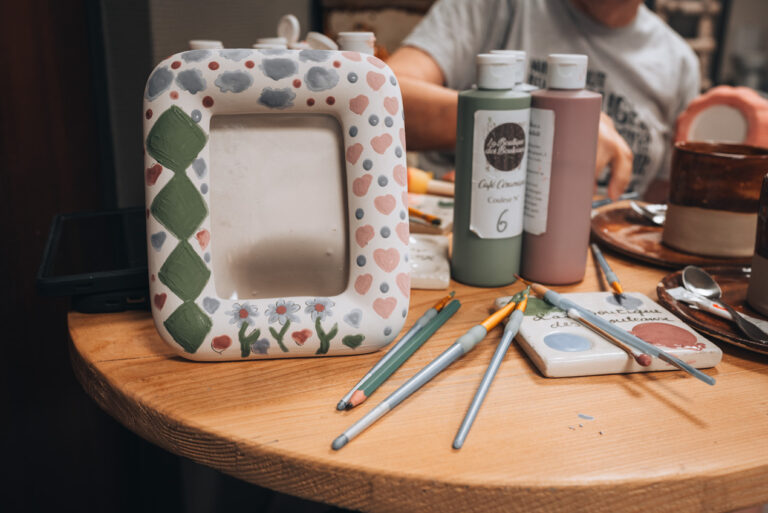
For the inevitable freezing or rainy day when you need to get indoors, a ceramic café is one of my favorite escapes.
They are popping up all around Alsace, but my favorite is La Boutique des Bouleaux.
One of my best winter memories here was spending two hours painting a picture frame with my mom while it was cold and gray outside.
We just sat there painting and chatting, and it ended up being one of those simple afternoons I still think about.
And if this only sounds appealing to artistic people, let me reassure you: you do not need any talent at all. I’m the proof. That’s part of why I love it. It’s not about making something perfect. It’s about having fun and creating.
I left with a souvenir that is more personal than anything I could buy at a market stall.
7. Visit Château du Haut-Koenigsbourg
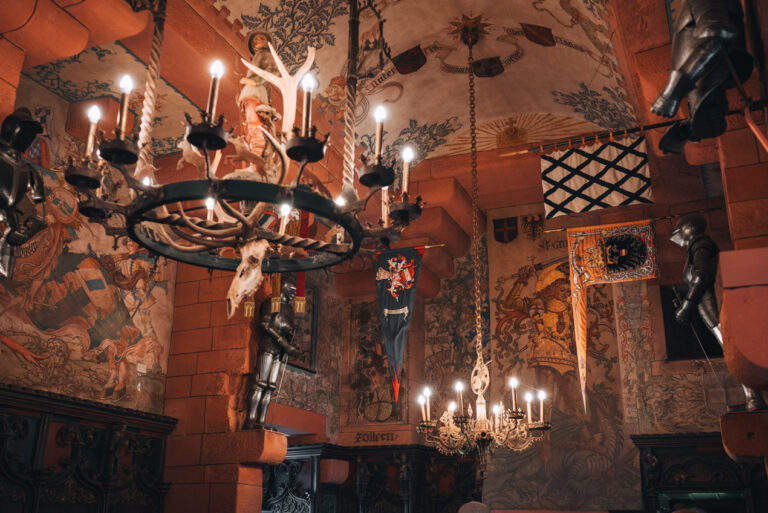
I’ve written before about how crowded Château du Haut-Koenigsbourg gets in peak season, but winter is a different story entirely.
The tour buses are gone, the surrounding hills are dusted with snow (sometimes), and the castle looks dramatic against a gray winter sky.
That’s exactly why I’d pick it over Château du Hohlandsbourg for a winter itinerary.
Château du Hohlandsbourg is great, but Château du Haut-Koenigsbourg has two big advantages in the colder months: it stays open year-round, and a shuttle runs up to the castle, which makes it easier to visit without a car.
The views from the ramparts are some of the best in the region. On a clear day, you can see across the frosted Alsatian plain all the way to the Black Forest.
My best tip is to go on a weekday morning. If you time it right, you may have whole sections of the castle almost to yourself, which is nearly impossible in summer.
8. Take a Batorama Winter Boat Cruise
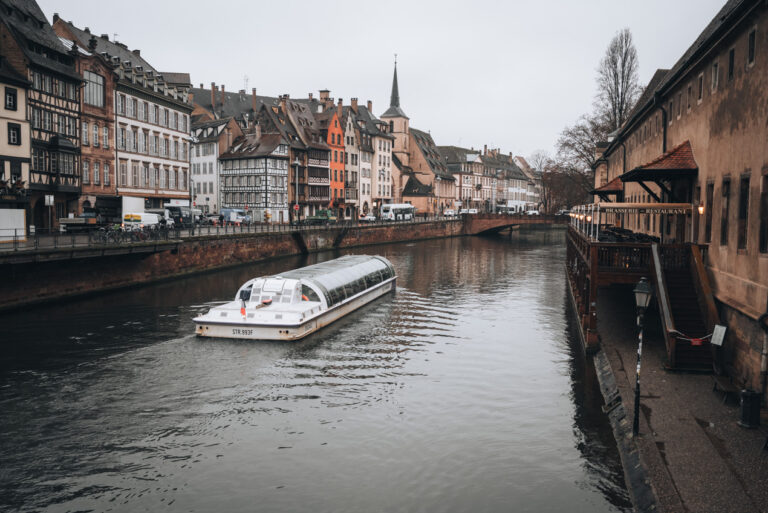
A cruise along the Ill is lovely at any time of year, but in December it takes on a completely different vibe.
What I like about Batorama in winter is that it gives you a break from the crowds without taking you out of the atmosphere.
You’re still in the middle of everything, but instead of weaving through packed streets, you’re watching the city slide by from a warm boat.
It’s one of the easiest ways to enjoy the festive side of Strasbourg without the crowds.
In December, Batorama also runs festive evening tours and wine tasting cruises alongside its regular sightseeing routes, which makes it a little more seasonal than a standard city cruise.
Helpful Tip: These tours sell out faster than people expect, especially on weekends and in the second half of December.
9. Visit the Alsace-Moselle Memorial in Schirmeck
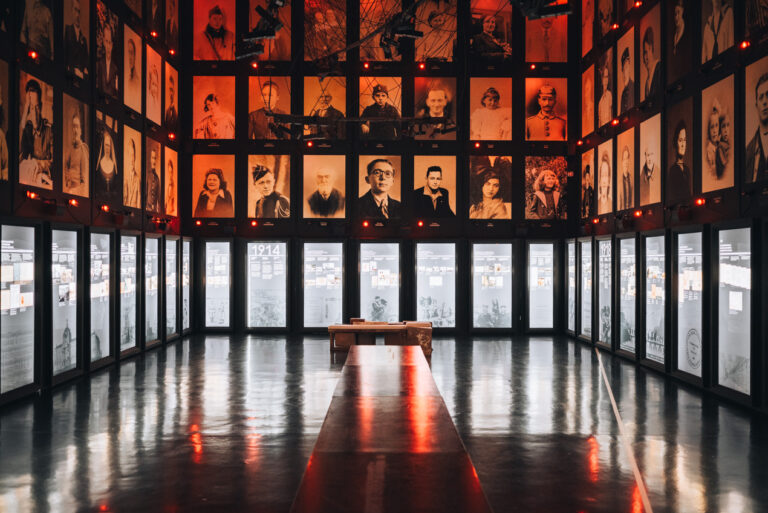
The Alsace-Moselle Memorial in Schirmeck is one of those places that stays with you long after you leave.
I went expecting a fairly standard regional history museum and came out realizing it was much more ambitious than that.
It covers Alsace’s turbulent history from the Franco-Prussian War of 1870 through World War II, and it does it in a way that gives you much more context for the region than most visitors ever get.
What affected me most were the sections on the resistance movements and the personal stories woven throughout the exhibits. It was more emotional than I had anticipated.
It’s also a very good winter activity because it’s entirely indoors and easy to pair with a colder day, but I wouldn’t treat it as just a backup plan for bad weather. This is a place to visit when you have the time and attention for it.
I read nearly everything, and it took me a solid two hours to get through. If you rush it, you’ll miss the point. If you take your time, it adds a whole new layer to your understanding of Alsace.
10. Experience Carnival
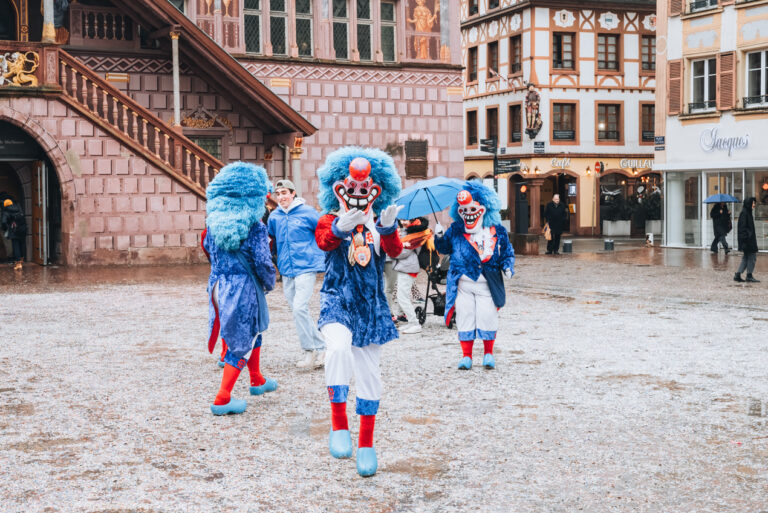
If you’re in Alsace in late winter (late February to early March), Carnival is one of the most fun local traditions you can stumble into, and my favorite place to experience it is Mulhouse.
It has a completely different energy from the Christmas markets and cozy village side of the region. It’s louder, messier, more playful.
The first time I went, what struck me most was how alive the city was. The streets were packed with music, costumes, parades, and families leaning in to watch everything go by.
And then there were the Waggis, those iconic carnival figures with exaggerated features and bright costumes. They’re such a big part of the atmosphere, and seeing them in person made the event feel Alsatian.
11. Celebrate the End of Winter in Mittelwihr
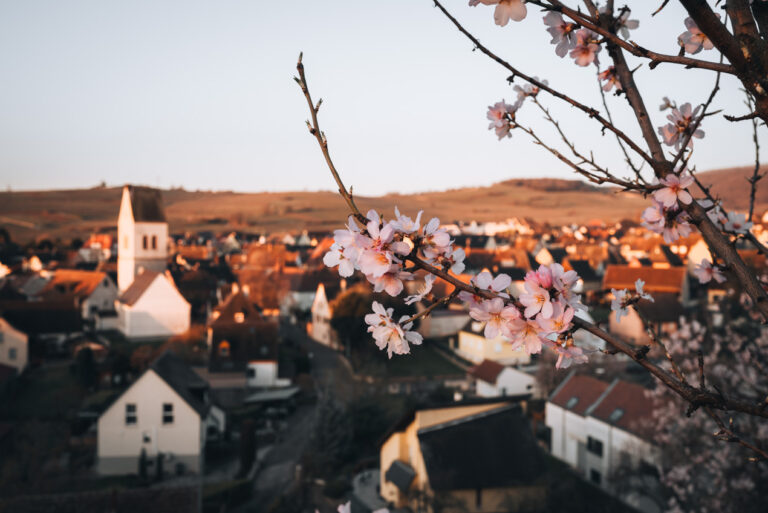
One of my favorite signs that winter is finally loosening its grip in Alsace is the almond blossoms in Mittelwihr. Near the beginning of March, this little village starts to soften.
Suddenly there are pale pink and white blossoms along the vines, and the whole landscape starts to wake up.
What I love about it is the contrast. You’re still very much in that in-between season, not quite winter, not quite spring, but Mittlewihr gives you this first glimpse of what’s coming next.
It’s not a big-ticket attraction, but that’s why I like it. You get to see Alsace at a small but very specific seasonal moment.
Where to Stay
Where you stay in Alsace matters more in winter than in any other season. During market weeks especially, the right base can make or break your trip.
So after years of living here and hosting friends and family through many Decembers, here’s my honest, traveler-by-traveler advice.
Helpful Tip: I can’t stress this enough: book early. The best places vanish months ahead for December weekends, and I’ve watched too many visitors scramble at the last minute.
Strasbourg for First-Timers
If it’s your first time in Alsace, I always point people to Strasbourg. It offers a small-town feel with big-city amenities. It’s accessible by train, and there are plenty of car rental options.
My top picks are:
- Hôtel & Spa Le Bouclier d’Or: It sits right in La Petite France and has that fairy-tale scene you’re hoping for, with cozy rooms and a spa that’s perfect for thawing out after a cold day at the markets.
- Hôtel Cour du Corbeau – MGallery: This is my other favorite. The rooms are beautiful, and it’s tucked just far enough from the busiest streets that you get calm and convenience at once.
Colmar as a Base for the Wine Route
If your heart is set on the fairytale Christmas market and easy access to the wine route villages, base yourself in Colmar instead.
It has that small-town charm Strasbourg can’t quite match, and it’s the ideal launch point for reaching places like Riquewihr and Eguisheim.
My top picks are:
- Hotel Saint-Martin: It’s right on Grand Rue in the heart of everything, but the rooms are soundproof, so you get the location without the noise.
- Colmar Hotel: This is your best bet if you’re planning lots of day trips. It sits near the station, the staff is lovely, and it makes hopping between towns simple.
What and Where to Eat
After a few hours out in the cold, nothing beats sitting down to hot, hearty Alsatian food. Winter is when the local kitchen shines, and it’s a big part of why I love this season here.
My one rule, and I say this after learning the hard way: always make reservations in December. The good spots fill up fast.
Before the where, let me tell you about the what: these are the dishes that get me through an Alsatian winter.
- Tarte flambée: Think of a paper-thin, crispy flatbread topped with cream, onions, and lardons. It’s light enough that you keep saying “just one more slice” until it’s gone.
- Choucroute garnie: A mountain of tangy fermented cabbage piled with sausages and cuts of pork. It’s the definition of stick-to-your-ribs comfort, and it always warms me up.
- Baeckeoffe: A slow-cooked casserole of marinated meats and potatoes baked together for hours. When the lid comes off and that steam hits you, it’s pure winter magic.
Here are my favorite restaurants:
- Caveau du Vigneron, Turckheim: The best baeckeoffe I’ve had in the region, tucked into one of my favorite little villages.
- La Cloche à Fromage, Strasbourg: My melted-cheese haven for fondue and raclette on the coldest nights. Go hungry.
- La Soï, Colmar: My top pick for tarte flambée, and the apple strudel dessert version is so good I genuinely couldn’t stop eating it.
- Gurtlerhoft, Strasbourg: Cozy, vaulted, and exactly where I send anyone craving choucroute garnie.
Final Thoughts
Winter is when Alsace is most like the fairytale people imagine.
But after living here since 2019, I’ve learned that the real magic isn’t in trying to capture every glowing scene. It’s in knowing when to slow down and warm up.
I’ll be honest with you: it’s cold, it’s busy, and December can be overwhelming if you don’t know what to expect. The markets get packed, the trains fill up, and the weather doesn’t always cooperate.
But that’s exactly where a little local knowledge makes all the difference.
Knowing which streets to wander before the crowds arrive, which cellar to duck into when your fingers go numb, which restaurant to book ahead; those small things are what turn a good trip into a memorable one.
If you’d like a hand shaping your trip, I’m always happy to help. You can book a travel planning consultation with me, and I’ll help you sort through the details so your winter here is stress-free.
Read More Articles About Alsace
I hope you enjoyed my post and found it helpful. Here are some other articles that I think you might find interesting.
- What is Alsace Famous For? Beyond the Postcard Villages
- 17 Essential Apps and Websites for Your Trip to Alsace
- 35 Incredible Pictures of Alsace to Inspire Your Trip
- What to Do in Alsace: Experiences I’d Prioritize as a Local
- Alsace without a Car: Top 19 Things to Do (from a Local)
- 19 Most Charming Towns in Alsace (Local’s Guide)
- My 5 Day Alsace Wine Route Itinerary
