I discovered Nancy’s Art Nouveau district by accident. I’d come for Place Stanislas, wandered into the Musée des Beaux-Arts on a whim, and walked out completely hooked on this swirling, flowery style of art.
Since then, I’ve gone back, dug into the history, and finally completed the full Parcours Art Nouveau on foot. Most visitors head straight for the grand square and leave. But the real architectural magic is tucked into the streets around it.
Below, I’ll show you the places I’d prioritize if you only have a few hours, the one museum that gives the best introduction to the Art Nouveau movement, and the exact walking route I’d follow as a first-time visitor. I’ll also share the tiny details I almost missed, so you don’t walk past them like I nearly did.
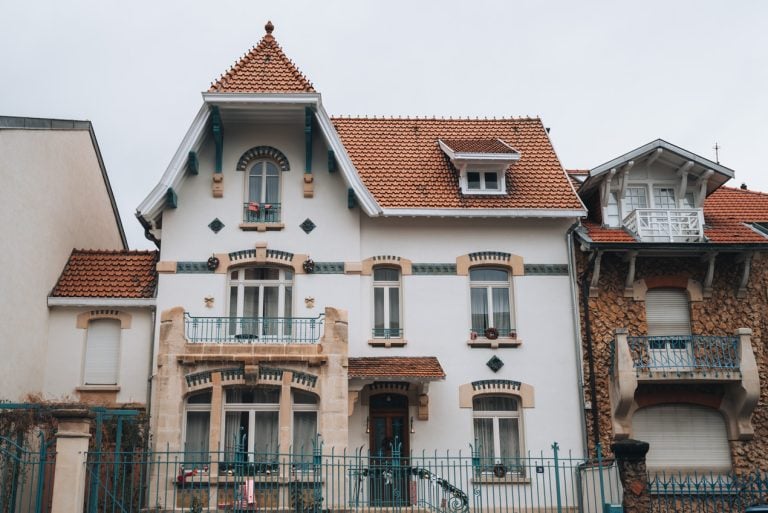
At A Glance
- Is it worth visiting? Yes, Nancy is one of Europe’s lesser-known Art Nouveau capitals.
- Time needed: 3–5 hours
- Best for: Architecture lovers and photographers.
- Do you need a car? No, everything is walkable.
- Can you do it as a day trip? Yes, easily from either Paris or Strasbourg.
- One place not to miss: Villa Majorelle
The 5 Places I’d Prioritize
There are over 60 Art Nouveau buildings scattered around Nancy, which sounds wonderful until you realize you can’t possibly see them if you are only in town for a day.
So I’ve narrowed it down.
These five give you the best mix of grand landmarks, hidden details, and that “wow, I need to look up” feeling, without wearing out your feet.
1. Villa Majorelle
If you visit only one building, make it this one.
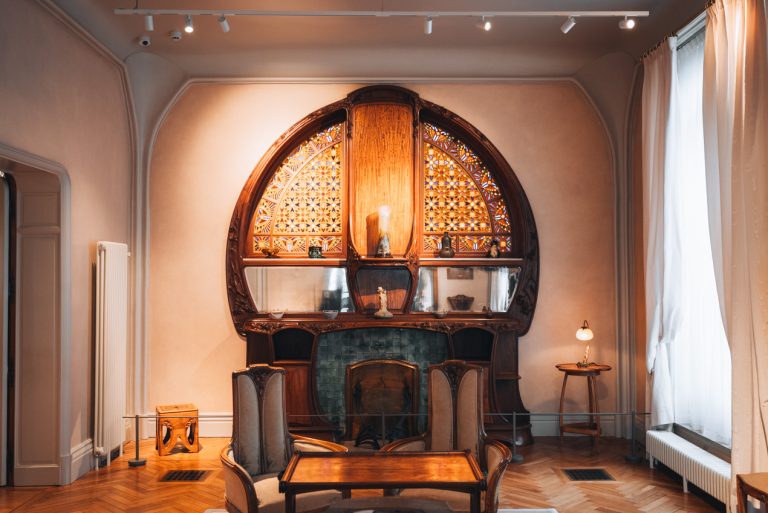
Villa Majorelle was the home of furniture master Louis Majorelle, and stepping inside is like walking into a complete Art Nouveau world rather than looking at it from the street.
What stood out to me was how personal it was. Each room follows a natural theme, and my favorite was the lounge, where every piece, right down to the cabinet handles, carried a pinecone motif.
It’s one thing to see Art Nouveau on a façade; it’s another to sit in a space where the furniture, the stained glass, and the woodwork were all designed to speak the same language.
Designed by Henri Sauvage with Lucien Weissenburger, it’s the most immersive stop on this list.
Helpful Tip: Reservations are required, and time slots fill up fast, so book before you go.
2. Musée de l’École de Nancy
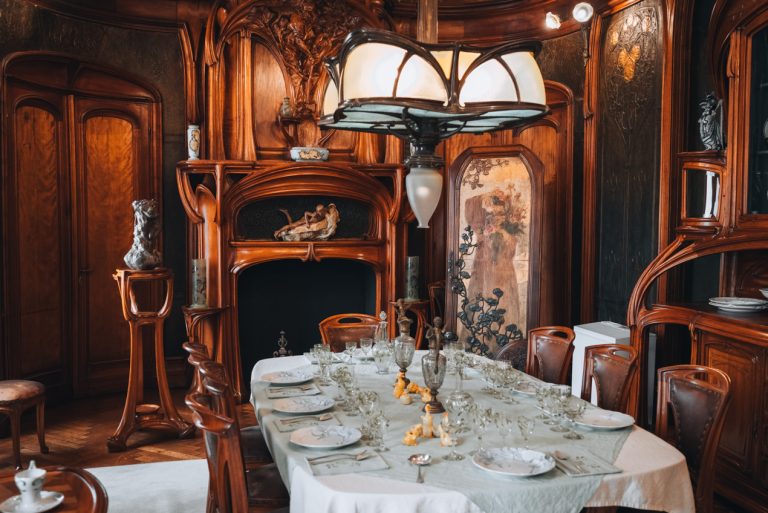
This is the museum I’d choose if you only have time for one.
Housed in a stunning Art Nouveau building of its own, it holds an extensive collection of furniture, glassware, ceramics, and decorative objects from the movement’s biggest names.
What tipped it over the edge for me was the free self-guided audio tour. You download the app, pick how you want to explore, and suddenly you’re not just looking at beautiful objects, you understand why they matter.
That context completely changed how I saw every building afterward. Don’t skip the garden either, because it offers the best view of the museum building itself.
3. Brasserie l’Excelsior
Here’s a stop that lets you sit down and soak it in.
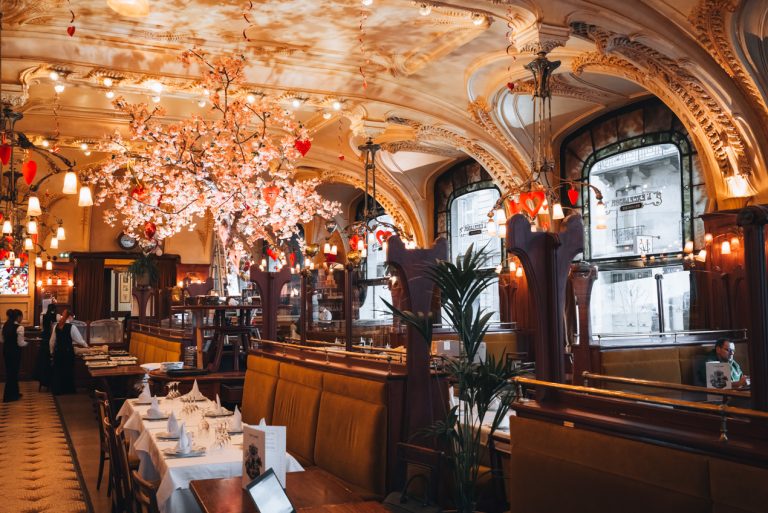
This working brasserie has one of the most beautiful interiors in the city, and I planned my breakfast around it just so I could linger under the ceiling.
I’ll be honest, I expected the food to be an afterthought to the décor. It wasn’t. The meal was genuinely good, and I spent the whole time looking up at the leafy sculptures, wooden dividers, and Gruber stained glass.
If you’re visiting solo or you want a break that doesn’t feel like a break, this is the easiest way to experience Art Nouveau from the inside without a ticket.
Helpful Tip: Architects Lucien Weissenburger and Alexandre Mienville collaborated on the design. It also features stained glass by Jacques Gruber and sculptures by Léopold Wolf.
Address: 50 Rue Henri Poincaré, Date: 1910
4. Rue Félix-Faure
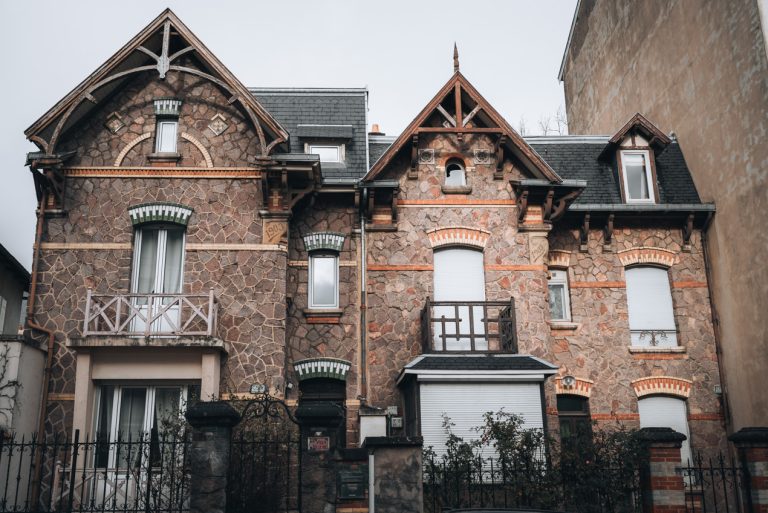
Save this street for when you want to slow down.
It’s lined with residential houses designed by César Pain, all in the Art Nouveau style, and it feels less like a tourist stop and more like a quiet discovery.
This is where I found some of my favorite details of the whole trip.
Because these are homes, not monuments, nobody’s rushing you along, and you can take your time noticing the decorative window frames and flowery ironwork on the balconies.
Walk all the way down and keep looking up. The best details hide above eye level.
Date: 1900-1910
5. Chambre de Commerce et d’Industrie
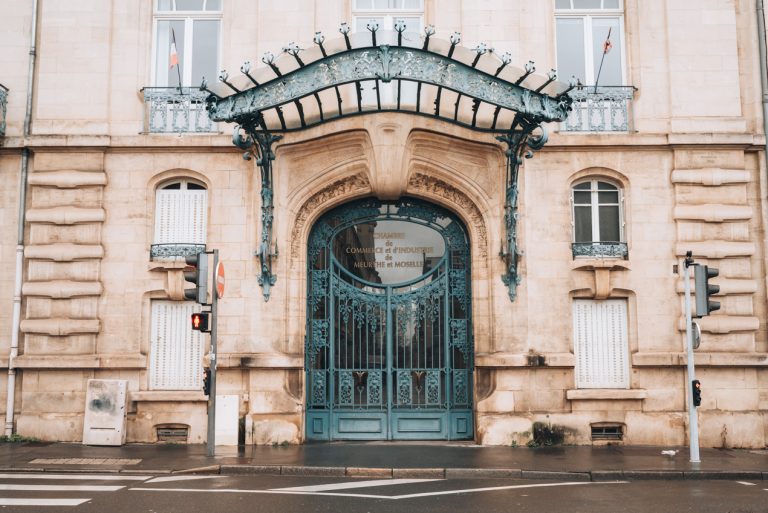
You can’t go inside, but you don’t need to. The ironwork on this building stops you in your tracks right from the street.
The floral ironwork here felt far more organic to me than the Art Nouveau I’d seen in Paris.
Instead of neat, symmetrical patterns, the metal vines seemed to twist and climb naturally around the entrance, as the building had grown them. It’s on Rue Henri-Poincaré, so if you’re walking toward Place Stanislas, it’ll be on your left.
Ironwork by Louis Majorelle, stained glass by Jacques Gruber, and it’s one of the best Art Nouveau buildings near Place Stanislas.
Address: 40 Rue Henri-Poincaré, Date: 1908
A Quick History (So the Details Make Sense)
Once you’ve seen a building or two, a little background makes everything click.
Art Nouveau, meaning “new art” in French, emerged in the late 19th and early 20th centuries as a reaction against industrialization and endless copies of old historical styles.
Artists wanted something fresh, so they turned to nature, borrowing the curves, colors, and lines of flowers, leaves, and vines to create flowing, organic designs.
In Nancy, this movement had a name and a leader.
The École de Nancy, headed by Émile Gallé, brought together glassmakers, cabinetmakers, architects, and ironworkers who pushed each other to invent new techniques.
Names like Louis Majorelle, the Daum brothers, Jacques Gruber, and Victor Prouvé all belonged to this circle.
That’s why the city feels so cohesive today.
These weren’t isolated buildings; they were the work of a community creating a shared style, and once you know the names, you start spotting the same hands at work across the city.
Hidden Details Worth Looking For
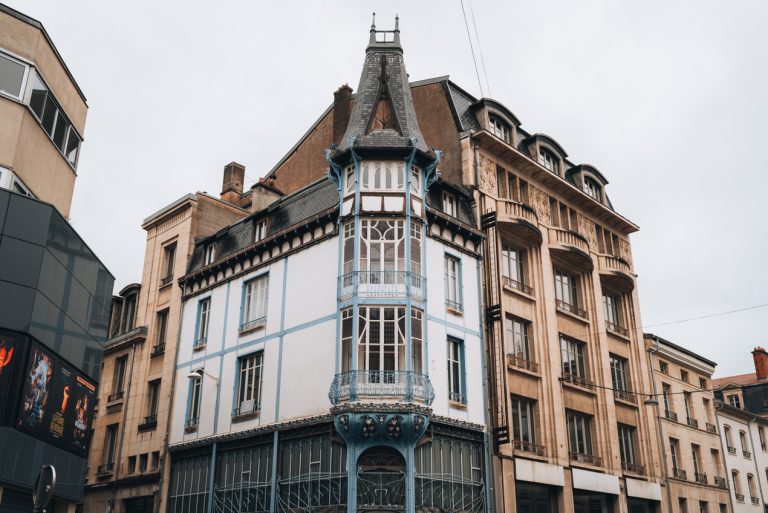
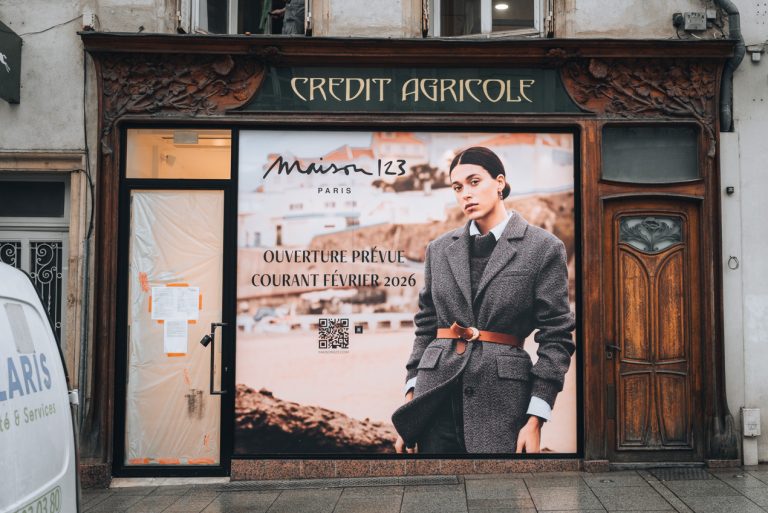
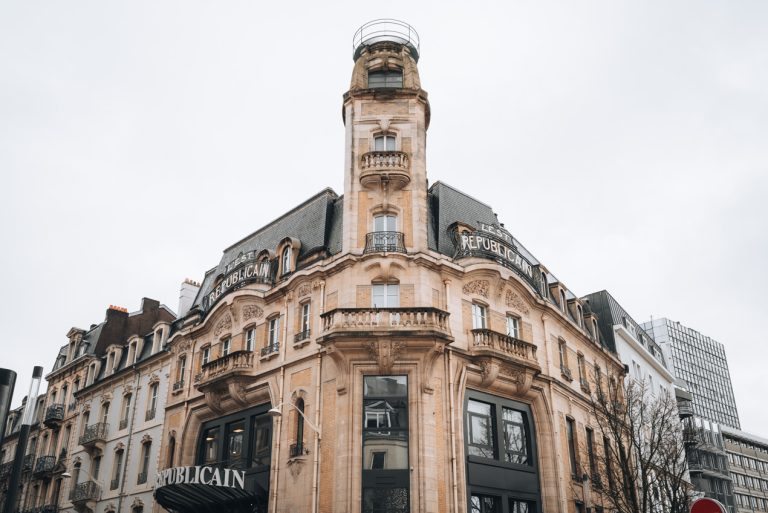
The famous buildings are only half the fun. The other half is training your eye to catch the small stuff, and Nancy rewards anyone who slows down.
As you walk, keep an eye out for these:
- Doors and door frames. The Ancien Magasin Goudchaux near Place Stanislas has a gorgeous wooden Art Nouveau frame around its entrance. Walk right up close, because the detail is easy to miss from across the street.
- Balconies and ironwork. The residential streets, especially Rue Félix-Faure, and buildings like Ancienne Graineterie Génin hide flowery ironwork on balconies that most visitors breeze right past.
- Stained glass. If this is your first Art Nouveau building, pause and look up at the stained glass above the entrances. It’s the easiest detail to overlook when you’re focused on the façade.
- Whole corners. L’Est Républicain on Avenue Foch takes up an entire corner, so walk all the way around it rather than admiring just one side.
Other Ways to Experience Art Nouveau
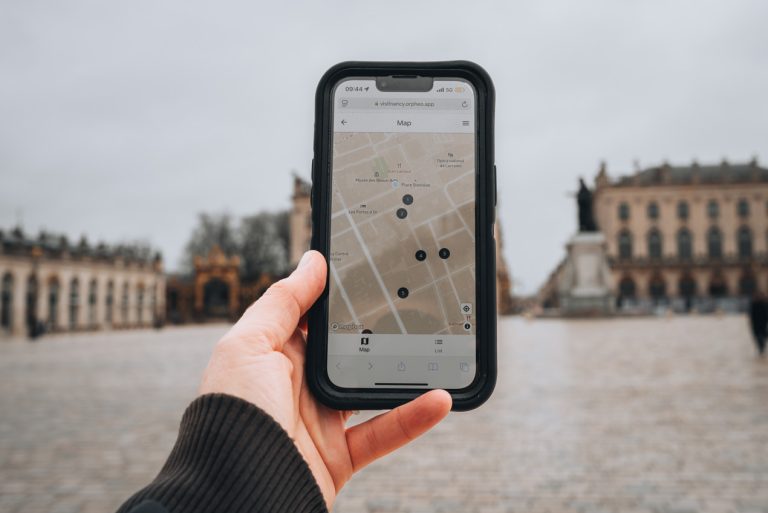
The easiest way to visit all of these places is with a walking tour.
The tourist office runs an excellent free audio walking tour called Art Nouveau Heritage (sometimes written as the Parcours Art Nouveau).
You follow it on your phone, and there are little symbols set into the ground to keep you on track. This is my top pick for first-timers because it does the navigating for you.
If you’d rather have a live guide, the tourist office also offers guided tours, but each one covers a different area of the city. If you go this route, research a few buildings first so you can pick the tour that includes the ones you most want to see.
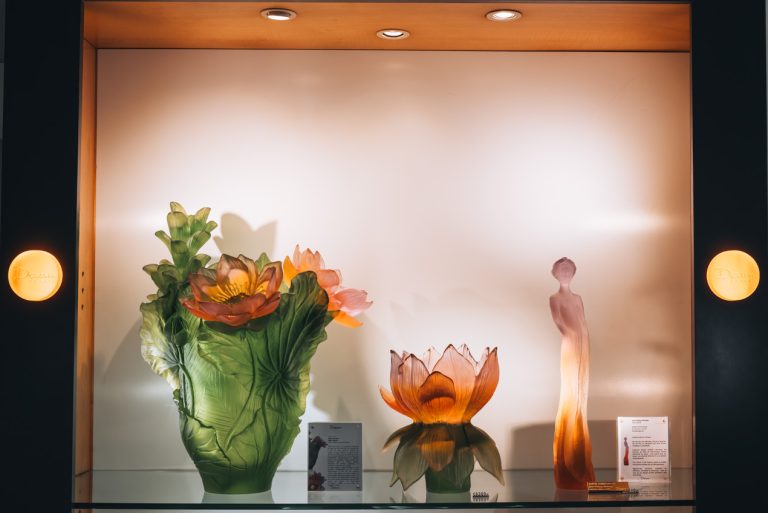
Finally, if you love Daum glassware, stop by the Daum store at 14 Place Stanislas. The third floor has a small section on the history of the brand and its artists, which is a lovely, free bonus.
Plan the Rest of Your Trip
Nancy ended up being one of the biggest surprises. The Art Nouveau architecture here is world-class, yet the city stays far less crowded than the famous Art Nouveau capitals like Paris.
If you’re building a Grand Est itinerary, I’d consider adding a day, or even an overnight stop, just for this.
And once you’ve decided Nancy is worth it, take a look at where to stay so you can lock in the perfect base for your visit.
Read More Articles
I hope you enjoyed my post and found it helpful. Here are some other articles that I think you might find interesting.
- Metz or Nancy: Which Should You Visit? (Local’s Guide)
- What to Do in Metz in One Day: 15 Amazing Activities
- Is Metz Worth It? 19 Pros and Cons to Consider
