Planning a trip along the Alsace Wine Route can quickly feel overwhelming.
With more than 100 villages scattered between vineyards and mountains, it’s hard to know which towns are actually worth your time.
When I moved to Alsace in 2019, I started exploring the wine route one village at a time.
After years of day trips, wine weekends, and revisiting towns in every season, I learned which places truly stand out, and which ones are better skipped.
In this 5-day Alsace Wine Route itinerary, I’m sharing the villages and experiences that made me fall in love with the region.
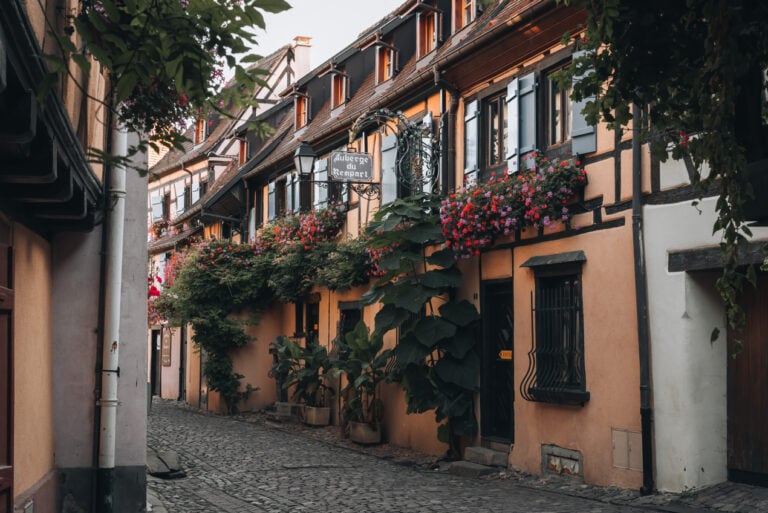
You’ll visit famous towns like Riquewihr and Eguisheim alongside quieter spots like Rosheim and Mittelwihr. It’s designed for travelers who want to explore Alsace slowly and experience all the little nuances.
I’ve also designed it to be doable by car or public transport.
This post contains affiliate links, meaning I may earn a commission if you make a purchase by clicking on a link (at no extra cost to you). Disclosure Policy
Day 1: Rosheim and Obernai
Starting in Rosheim and Obernai gives you a slower introduction to Alsace.
The crowds are smaller, the wineries feel more personal, and the architecture is just as impressive.
I’ve done this exact day trip multiple times since moving to Alsace, and it’s still one of my favorite parts of the route, especially in spring when the cherry trees around Obernai are in bloom.
- Driving Time between Villages: 10 minutes
- Best For: Architecture, quieter wine tastings, traditional Alsatian food
- Can You Do This by Public Transport? Yes, both towns are connected by TER trains.
Morning in Rosheim
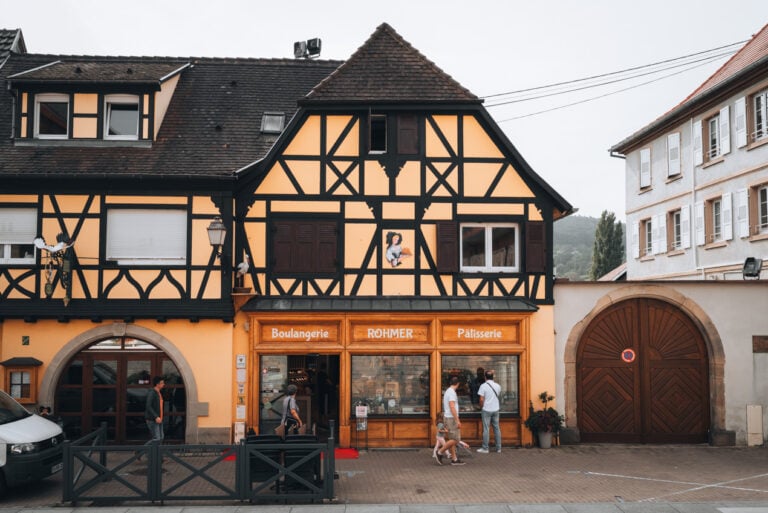
Rosheim is the kind of town that surprises people.
At first glance, it doesn’t look like much.
But once you start wandering, you realize it has some of the most fascinating history in the region.
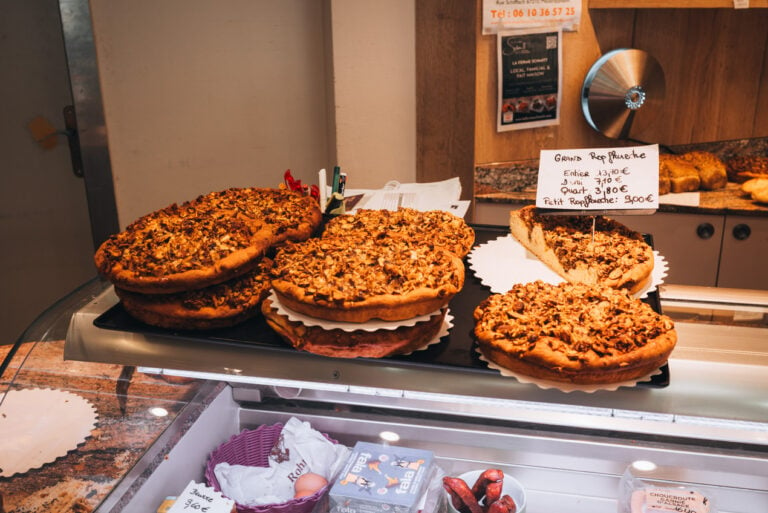
I usually start my mornings here at Rohmer, the oldest bakery in France. Their specialty is the Ropfkueche, a soft, brioche-like pastry topped with roasted nuts and cinnamon.
After breakfast, spend some time wandering through the historic center.
Rosheim has some of the best Romanesque architecture in Alsace, including:
- Maison Romane, the oldest building in Alsace
- Saints Peter and Paul Church, built in the 12th century
- Église Saint-Étienne, a striking neoclassical church with origins dating back to the 1200s
But what I love most about Rosheim is that it still feels peaceful.
Even during summer, I rarely run into the massive tour groups that fill towns like Riquewihr by midday.
It gives you space to enjoy the atmosphere instead of squeezing through crowds for photos.
Afternoon in Obernai
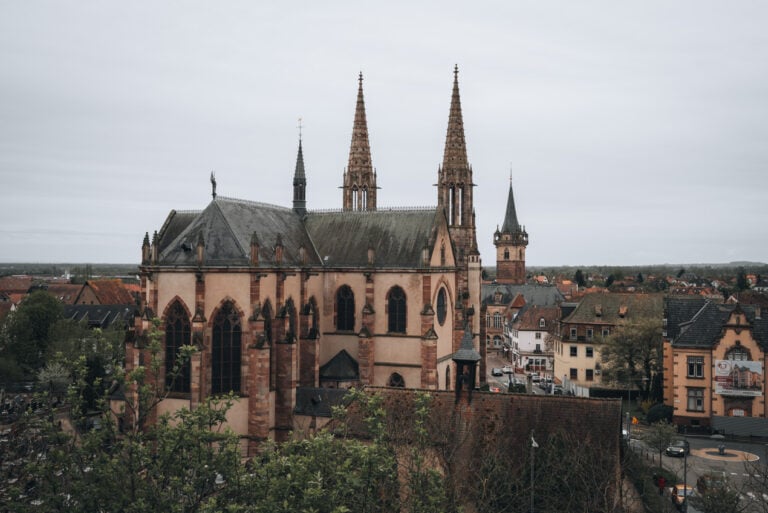
Next, head south to Obernai.
This is one of the larger towns in the northern part of the wine route, but it still feels charming rather than overly touristy.
The first thing I recommend doing is the self-guided Old Town Circuit.
It takes you through the town’s major landmarks while also explaining the history behind them.
I ended up spending nearly two hours on it the first time because I kept stopping to read every information board.
My top five stops are:
- The Romanesque House
- Saints Peter and Paul Church
- Puits à Six Seaux
- Cour Fastinger
- Saint Odile’s Fountain
Lunch at Winstub Le Freiberg
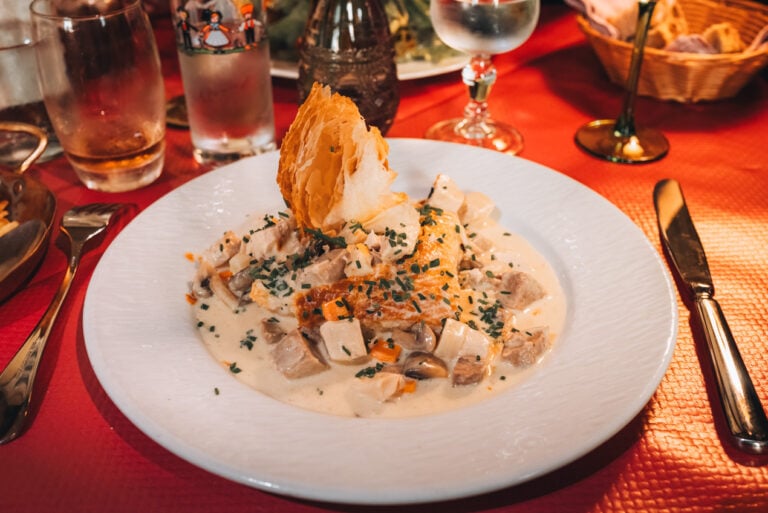
For lunch in Obernai, my top pick is Winstub Le Freiberg.
It’s one of my favorite traditional Alsatian restaurants on this part of the route, especially if you want to try hearty regional food.
My go-to order is the bouchée à la reine, a creamy puff pastry dish that’s extremely popular in Alsace.
Wine Tasting at Domaine Blanck
Obernai has several excellent wineries, but Domaine Blanck is easily the best.
The tasting felt relaxed and unpretentious, and I ended up enjoying nearly every wine I tried, especially the Pinot Gris.
I also appreciated that the staff explained the wines in a way that felt welcoming to a casual wine drinker like myself.
Sunset at Mont National
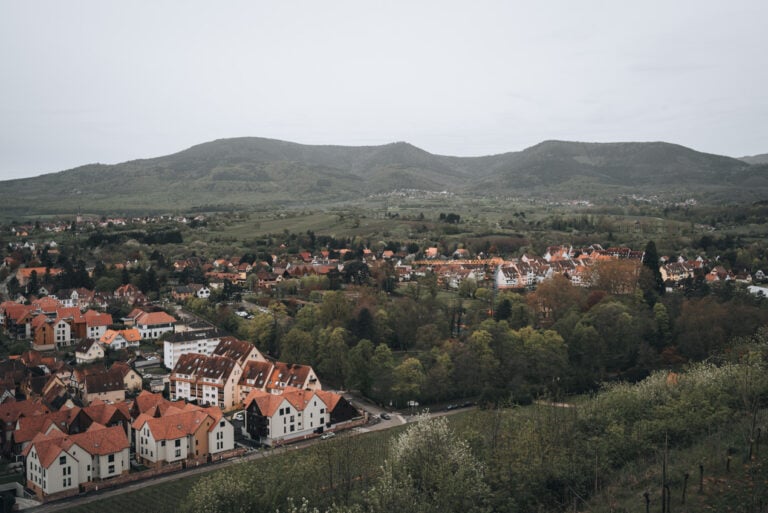
If you still have energy in the evening, head up to Mont National.
The short uphill walk is completely worth it for the panoramic views over Obernai, the vineyards, and the Vosges Mountains.
Sunset is especially beautiful here in late summer and autumn when the vineyards start to change color.
This was one of the first places in Alsace where I had that “I can’t believe I live here now” feeling.
Day 2: Bergheim and Ribeauvillé
When people ask me for an underrated gem along the Alsace Wine Route, my answer is always Bergheim.
This colorful, walled village manages to fly under the radar. Most travelers head straight to Riquewihr and never realize what they’re missing just down the road.
Pairing Bergheim with Ribeauvillé makes for a day full of medieval charm, vineyard scenery, and a gentler pace you won’t experience in busier spots.
- Driving Time between Villages: 10 minutes
- Best For: Storybook villages, vineyard walks, and medieval history
- Can You Do This by Public Transport? Yes, both towns are accessible by public buses.
Morning in Bergheim
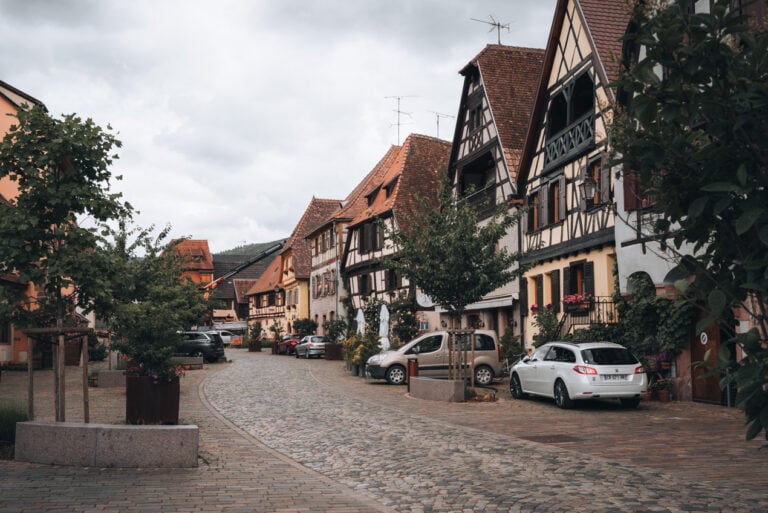
This medieval town is full of stone towers, timbered houses, and twisting cobbled lanes.
And the best place to start your visit is at the Porte Haute, the town’s original 14th-century gate. This is also where you’ll find the Lack’Mi Plaque.
It represents the right of asylum, which was established in 1361. And it was created to mock anyone who was chasing a refugee.
Strolling along the ramparts is another highlight. They encircle the entire center, and there are lots of little side streets you can wander down.
On my first visit, I discovered the town’s little witch museum (Musée des Sorcières).
Bergheim held infamous witch trials, and the displays are both quirky and unexpectedly moving.
Helpful Tip: The opening hours are very limited, and I had to plan my trip around them, so be sure to check in advance if it’s a museum you want to visit.
Afternoon in Ribeauvillé
Ribeauvillé is down the road from Bergheim and is far more popular.
Grand Rue is the village’s beating heart, brimming with candy-colored houses and cute shops.
But I always slip off to quieter corners like Place du Bouc or Place de la Sinne. They have a gentle charm and plenty of benches to soak up the view.
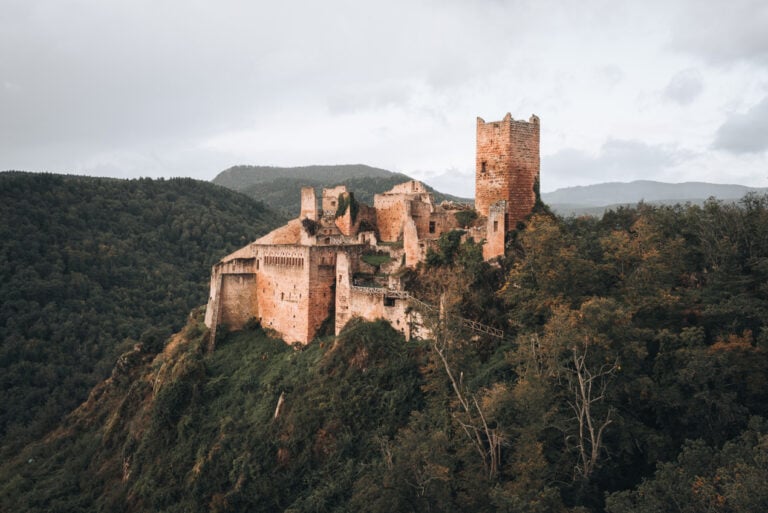
If you’re up for it, one of my favorite hikes in Alsace is the trail to the Three Castles of Ribeauvillé.
It’s steep in a few places, but the sweeping views, especially from Château du Girsberg are worth every minute of uphill effort.
Lunch at Restaurant Aux Trois Châteaux
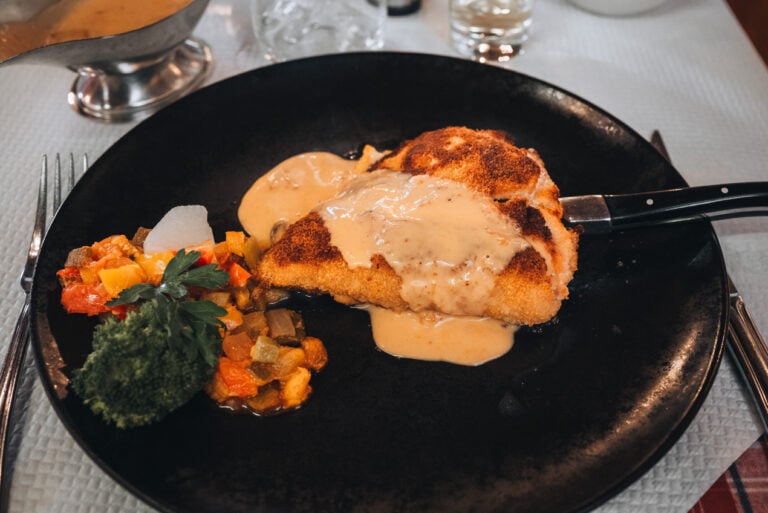
For lunch, I’m always happy at Restaurant Aux Trois Châteaux.
It’s at the base of the Three Castles of Ribeauvillé trail, so it’s the perfect place to stop after a hike.
And their cordon bleu with Munster cheese is the best I’ve had in Alsace.
Wine Tasting at Domaine Jean Sipp
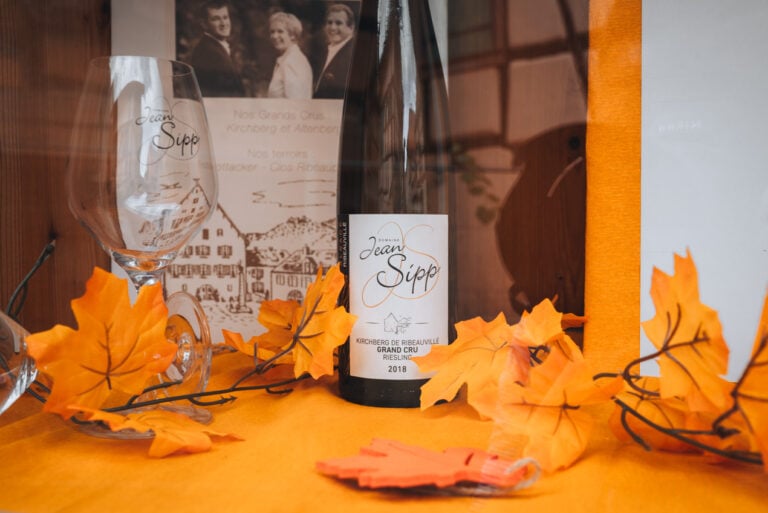
Before leaving town, pop into Domaine Jean Sipp for a tasting.
It’s family-run and has the kind of welcoming Alsatian warmth that makes you linger longer than planned.
But what I loved about this place is that it’s in the corner, away from the busy tourist center, which meant I could enjoy my wine tasting without the crowds.
Day 3: Colmar
Colmar is the heart of Alsace’s wine country, and, honestly, no trip to this part of France feels complete without a day here.
I’ve come back more times than I can count, and every visit finds me wandering the same postcard neighborhoods but noticing new details each time.
- Best For: Colorful canals, classic Alsatian charm, history, and standout wine tastings
- Can You Do This by Public Transport? Yes, Colmar has a well-served train station.
Morning in Little Venice
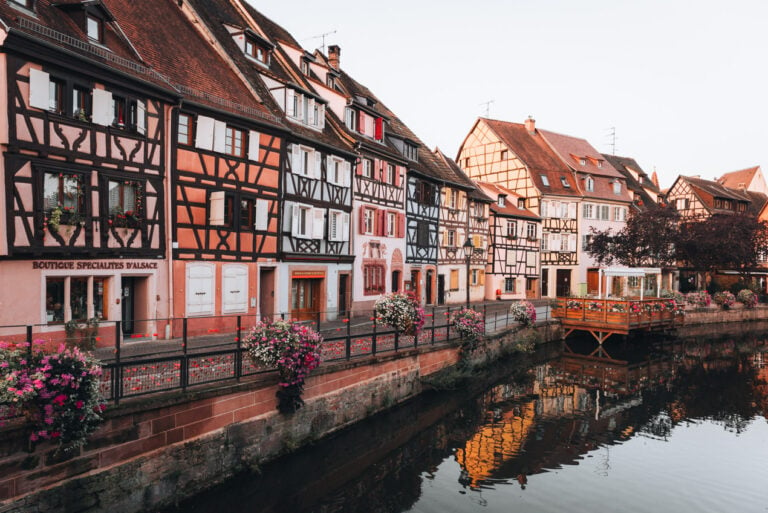
Whenever I arrive in Colmar, I make a beeline for Little Venice before the crowds wake up.
Early morning is magical here: the canals are quiet, and the half-timbered houses lining the water reflect in the still surface.
Little Venice is easily the most photogenic corner of the town.
I always pause at the bridge on Rue des Écoles for what I think is the best view. The mix of pinks, blues, and greens, with the canal winding through the center, is pure storybook Alsace.
Mid-Morning at The Village Hansi & Its Museum
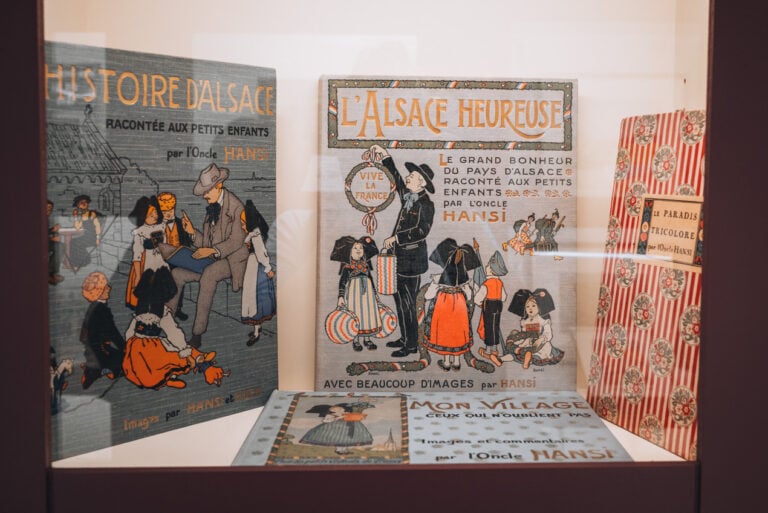
After the canals, I like to head to The Village Hansi & its Museum.
If you only visit one museum in Colmar, make it this one.
It’s not huge, but it perfectly showcases Alsatian culture as seen through the eyes of Jean-Jacques Waltz (aka Hansi).
The first time I visited, I found myself charmed by his gently satirical postcards and the way he wove local culture with humor.
His work gives you a sense of what makes Colmar tick.
Lunch at Le Fer Rouge
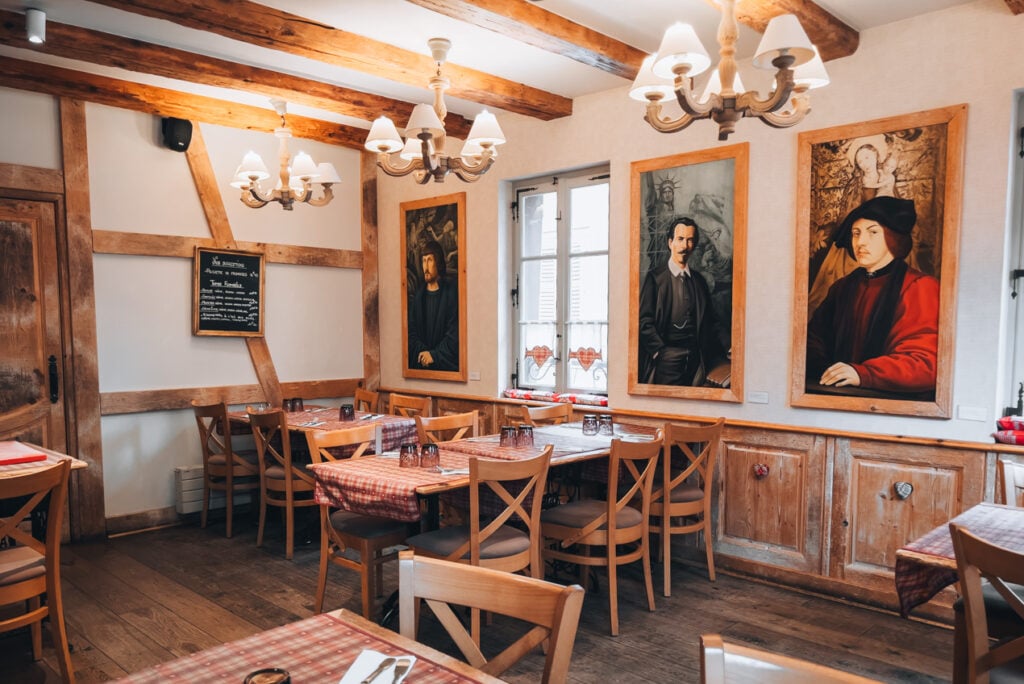
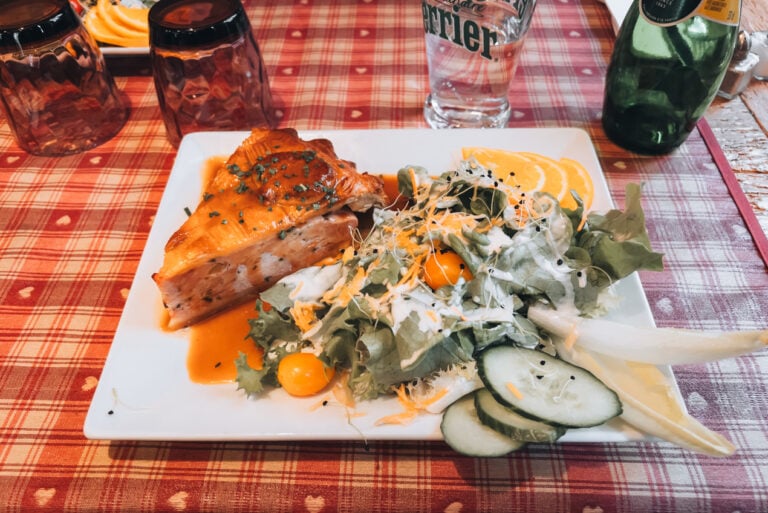
Old Town Colmar is lined with inviting winstubs and cafés.
My go-to is Le Fer Rouge, especially if you can snag a table inside. The interior, especially upstairs, is beyond charming.
It can get crowded on the street in front of Le Fer Rouge, but it’s quiet and calm inside.
Afternoon Strolling Colmar’s Old Town
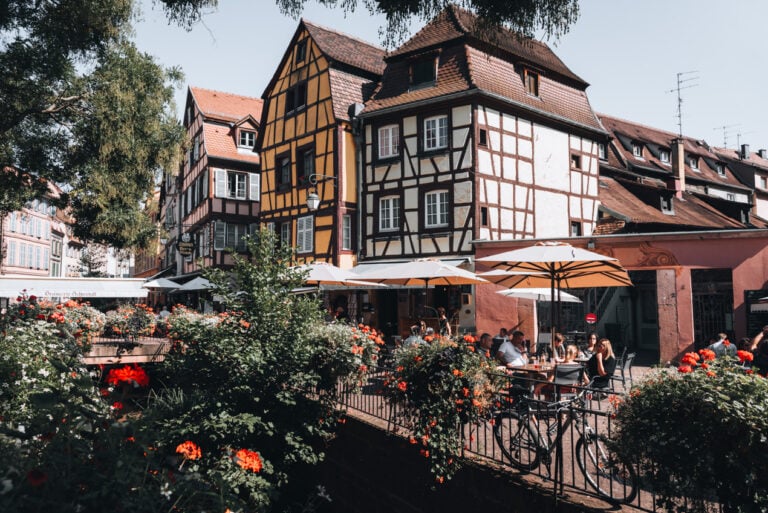
After lunch, spend some time discovering the rest of the Old Town on foot.
Even after dozens of visits, Colmar still surprises me. Every street really does look like a scene from Beauty and the Beast.
Don’t miss the covered market (Marché Couvert), even if it’s just for the atmosphere.
I like to pop in for a coffee and a peek at the cheese stalls, and if you’re lucky, you can grab a table on the canal-side terrace for a quick break.
Wine Tasting at Domaine Martin Jund
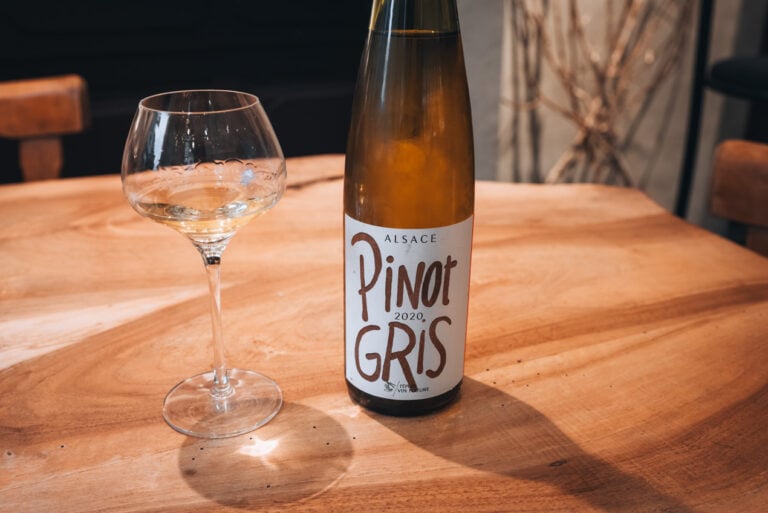
Colmar isn’t packed with tasting rooms, but the ones you’ll find are top-notch.
My favorite, hands down, is Domaine Martin Jund, a family-run winery right in the city center.
The first time I visited, I was welcomed like an old friend, and their naturally processed wines instantly won me over (the Pinot Gris in particular is a must-try).
There’s something special about sipping in their leafy courtyard. It’s away from the busy streets, and it’s a chance to see the quieter side of Colmar.
Day 4: Riquewihr and Mittelwihr
Riquewihr might be the most photographed town on the Wine Route, but don’t let its popularity fool you into thinking it’s overhyped.
Early mornings here are the best time to visit, and if you time your arrival before the tour buses, you’ll get to enjoy the cobbled lanes almost to yourself.
- Driving Time between Villages: 5 minutes
- Best For: Picture-perfect streets, small village life, and classic Alsatian wines
- Can You Do This by Public Transport? Yes, both villages can be reached by public bus.
Morning in Riquewihr
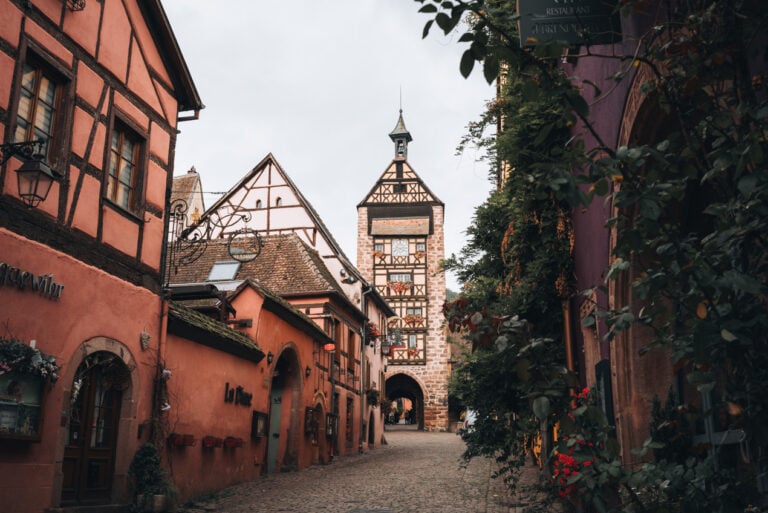
If you’ve ever seen photos of the Alsace Wine Route, there’s a good chance it was Riquewihr.
Yes, it’s popular, but trust me, it’s earned its fair share of the spotlight.
I like to get here early, before 10 a.m., when the town still feels sleepy, and you can stroll the main street (Rue du Général de Gaulle) without dodging crowds.
I usually grab a pastry from Crêperie du Vieux Pressoir and wander along Rue de la 1ère Armée and Rue du Cerf, where the pastel facades and flower boxes could rival any fairy tale set.
Don’t skip the Musée du Dolder or Musée de la Tour des Voleurs if you’re into quirky local history.
Between the two, I found the latter (the old thieves’ tower) had the best stories and most unexpected artifacts.
Lunch at Le Médiéval
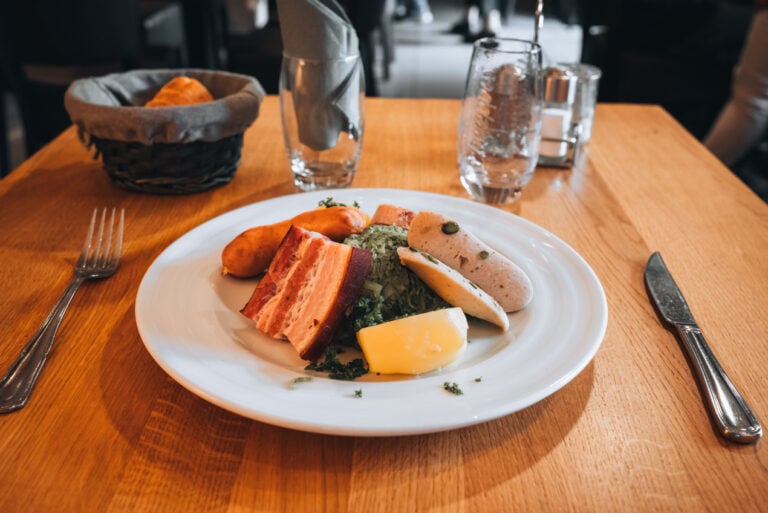
For lunch, my no-fail pick in Riquewihr is Le Médiéval.
There’s nothing fancier than a table by the window, a glass of Pinot Gris, and a hot plate of their famous Riquewihrienne.
They’re one of just a handful of places that make this savory specialty, and it’s my favorite.
Afternoon in Mittelwihr
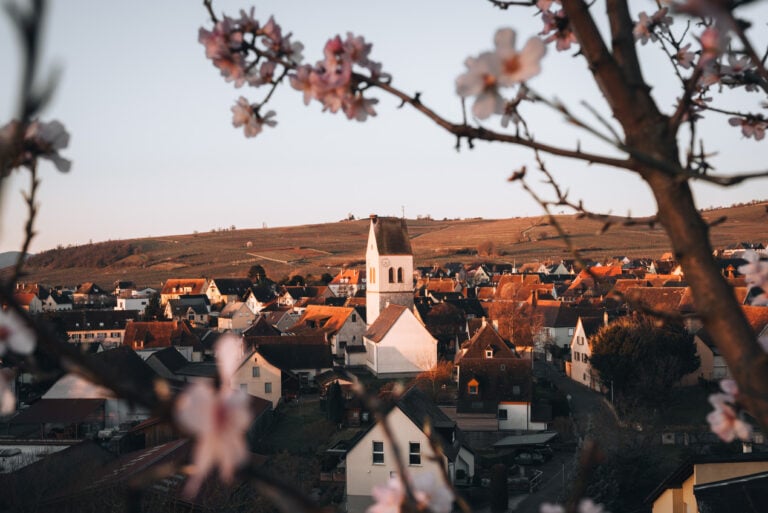
In the afternoon, head south to Mittelwihr.
This little wine village slips under the radar for most travelers, which is exactly what makes it special.
The pace here is much slower than in the other towns, and the rows of pink-blossomed almond trees (especially in spring) and hillside vineyards make it the perfect spot for a relaxing afternoon.
I like to head up to the big Mandelberg sign along the Chemin des Amandiers, where the views over the town and surrounding vineyards are second to none.
Wine Tasting in Mittelwihr
But the real reason to visit Mittelwihr is for the wine, specifically the Grand Cru from Mandelberg.
The two places where you are guaranteed to try some of this wine are Domaine Specht and Domaine Burghart Spettel.
I have visited both, and you can’t go wrong with either.
Day 5: Turckheim and Eguisheim
Finishing your Alsace adventure with Turckheim and Eguisheim is like saving the cherry on top of your sundae.
Both offer that classic, half-timbered magic Alsace is known for, but each brings something a little different.
- Driving Time between Villages: 15 minutes
- Best For: Medieval town walls, fairytale ambiance, and iconic scenery
- Can You Do This by Public Transport? Yes, both villages are served by public buses, the Kutzig Bus, and the Navettes de Noel. Turckheim also has a train station.
Morning in Turckheim
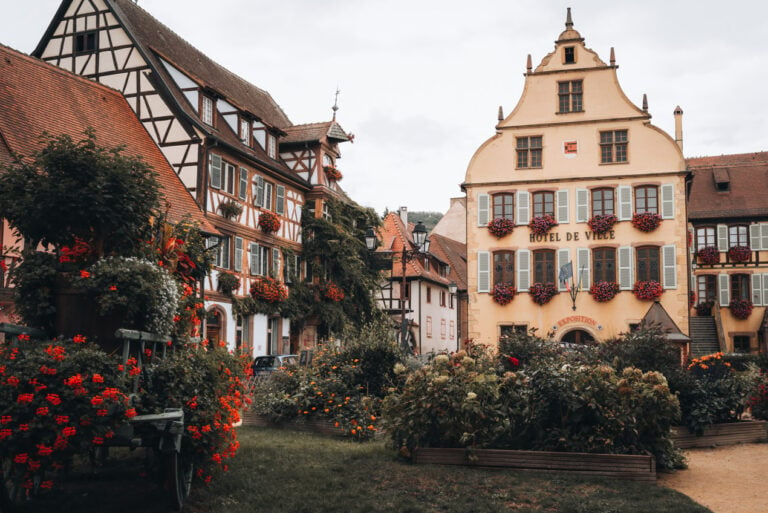
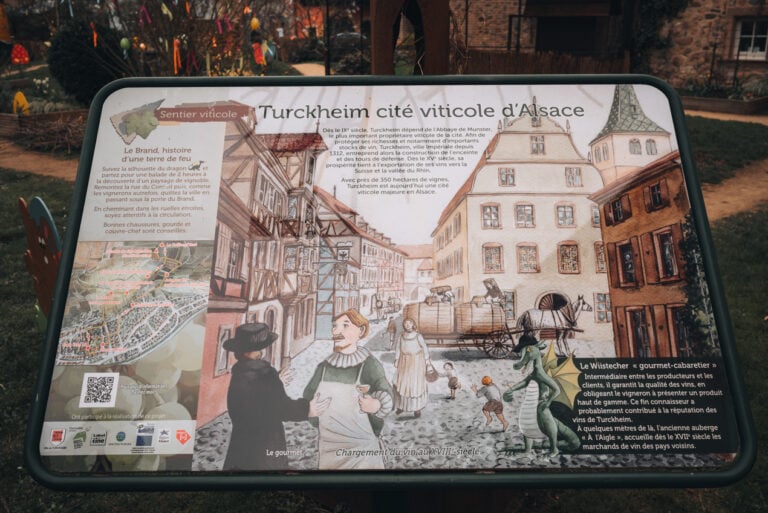
Turckheim has several things to do, even though it’s small.
I recommend arriving early and setting out on the sentier viticole. It’s a small trail that winds through the town and the surrounding vineyards.
There’s a map at the entrance to the Jardin de la Ville, and the trail is easy to follow. It took me about an hour.
Then, there’s the Musée Mémorial des Combats de la Poche de Colmar, which tells the story of the last Nazi strongholds in Alsace.
It is a moving museum and one of the only ones that goes into detail about the Poche de Colmar.
Lunch at Caveau du Vigneron
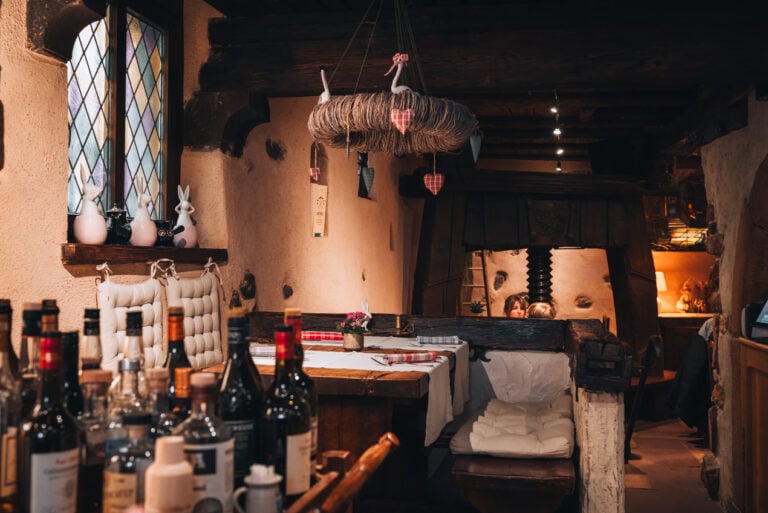
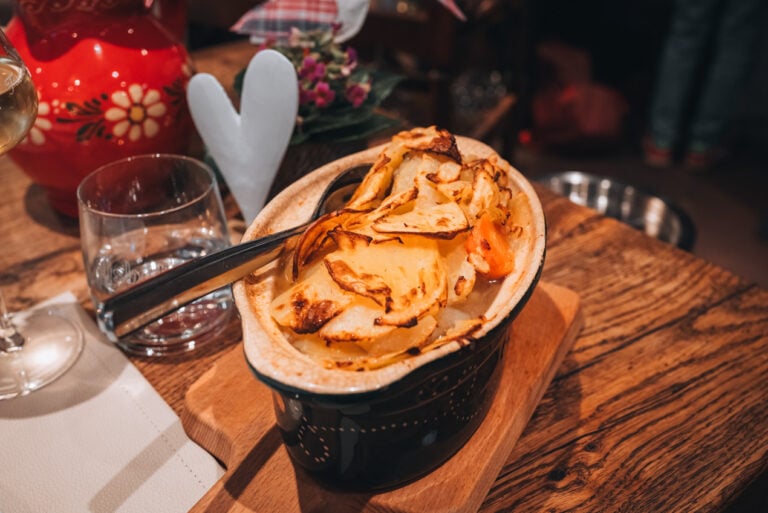
There are a few cozy restaurants in Turckheim if you want a hearty regional lunch. My go-to is Caveau du Vigneron.
It’s a traditional Alsatian restaurant that’s also attached to the Domaine François Baur winery.
They make the best baeckeoffe I’ve had, and the wine was excellent, especially the Pinot Gris.
Afternoon in Eguisheim
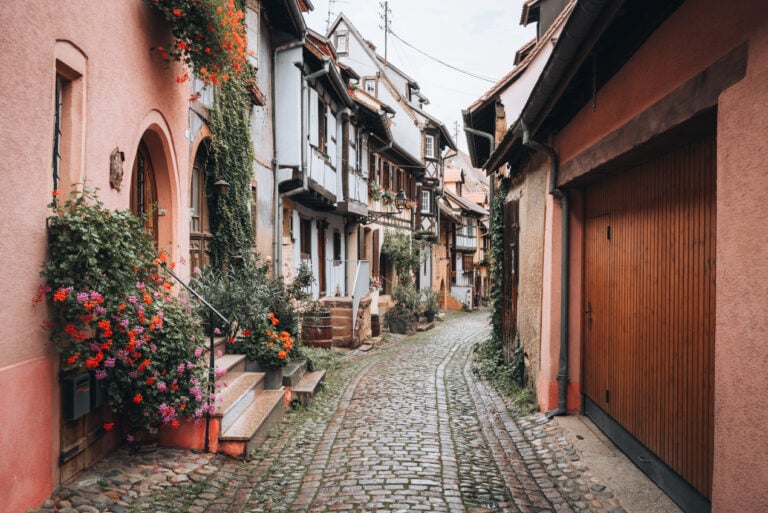
Along with Riquewihr, Eguisheim is one of the prettiest towns in the region.
The main street, Rue du Rempart, circles the town and is lined with brightly painted timbered houses and window boxes decorated with flowers.
I have hundreds of photos of this street, and I never get tired of walking around it. It’s at the top of my list of best things to do.
Once you’ve followed Rue du Rempart, head to Place Saint-Léon in the town center.
There is a beautiful fountain in the middle and a small chapel behind it.
If you go inside the chapel, make sure to turn on the lights.
The switch is at the back, and it costs one euro. You’ll get a much better view of the murals on the ceiling, which are hard to see when it’s dark.
Wine Tasting at Wolfberger
For a wine tasting in Eguisheim, Wolfberger is my top choice.
They produce some of the region’s most prestigious wines. Every wine I tried was fantastic, which isn’t always the case during a wine tasting.
Plus, they did an excellent job of explaining the terroir around Eguisheim and how their wines are produced.
Final Thoughts
This itinerary weaves together must-see villages and lesser-known gems, giving you a taste of the region’s landscapes, history, and culture.
It’s perfect for travelers who want a deeper, more personal connection to Alsace.
I recommend basing your stay in Colmar. From here, it’s easy to get around, either by public transport, the Kutzig bus, by car, or the Navettes de Noël.
If you have questions about your trip, book a consultation call with me. I offer travel planning services where you get advice and tips directly from a local.
Read More Articles About Alsace
I hope you enjoyed my post and found it helpful. Here are some other articles that I think you might find interesting.
- Is Alsace Worth It? A Local’s Guide to the Pros and Cons
- Where to Stay in Alsace: Best Towns and Hotels
- What is Alsace Famous For? 17 Things You Won’t Want to Miss
- 17 Essential Apps and Websites for Your Trip to Alsace
- What to Do in Alsace: Experiences I’d Prioritize as a Local
- Alsace without a Car: Top 19 Things to Do (from a Local)
- 19 Most Charming Towns in Alsace (Local’s Guide)
