Planning a trip to the Alsace Christmas markets can quickly feel overwhelming.
With dozens of villages and overlapping market dates, it’s hard to know which towns are actually worth your time.
When I moved to Strasbourg in 2019, I started exploring the region’s Christmas markets one by one.
After years of freezing my hands while holding a mug of vin chaud and figuring out exactly when the Navettes de Noël arrive, I learned how to navigate this winter wonderland the right way.
So, I’ve put together a 5-day Alsace Christmas market itinerary that’s intentionally different. It covers the iconic, must-see spots, but it also takes you to the northern and southern corners of the region, where you can experience the holidays at a relaxed pace.
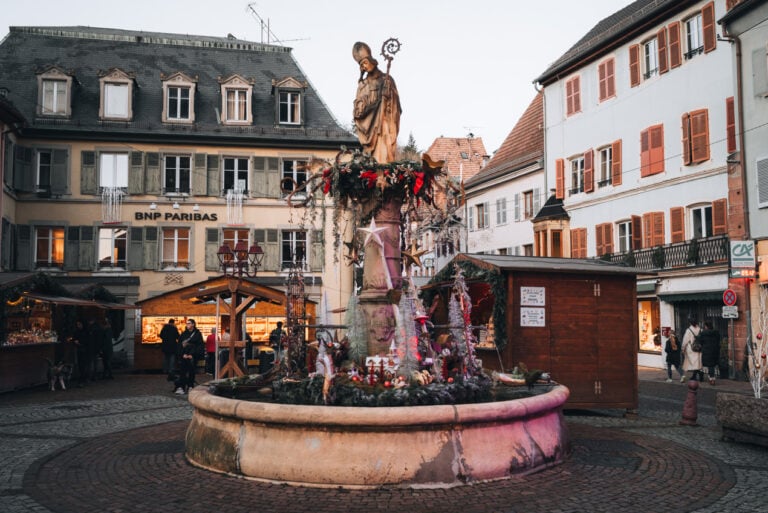
Day 1: Colmar
Morning in Little Venice
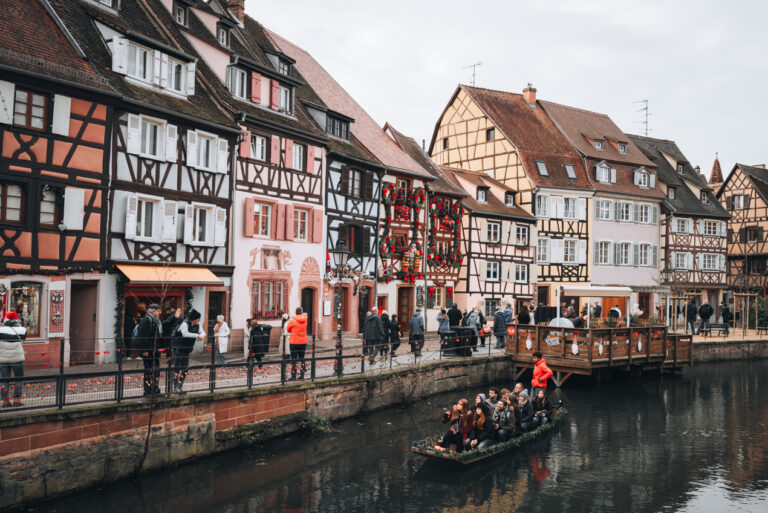
Start your Colmar day bright and early in Little Venice. Before 9 am, this neighborhood is quiet, free of the crowds that pack it by late morning.
I always start on Quai de la Poissonnerie near the Rue des Écoles bridge and walk towards the Rue Turenne bridge. Everything looks like a postcard, and the decorations are adorable.
Then, I head to the Boulevard Saint-Pierre bridge, which is often overlooked.
It’s a favorite of mine for capturing a more peaceful, local side of Petite Venise, even if the Christmas decorations aren’t as festive.
Lunch at Marché Gourmande
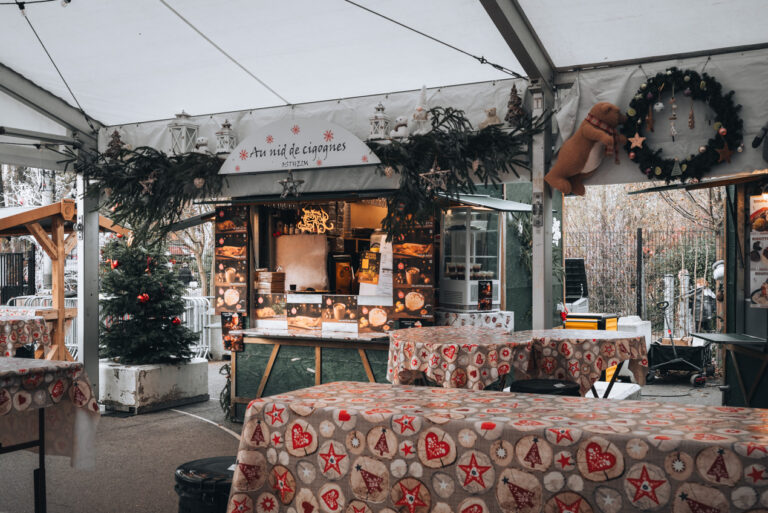
By midday, head to the Marché Gourmande, the food-focused part of Colmar’s Christmas market.
I like grabbing lunch here because there is a ton of variety.
The vendors are all from local restaurants, so I usually grab my appetizer, main dish, and dessert from different stalls.
Even a simple sausage sandwich is delicious.
The only thing that I didn’t appreciate was the prices. Compared to a restaurant, it was about one or two euros more expensive. But, for the atmosphere, it was worth it.
Afternoon Wandering the Old Town
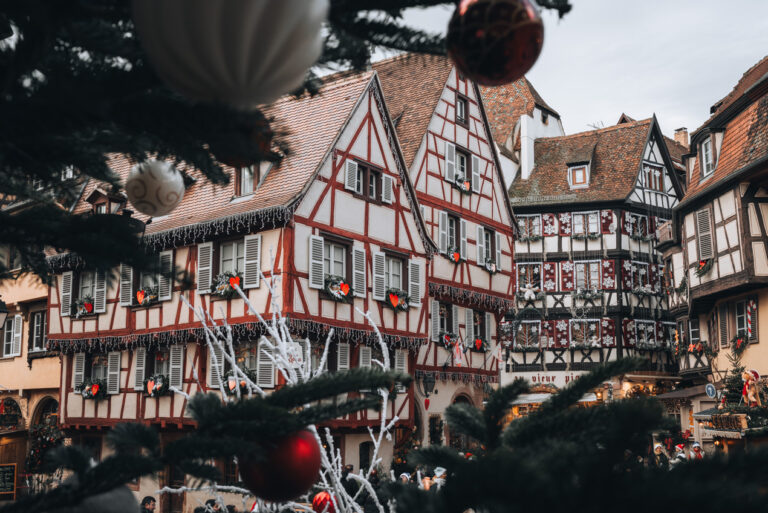
After lunch, the Old Town is ready for you, and honestly, this is my favorite stretch of the entire day in Colmar.
Place de l’Ancienne Douane is where I recommend starting. There are tons of wooden chalets, and the setting is very storybook-like. But it does get busy, so this is an area you want to get in and get out of fast.
Meander along Grand Rue and Rue des Marchands, and pop into the historic Koïfhus (Old Customs House) for a look at both architecture and local crafts.
There’s a little stairway on the side of the Old Customs House near the intersection of Grand Rue and Rue des Marchands that most people walk past.
This is one of my favorite hidden views of the two streets. It’s also where you find the entrance to the little local craft market.
Early Evening and Dinner in Place Rapp
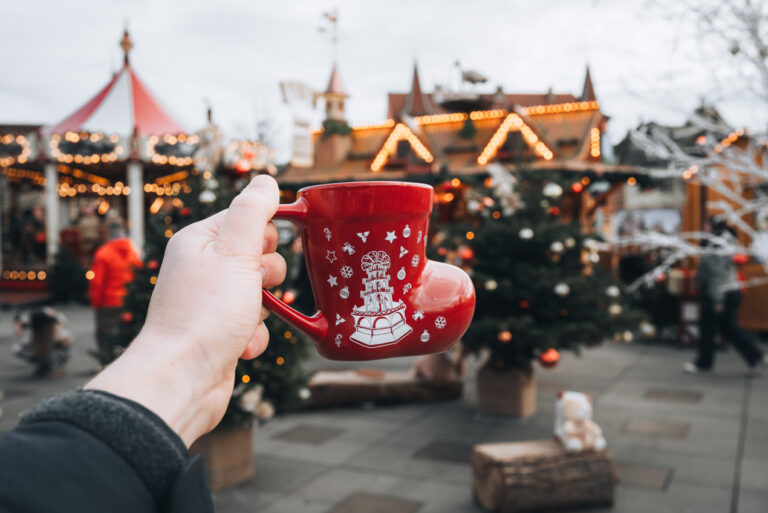
Finish your day in Place Rapp.
It doesn’t have the same charm as the markets around Petite Venise or Place de l’Ancienne Douane, but that’s also part of the appeal.
It feels a little less polished and a little less hectic, which can be a relief after spending the afternoon weaving through Colmar’s busiest streets.
I usually grab a vin chaud and enjoy the extra breathing room before heading back home to Strasbourg. The stands here also have some cute Christmas mugs. (It’s where I got the infamous red boot mug.)
Day 2: Riquewihr and Turckheim
Morning in Riquewihr
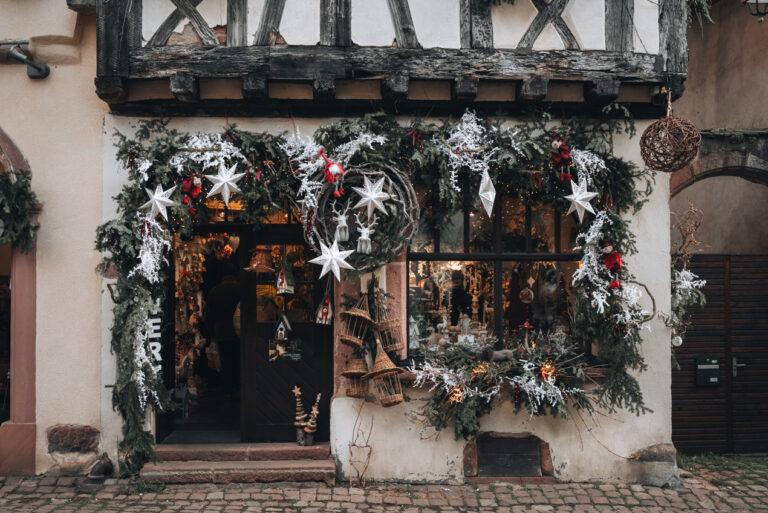
The Riquewihr Christmas market truly lives up to the hype. The first time I visited, I immediately understood why it ends up on so many travel itineraries.
The decorations are elaborate, the half-timbered houses are impossibly charming, and Rue du Général de Gaulle has that full-on storybook feel people come to the region hoping to find.
But it is also one of the places where timing matters most.
These days, if I’m going in December, I try to get there before 10:00 am. I made the mistake of visiting in the afternoon one year and regretted it instantly.
Once the tour buses start arriving, the atmosphere changes quickly, and what should feel magical can start to feel crowded and exhausting.
Afternoon in Turckheim
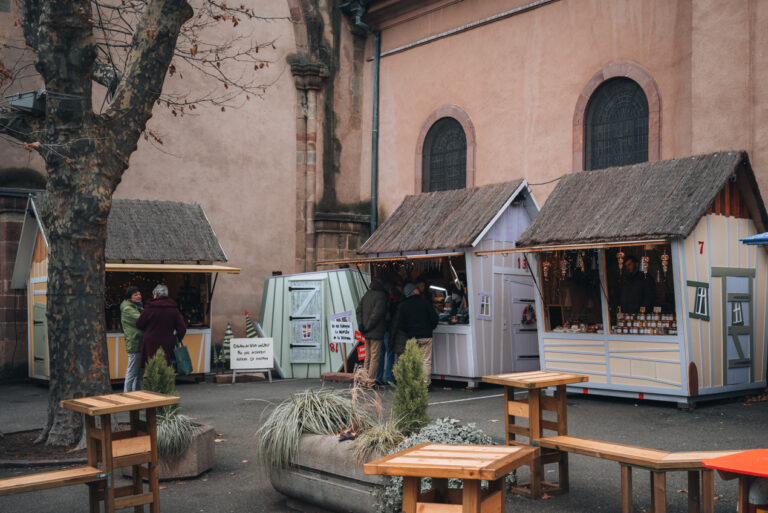
In the afternoon, head over to Turckheim.
This is one of my top contenders for the best market in Alsace because it is so incredibly quirky and unique. The theme here is the “Christmas Market of Elves.”
The wooden chalets look like they were built by elves, and the whole town leans into traditional folklore.
If you stay into the evening, you can even watch the town’s Night Watchman make his rounds, a tradition dating back to 1540.
Day 3: Mulhouse and Thann
Morning in Mulhouse
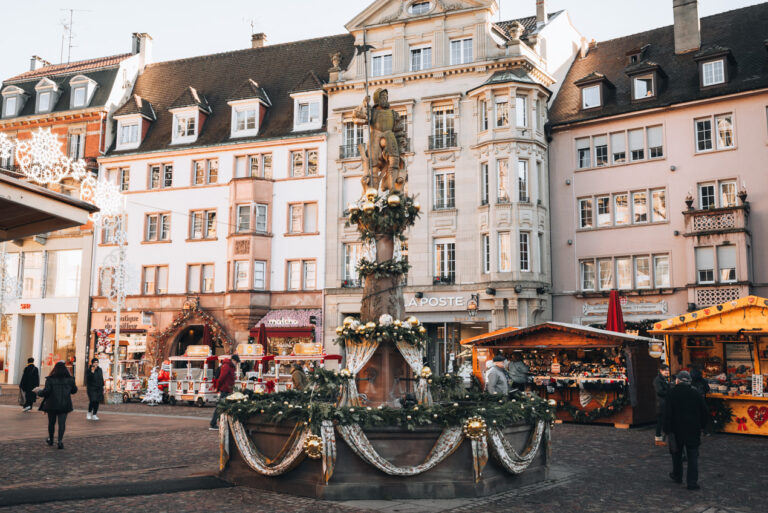
Mulhouse has a completely different feel from the Christmas markets in Colmar and Strasbourg, and that’s one of the reasons I like it so much.
Since 2019, this is the first Christmas market I have visited to kick off the holiday season.
The atmosphere is more relaxed, the crowds are more manageable, and the whole market feels rooted in the city’s identity.
Instead of the usual storybook village aesthetic, Mulhouse centers its Christmas market around its textile heritage.
Every year, a new Christmas fabric is designed, and you see it everywhere, draped over the chalets, decorating the Hôtel de Ville, and woven into the market displays. It gives the whole town a cozy, cohesive look that feels different from anywhere else.
Afternoon in Thann
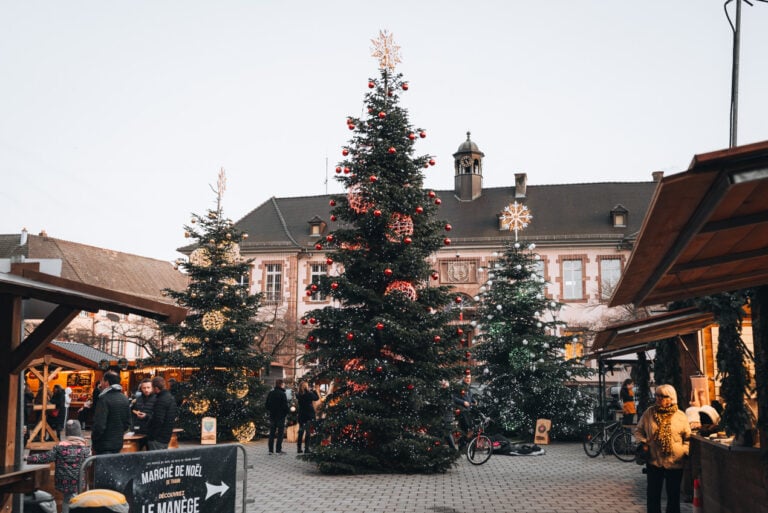
Just a short trip from Mulhouse sits the town of Thann.
I recommend visiting in the afternoon because the Christmas market opens at 2 pm on weekdays and 11 am on weekends.
Unlike the other towns, there isn’t a set theme, but the decorations are second to none. Add to that the slower pace, architecture, and a peaceful winter atmosphere.
I’ve been a few times, and there are very few tourists. Most who visit Thann’s Christmas market come from southern Alsace, so it has more of a family vibe than a touristy one.
Day 4: Strasbourg
Morning at Place de la Cathédrale and Place Kléber
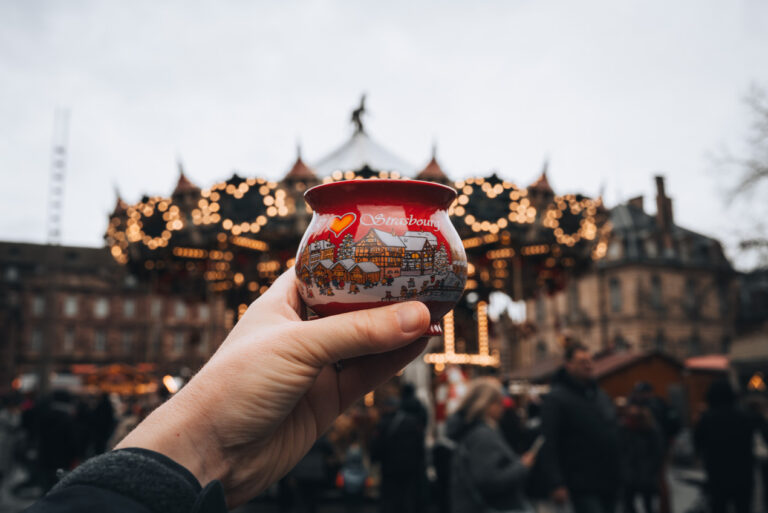
Wake up early and make your way to Strasbourg’s beating festive heart: Place de la Cathédrale and Place Kléber.
I always start in Place Kléber so I can snap a few photos without anyone around. The giant Christmas tree is something you have to see for yourself.
From there, wander down Rue Mercière, where the Strasbourg Cathedral’s dramatic Gothic spire makes for one of the best winter photos in France.
The market at the foot of the cathedral is the oldest in town (dating to 1570), with tiny wooden chalets selling handcrafted ornaments, bredele cookies, and pain d’épices.
This is where I grab a snack and a vin chaud (and yes, this is also where you’ll find Strasbourg’s most coveted Christmas mug).
Lunch at Le Gurtlerhoft
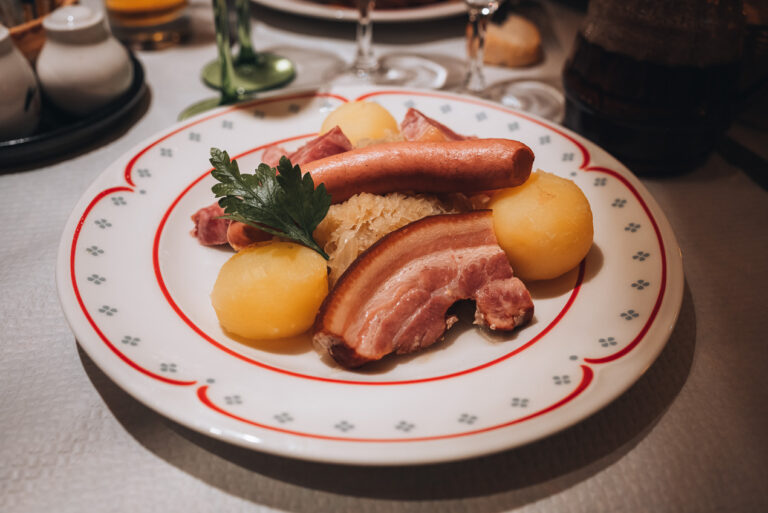
By midday, you’ll be ready to warm up, and Le Gurtlerhoft is my go-to spot near the cathedral.
Set beneath the square in a cozy cellar, this traditional restaurant serves up some of the best choucroute garnie in town.
The portions are generous, the prices fair, and the service always kind, even during December’s rush.
I always book ahead this time of year. There’s rarely space for walk-ins.
Afternoon in La Petite France
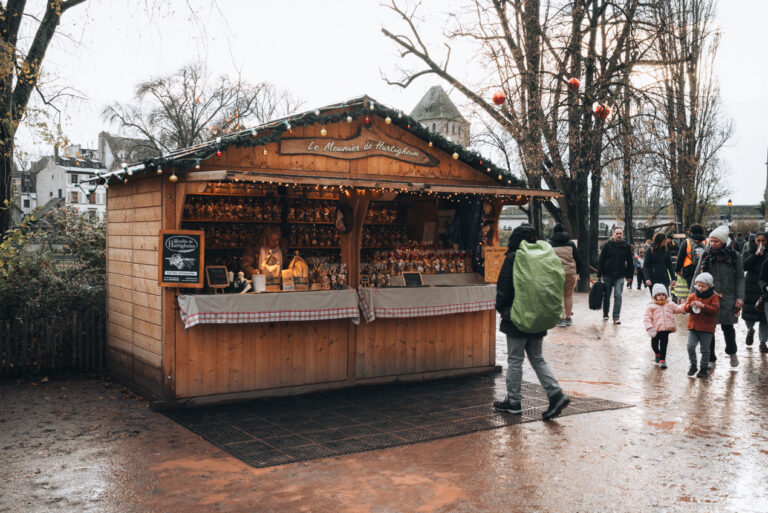
After lunch, head to La Petite France, the most photogenic neighborhood in Strasbourg.
Place Benjamin Zix, Louise-Weiss Square, and Place Grimmeissen are where you’ll find the main markets.
And, of the three, the market in Louise-Weiss Square was my favorite.
The vendors here are all local, and it’s where you’ll find products like honey and homemade gingerbread. It’s also less crowded than the other two.
But if you want to take home something really special, the Meisenthal Christmas ornaments are sold at a wooden chalet on the corner of Ecluse A de la Petite France and Place Benjamin Zix.
Evening in Place Broglie
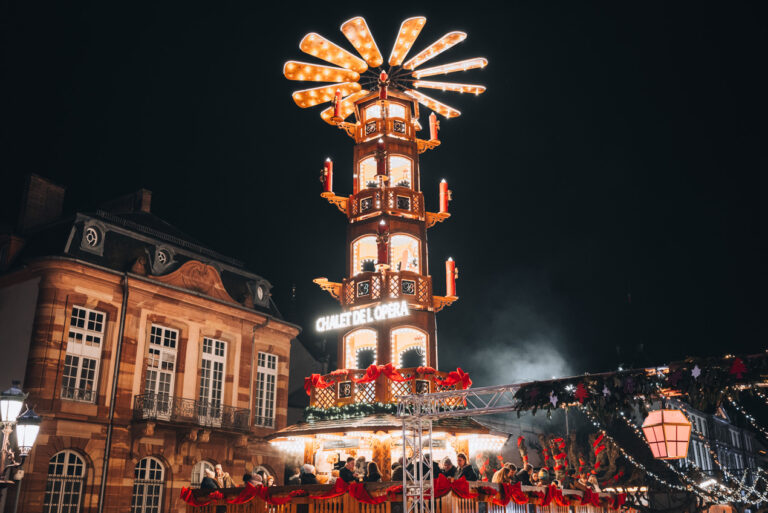
End your Strasbourg day with an evening stroll down to Place Broglie.
By night, the square is filled with a golden glow as rows of chalets serve up the region’s best street food, especially tarte flambée and mulled wine.
Grab a last snack and browse for any gifts you missed (there are lots of cute Christmas mugs sold here).
I like to sit on the stairs of the Opéra National du Rhin while I eat, then snap a few photos.
Day 5: Haguenau and Wissembourg
Morning in Haguenau
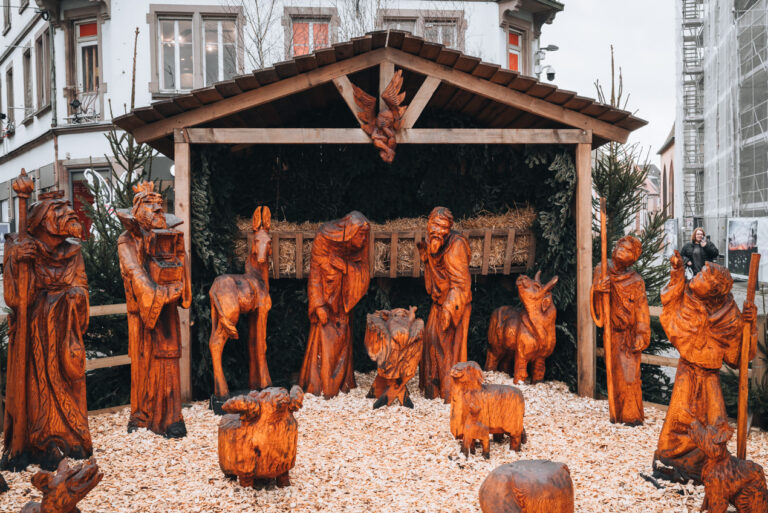
Haguenau is one of those Christmas markets that surprised me the first time I visited.
The market is known as the “Cradle of Nativity Scenes” because the first mention of a nativity scene happened here at St. George’s Church in 1420, and you really feel that history is woven into the experience.
The nativity displays are everywhere, and they give the market a more traditional, local feel than some of the bigger, flashier towns.
What stood out to me most, though, was how welcoming it felt. The vendors seemed genuinely happy to chat, and the whole atmosphere was calmer and more personal because it wasn’t overrun with tourists.
Afternoon in Wissembourg
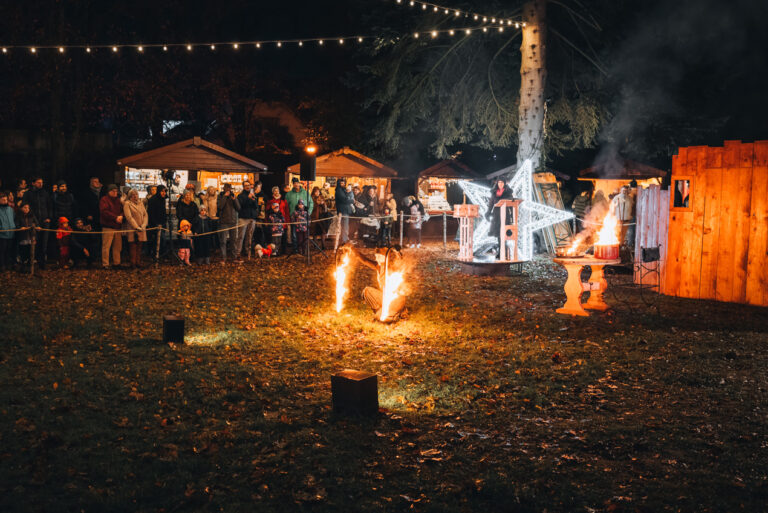
Finish your trip at Wissembourg’s Christmas market. Like Haguenau, it’s one of those places that feels a little more under the radar, which is exactly why I like ending here.
But what makes it especially memorable is how it leans into the legend of Hans Trapp, a dark Alsatian folklore figure.
It doesn’t feel gimmicky either. It feels rooted in local tradition, which makes the whole experience more interesting. There are even performances (on the weekends) where locals dress up and act out different stories.
It leaves you with a very different side of Alsace than the one most first-time visitors expect.
If I Were Planning This Trip Today…
If a friend asked me how to do this exact itinerary, here is my final recommendation:
Base yourself strategically. You could easily spend your first two nights in Colmar (to cover Colmar, Riquewihr, Turckheim, Mulhouse, and Thann via short trips).
Then move to Strasbourg for your final three nights to cover the city itself and easily catch the northbound trains to Haguenau and Wissembourg.
Remember to dress in warm layers, wear very comfortable walking shoes, and always start your interactions with a polite “Bonjour.”
If you have questions and need help planning your trip, book a consultation call with me. You’ll get local advice from someone who knows the area.
Read More Articles About Alsace
I hope you enjoyed my post and found it helpful. Here are some other articles that I think you might find interesting.
- Where to Stay in Alsace: Best Towns and Hotels
- A Local’s Guide to Getting to Alsace
- A Local’s Guide to Getting Around Alsace
- The Ultimate Sélestat Christmas Market Guide
- The Ultimate Kaysersberg Christmas Market Guide
- The Ultimate Obernai Christmas Market Guide
- The Ultimate Eguisheim Christmas Market Guide
