When I moved to Strasbourg, the capital of Alsace, in 2019, I quickly fell in love with the region. Its architecture, cuisine, and cultural heritage were all captivating.
Naturally, Mulhouse caught my attention.
Even though it often sits in the shadow of its more famous neighbors like Colmar, its museums and Christmas market have an impressive reputation.
Over the years, I’ve visited several times, and each trip has left me with fresh perspectives on what this industrial-turned-cultural city has to offer.
Whether you’re planning a quick stop or debating a longer visit, this guide will take you through the pros and cons of visiting Mulhouse, so you can decide if it’s worth adding to your itinerary.

15 Pros and Cons of Visiting Mulhouse
1. Pro: Lots of Museums


The best thing to do in Mulhouse is to visit a museum. And there are plenty to choose from.
At the heart of the city is the Musée National de l’Automobile, also known as the Schlumpf Collection. This museum has 400 vintage automobiles on display. There are quirky cars, speed racers, and even old taxi cabs.
Not far away, you’ll find the Cité du Train – Patrimoine SNCF, which has tons of historical trains. I loved touring the older models and getting to see what train travel used to look like.
But my favorite museum was the Electropolis Museum. It traces the fascinating history of electricity with artifacts and hands-on exhibits. And for someone like me, who has a background in science, I had a ton of fun.
Mulhouse also has the Musée Historique de Mulhouse, which focuses on the city’s past, and the Musée des Beaux-Arts de Mulhouse, where you can appreciate fine art.
2. Con: Limited Nightlife
While Mulhouse may have lots of cool things to do during the day, the city is lacking in terms of nightlife.
Compared to larger cities like Paris or Lyon, Mulhouse does not have as many options for late-night entertainment. I would say Strasbourg has a better nightlife, and that’s a stretch.
There are still a few bars and clubs scattered throughout the city where you can enjoy a drink or two in the evening, but I wouldn’t plan for anything more.
3. Pro: Amazing Street Art
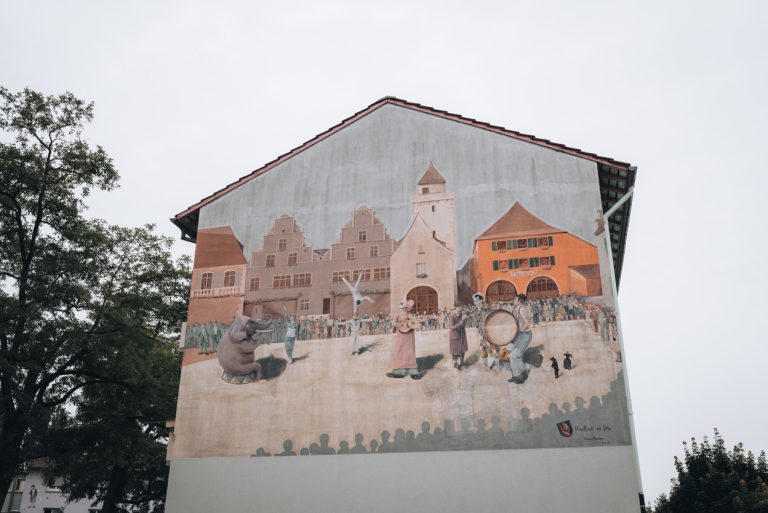
Mulhouse has embraced the vibrant and dynamic world of street art. So much so that it has transformed its urban landscape into an open-air gallery.
And it’s not just about aesthetics.
This flourishing movement fosters community engagement and sparks conversations.
As you stroll through the city, you’ll see striking murals everywhere.
My favorites were those found at the corner of Boulevard des Alliés and Rue de la Mutualité. I was walking by and a resident showed me these hidden works of art, so you won’t find them listed in any guidebook.
But the most well-known spot for street art is the M.U.R. (Modulable, Urbain, Réactif).
This innovative approach to urban beautification has attracted artists from around the globe. It’s a constantly changing canvas that showcases new pieces every month.
4. Con: Competition from Nearby Cities
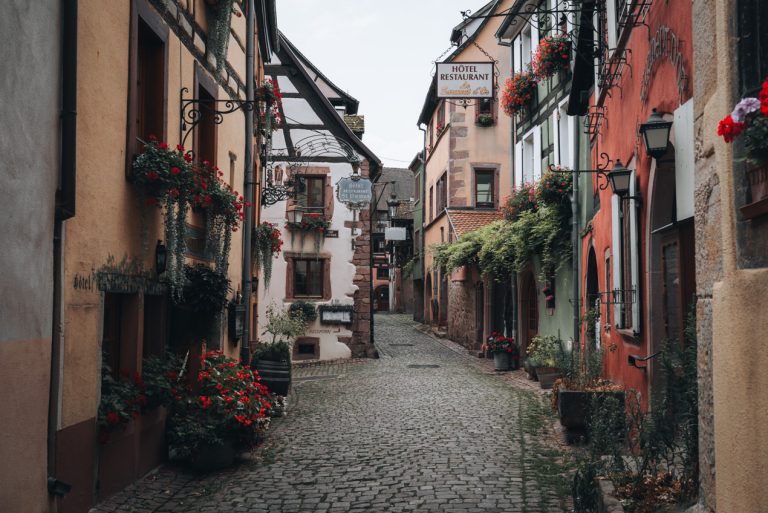
Alsace is known for its colorful half-timbered houses and quaint villages.
That’s what most tourists want to see when they visit.
So, neighboring towns like Colmar, Eguisheim, Riquewihr, and Strasbourg attract the most attention.
And, since Mulhouse doesn’t really have a ton of colorful buildings and almost no half-timbered houses, it often gets overlooked.
This can be seen as a disadvantage for the city, but it also means that Mulhouse remains relatively untouched by mass tourism.
5. Pro: Beautiful Historic Center

The most charming part of Mulhouse is undoubtedly its historic center, Place de la Réunion.
It’s a delightful mix of beautiful architecture, inviting squares, and quaint cafés.
Here you’ll find the beautiful 16th-century Town Hall. It’s adorned with vibrant frescoes depicting scenes from the Old and New Testaments.
This square also hosts a lively market and is home to the Temple Saint-Étienne.
6. Pro: Ville d’Art et d’Histoire

The title “Ville d’Art et d’Histoire” (City of Art and History) is a prestigious label in France. It’s awarded to cities that are committed to promoting their historical heritage.
Mulhouse has proudly held this title since 2008.
In short, it’s a place with an exceptional legacy that is worth exploring. From its historical monuments to its museums, each tells a fascinating story about its past.
One example is the Tour du Bollwerk. It was built in the 14th century and, today, it’s one of the last remaining sections of the city’s former fortifications.
7. Con: Weather
The weather in Mulhouse isn’t the best. But it isn’t much different than the rest of Alsace.
Summers are hot and humid, and winters are cold and gray.
It’s not to say that the weather is bad every day, but it is worth checking before your visit. And if you do happen to be visiting on a rainy day.
There are plenty of indoor activities and museums to explore, as I mentioned earlier.
8. Pro: Close to Other Attractions

What makes Mulhouse so attractive is its convenient location. The train station serves as a major transportation hub for this part of France.
The most popular nearby city is Colmar. Often referred to as ‘Little Venice’, it’s one of the most beautiful towns in the region. And its colorful half-timbered houses are second to none.
You can visit Colmar as a day trip from Mulhouse or vice versa; both are easily doable.
Further north is Strasbourg.
It’s both the capital of Alsace and one of the four capitals of Europe. Then, there is the Notre Dame Cathedral and the picturesque neighborhood, La Petite France.
You can even visit Mulhouse if you’re on your way to Lyon, Dijon, or Basel (Switzerland). That’s how well-connected this city is.
9. Con: Lack of Iconic Landmarks

Compared to Strasbourg, Colmar, or even Sélestat, Mulhouse doesn’t have any world-renowned landmarks or monuments.
There are a few important sites like the Tour du Bollwerk, the Hôtel de Ville, and the Temple Saint-Étienne.
Unfortunately, they don’t compare to Strasbourg’s Notre Dame Cathedral, the Humanist Library in Sélestat, or the Château du Haut-Kœnigsbourg.
10. Pro: Easy to Get To and Get Around
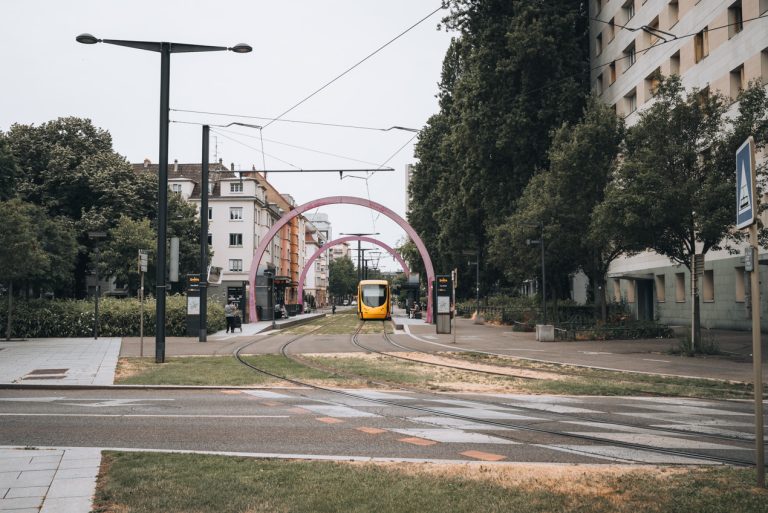
Thanks to its strategic location, Mulhouse is reachable from several major European cities.
Not only that, but it has a well-served international airport, EuroAirport Basel-Mulhouse-Freiburg.
It’s a 30-minute drive (or a 20-minute train ride) from Basel (Switzerland) and less than an hour by train from Strasbourg.
Helpful Tip: Mulhouse is one of the major transportation hubs for Alsace.
Mulhouse’s local transport network is commendable too. The tram services are efficient, frequent, and cover most parts of the city, making it easy to get around.
11. Con: Industrial Reputation
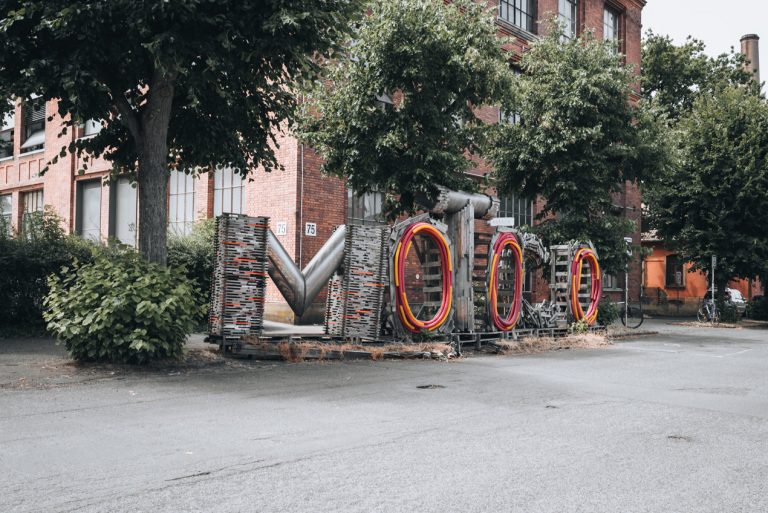
Over the years, Mulhouse has struggled with its industrial reputation.
Known as a manufacturing hub for textiles and heavy machinery, the city experienced a decline in these industries in the latter half of the 20th century.
However, Mulhouse has made great efforts to revitalize itself and diversify its economy.
It has also converted old factories into cultural spaces, like the Motoco.
Unfortunately, several areas of the city are still run-down and in need of revitalization.
12. Pro: Parks and Gardens

Mulhouse is home to several parks and gardens where you can enjoy the outdoors without leaving the city.
The crown jewel among them is the Parc Zoologique and Botanique de Mulhouse. It’s home to all kinds of animals and plants, making it a lively exploration of biodiversity.
Then, there’s the Parc Salvator, a little oasis in the heart of the city, perfect for a stroll or a picnic.
But my favorite was Parc du Belvédère.
It’s famed for the Tour du Belvédère, a 20-meter-high (65-foot-high) tower that looks out over the city.
And on a clear day, you can see as far as the Vosges mountains. My legs trembled on the way to the top, but once I saw the view, I forgot all about my vertigo (well, kind of).
13. Pro: Festivals
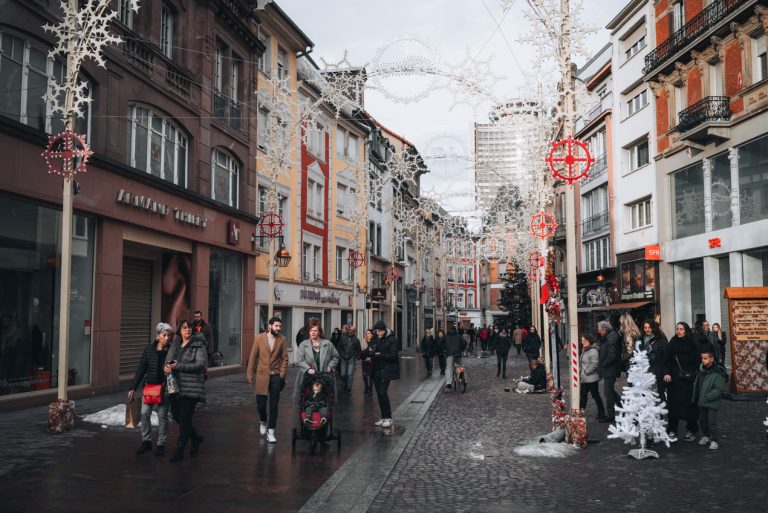
Throughout the year, Mulhouse plays host to quite a few festivals.
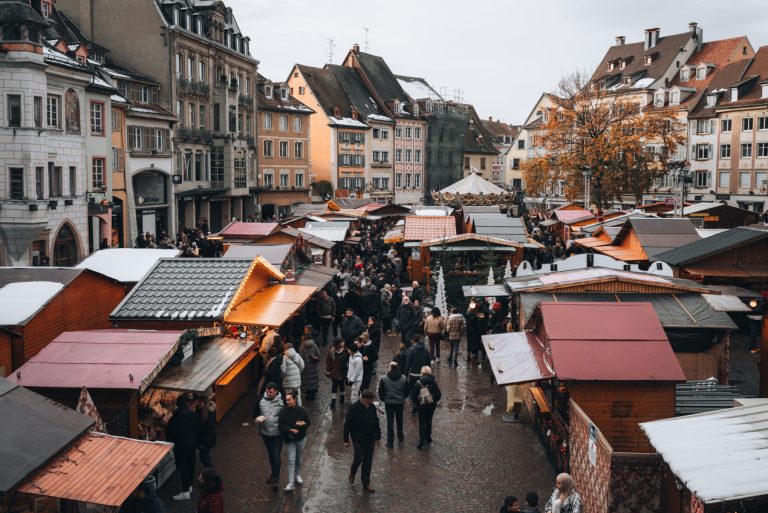
The most famous among them is the Marché de Noël or the Christmas market. Every year at the end of November, the center of Mulhouse transforms into a little winter wonderland with decorations and wooden chalets.
Then, there is the MÉTÉO – Mulhouse Music Festival. This atypical music festival has been a staple of the town since 1983. And every year at the end of August, it showcases an eclectic program dedicated to young artists.
If you’re looking for cultural events, evening shows focused on cinema and music are held every Thursday in Salvator Park. Dates run from mid-July to mid-August.
14. Con: Short Stay Destination
While Mulhouse does have several attractions to see, it’s mostly a short-stay destination.
I have visited mostly on day trips from Strasbourg and Colmar. And I have never felt that I needed more time.
Most of the main sites are within walking distance of the train station, and the few attractions that are outside the center are accessible by public transport.
It’s also not a good base for exploring the northern sections of the Alsace Wine Route.
You can use it for day trips to the towns in southern Alsace, but other cities, such as Colmar and Strasbourg, also work.
(And, for me, both of those towns have more amenities for tourists than Mulhouse.)
15. Pro: Affordable

For being the second-largest city in Alsace, Mulhouse is surprisingly affordable.
Accommodation is generally less expensive than that in other Alsatian cities.
You can find a wide range of options from budget hostels to mid-range hotels that offer excellent value for money.
And, when it comes to dining, tons of good restaurants won’t leave a hole in your pocket.
But the best thing is the number of free or low-cost activities.
Many of the museums, like the Musée des Beaux-Arts, are free. Additionally, if you visit the Cité du Train – Patrimoine SNCF and the Electropolis Museum, a discounted ticket is available for both.
Conclusion
There’s no denying that Mulhouse is an underrated city.
However, it’s not a destination for every kind of traveler.
It’s perfect for those who have a day to spare or want to get off the beaten path. And, while it does have some amazing attractions, it’s not as beautiful as other villages in the area.
I recommend planning a day trip from Colmar, Sélestat, or Strasbourg.
Read More Articles
I hope you enjoyed my post and found it useful. Here are some other articles that I think you might find interesting.
- 3 Days in Strasbourg: The Perfect Itinerary (from a Local)
- 15 Amazing Things to Do in Eguisheim, France
- Is Colmar Worth Visiting? 19 Reasons Why You Should!
