Mulhouse might not be at the top of every travel wish list, but after living in the capital of Alsace since 2019 and making countless trips here, it has become one of my favorite cities to explore.
Every visit brings something new—an unexpected exhibition at one of its museums, the yearly Christmas cloth for the Christmas market, or a quiet moment in a hidden square.
Over the years, I’ve wandered its colorful streets, marveled at its industrial heritage, and sampled more tartes flambées than I’d like to admit.
In this guide, I’ll share my top picks for things to do in Mulhouse. These are the experiences that have made the city special for me, and I hope they’ll inspire your own discoveries.
Please note: This post contains affiliate links, meaning I may earn a commission if you make a purchase by clicking on a link (at no extra cost to you). Privacy Policy.
1. Visit a Museum
I’ve visited a lot of towns in Alsace, and if there is a museum in the area, I’ll stop by.
Mulhouse is no exception – in fact, it may have the most diverse and interesting museums of any town I’ve visited in the region.
It’s the main reason why I recommend it as a must-visit destination.
Below is a list of the museums that I recommend visiting:
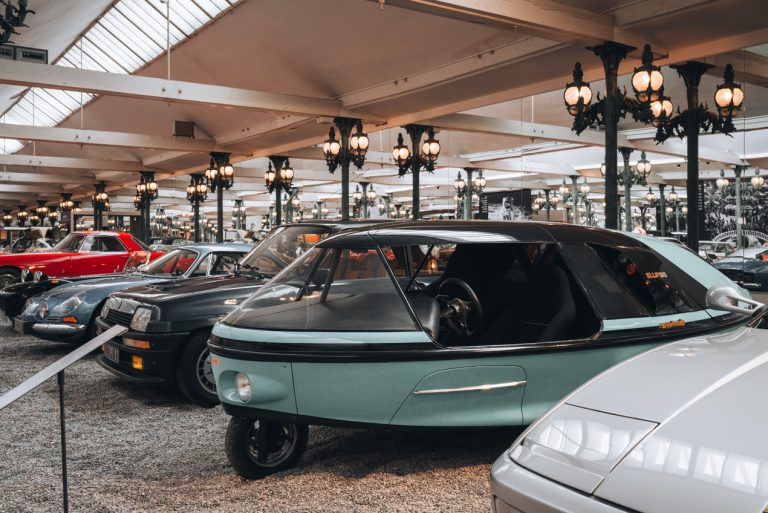
- Musée National de l’Automobile: This museum has over 400 automobiles on display. There are quirky futuristic cars, old taxi cabs, speed racers, and more. They are arranged by the year they were manufactured, allowing you to see the evolution of cars.
- Cité du Train – Patrimoine SNCF: Here, you can see the evolution of trains and even walk through many of the passenger cars. I loved touring the older models and seeing what train travel looked like decades ago.
- Musée de l’Impression sur Étoffes: This museum showcases Mulhouse’s rich textile printing history through artifacts, machinery, and exhibits.
- Electropolis Museum: Here you can learn about the history of electricity with interactive exhibits and hands-on experiments. It’s a ton of fun, especially for kids.
- Musée des Beaux-Arts: This is Mulhouse’s fine arts museum. It features French artists, primarily from Alsace, from the mid-19th to mid-20th centuries.
- Musée Historique de Mulhouse: Here you’ll learn about the history of Mulhouse and Alsace. It’s one of the best history museums in the region, in my opinion.
2. Visit the Zoological and Botanical Park of Mulhouse
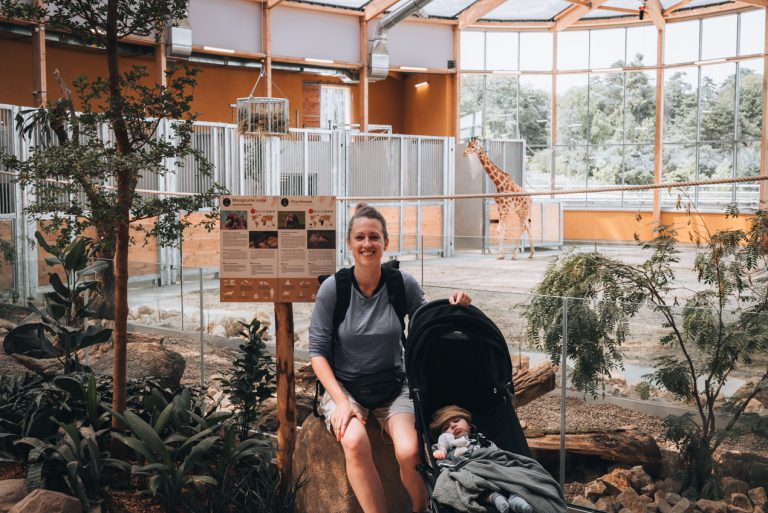
This 25-hectare park is home to over 900 animals from around the world, including tropical birds, giraffes, polar bears, and more.
They even have a children’s zoo where you can pet farm animals such as goats, rabbits, and donkeys.
Then, there are educational activities and presentations for both children and adults. You’ll learn about the animals and how they are cared for.
In general, the park is spacious, clean, and easy to navigate. When I visited, there were a lot of people, but it didn’t feel crowded, and I didn’t have to wait to see any animals.
My only recommendation would be to purchase your tickets online before arriving.
3. Check Out the Temple Saint-Étienne
The original church was consecrated in 1186 and was of the Catholic faith. It was converted to Protestantism in 1523 when the city also changed allegiance.
The church you see today was built in the mid-19th century and is now the tallest Protestant building in the country. It’s also considered the main cathedral in Mulhouse.
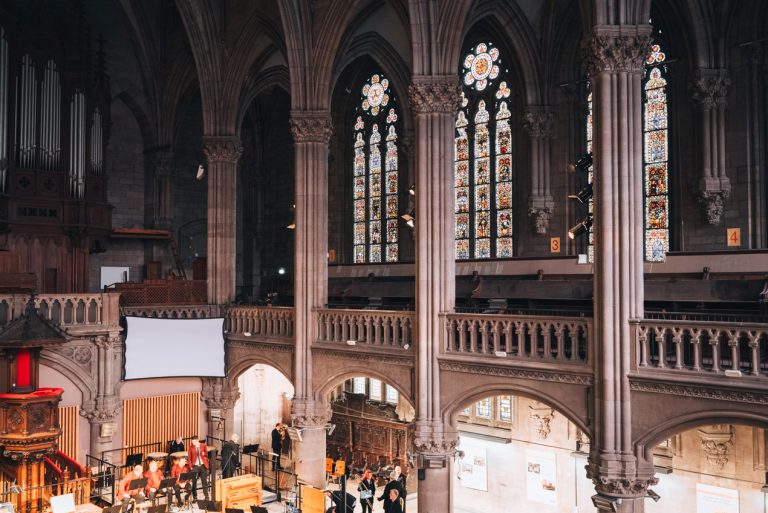
While the outside of the church is no doubt impressive, my favorite feature was the stained-glass windows.
When you enter the church, there is a set of stairs that leads to the choir. From here, you can walk along a small platform and check out each window up close.
4. Hang out in Place de la Réunion
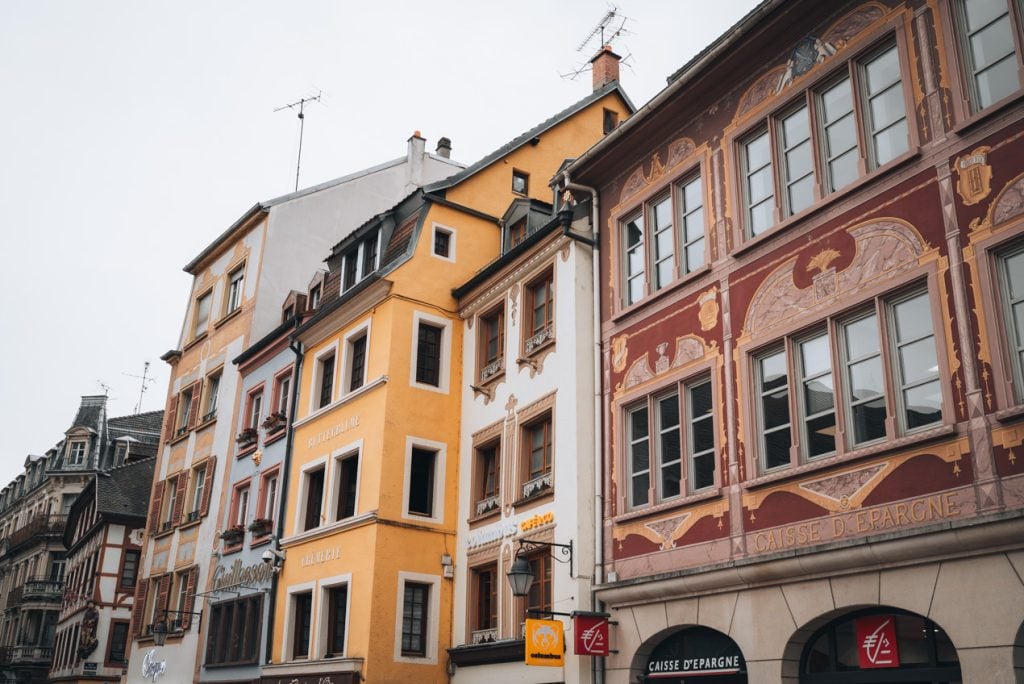
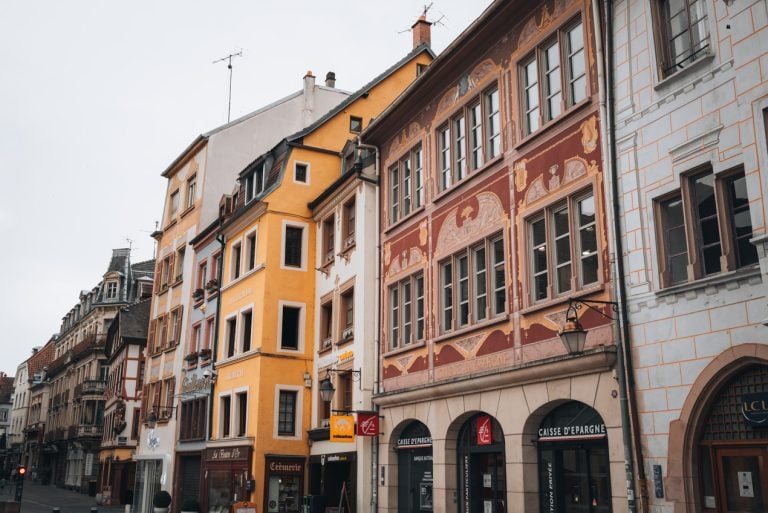
Place de la Réunion is one of the most beautiful squares in Mulhouse. It’s named after Mulhouse’s reunion with the French Republic in 1798.
Here you’ll find colorful buildings, cafés, and shops.
There’s also the 16th-century Town Hall and the Temple Saint-Étienne. Then, every December, it hosts one of the best Christmas markets in the region.
5. Take a Photo of the Hôtel de Ville
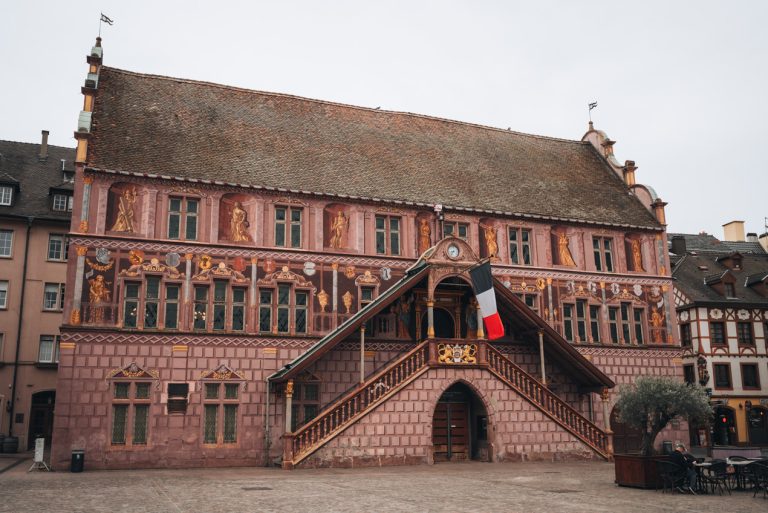
I know that I have already mentioned Place de la Réunion and the beautiful Town Hall located there, but it’s worth mentioning again.
The Hôtel de Ville is simply stunning. If you take one photo during your visit to Alsace, this would be the building to capture.
It’s painted in a trompe-l’œil style, which is a highly realistic optical illusion. The statues look so lifelike. It’s something you have to see for yourself.
6. Admire the Street Art
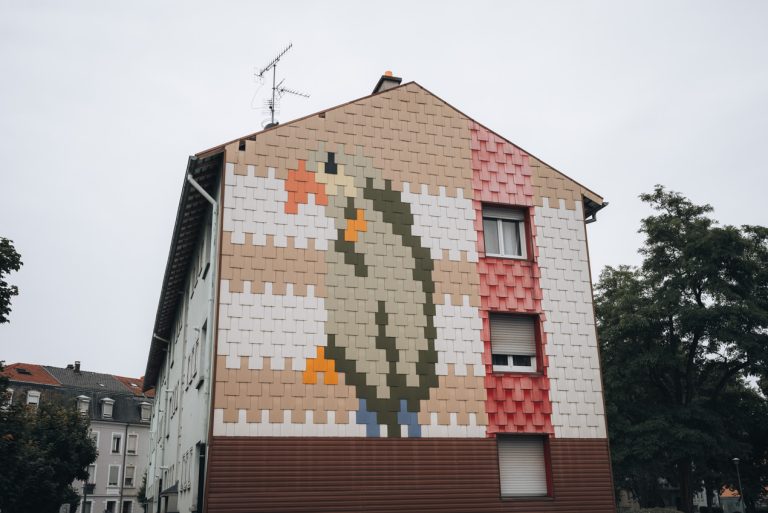
While it might not be the most obvious place for street art, Mulhouse has a thriving street art scene. You can find murals all around the city.
If I had to pick my favorites, they would be the murals at the corner of Boulevard des Alliés and Rue de la Mutualité.
A resident saw me taking photos and suggested I check out the ones along these two streets. It was out of the main tourist area, but I was glad I stopped by.
The most well-known area for street art is, however, Rue de la Moselle.
Here you’ll find the M.U.R (Modulable, Urbain, Réactif). The artwork on display changes monthly and features a variety of artists and styles.
7. Climb the Tour du Belvédère
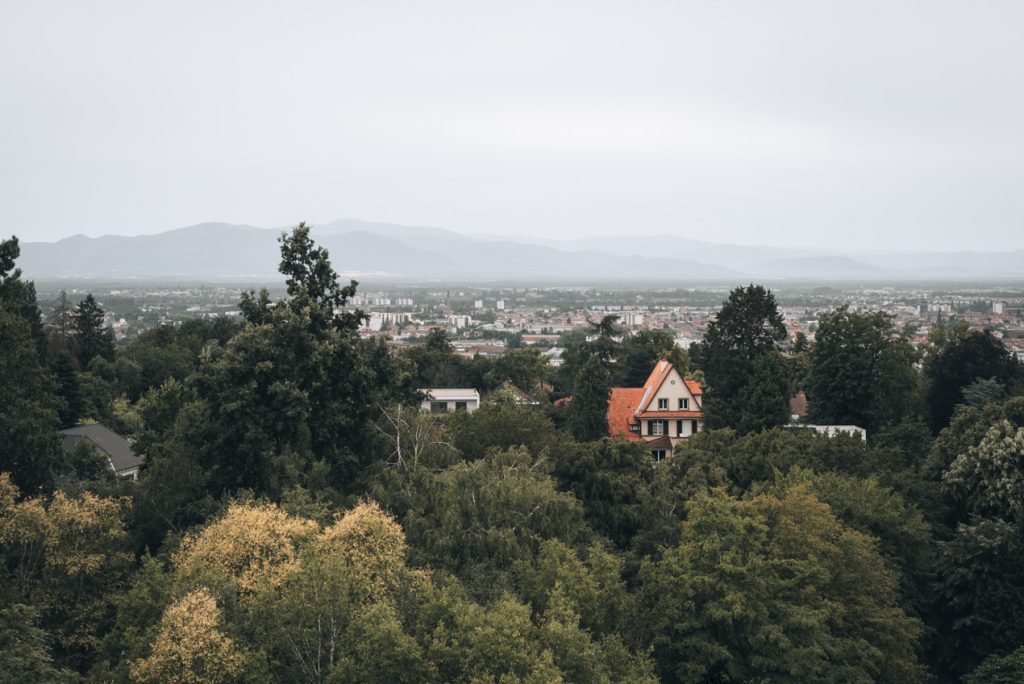
The Tour du Belvédère is a 20-meter-high (65-foot-high) metal tower that overlooks the city.
Compared to the activities I’ve done in Alsace, climbing this tower was one of the best.
When I did it, I could see as far as the Vosges mountains, so if you can, I recommend going on a clear day.
Be aware that the steps and platforms are see-through. My legs were shaky all the way up and down. But the views were worth it.
8. Go Shopping
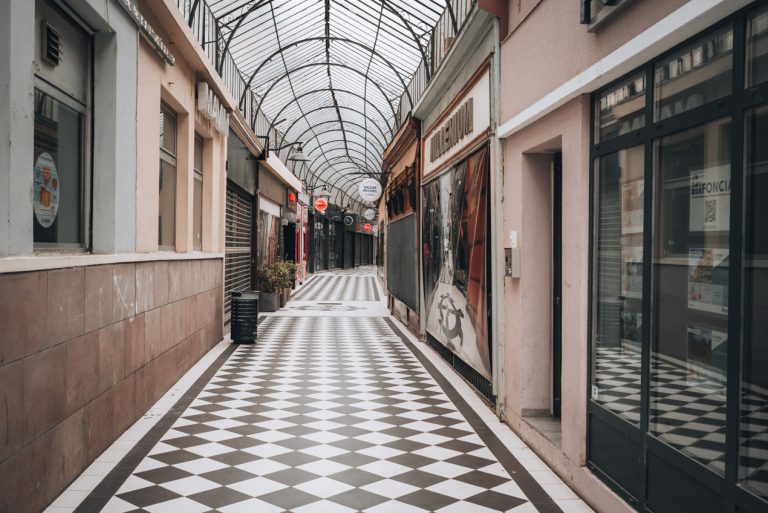
As the second-largest city in Alsace, Mulhouse has a big shopping scene.
The must-visit spots for shopping are Rue du Sauvage, Rue du Werkhof, Rue des Tanneurs, and Passage du Théatre. Here you can find everything from designer clothing to artisanal goods and souvenirs.
Then, every Tuesday, Thursday, and Saturday from 6:00 am to 5:00 pm, Mulhouse hosts one of the largest covered markets – Marché du Canal Couvert.
You’ll find vendors selling fresh produce, local treats, handmade crafts, and more.
9. Relax in a Park
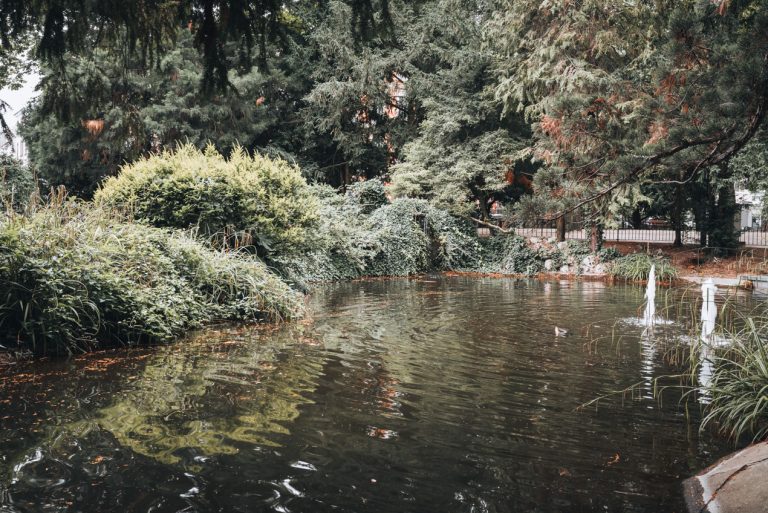
Mulhouse doesn’t have a ton of green space, but there are a few parks worth checking out.
- Parc Salvator: This park is close to downtown Mulhouse. There are walking paths and lots of green space to enjoy.
- Parc Steinbach: Another park near the center. Here is where you’ll find locals hanging out after work or school. There are benches, a playground, and a book exchange.
- Parc du Belvédère: This park is where you’ll find the Tour du Belvédère. There’s also a playground and walking paths. It’s one of the quieter places in Mulhouse.
- Parc Zoologique et Botanique de Mulhouse: This zoo features numerous parks and picnic areas, and it never feels overcrowded.
10. Explore Southern Alsace
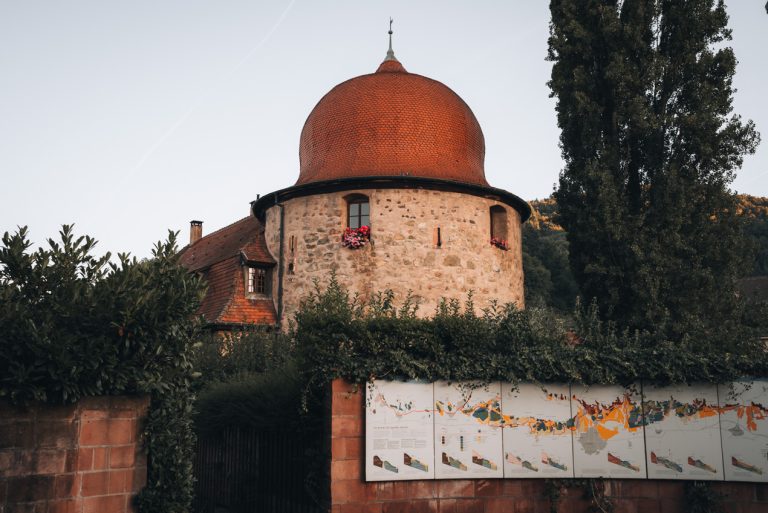
Since moving to the capital of the region in 2019, I’ve used Mulhouse as a base to explore the small towns around it. It’s like a gateway to southern Alsace.
Here are a couple of recommendations:
- Thann: A small town with a few museums and a castle (Château d’Engelbourg) with an incredible viewpoint. It’s also the southern end of the Alsace Wine Route.
- Kurth: This is one of my favorite towns in southern Alsace. The town itself doesn’t have much, but the Château de Wildenstein and the surrounding area are beautiful. There are hiking trails, and the Lac de Kruth-Wildenstein is stunning.
- Écomusée d’Alsace: This outdoor museum showcases Alsatian houses, workshops, bakeries, etc., from the 20th century. They also have demonstrations and events throughout the day. Most of these are in French, but all the information boards are in French, English, and German.
11. Attend a Festival or Event
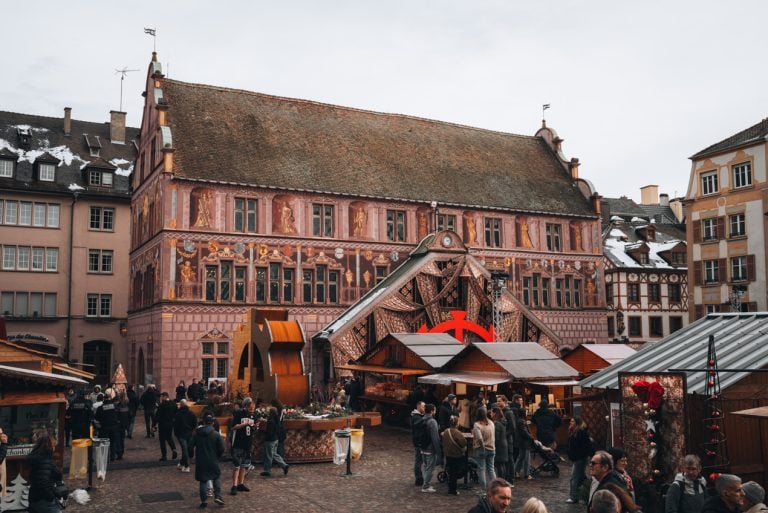
Mulhouse has several festivals throughout the year that are worth checking out.
The most well-known is the Christmas market. Its theme is focused on the Christmas cloth, which has a new design every year. It represents the textile industry that was once the city’s main economic activity.
Another popular event is the MÉTÉO – Mulhouse Music Festival. At the end of August, Mulhouse uses this festival to showcase young artists. It’s been around since 1983 and is always a success.
Then, every Thursday from mid-July to mid-August, Salvator Park hosts an outdoor movie night. It’s a fun, family-friendly event.
Where to Stay
Mulhouse has a wide selection of hotels. Below is a list of the places I recommend:
- Gîte des Victoires: This hotel offers fully equipped apartments. The apartments are immaculate, and the host is friendly. It’s also located right downtown.
- SPA de charme 6 pers avec Jacuzzi & Sauna privatifs au coeur de ville – Esprit Coco: If you want to add a little luxury to your trip this is the place to go. It’s downtown, so you’ll be close to everything. They also have a jacuzzi and a sauna, perfect if you plan on hiking.
- Berti Hotel – Mulhouse Centre Gare: Next to Mulhouse’s train station, this contemporary-style hotel offers comfortable rooms, a good breakfast, and helpful staff.
Where to Eat
Mulhouse has a variety of restaurants. There are traditional Alsatian restaurants as well as international options. Below are the places I recommend:
- Restaurant Zum Sauwadala: This is the best traditional Alsatian restaurant in town. If you’re looking to try local food, this is the place to go.
- Le Faubourg: A French restaurant with a beautiful interior. It’s designed to resemble the streets of Paris, and the food is delicious. The menu changes regularly and is dependent on local seasonal ingredients.
- Restaurant El Perú Mulhouse: This Peruvian restaurant is one of the best in town. The food is authentic, and the decorations make you feel like you’re in the Andes. The atmosphere is also welcoming and friendly.
Conclusion
As the second-largest city in Alsace, Mulhouse has a lot to offer in terms of activities.
My favorite thing to do here is visit the museums. There is a wide variety, and each one offers a different perspective on the history and culture of the city.
Then, there is the Christmas market. It’s one of the best in the region, in my opinion. The theme is unique and the atmosphere is authentic.
Overall, Mulhouse is a great destination for an off-the-beaten-path experience. And, since it’s a main transportation hub in the region, it’s an easy stopover if you’re going to more popular cities like Colmar and Strasbourg.
Read More Articles
I hope you enjoyed my post and found it useful. Here are some other articles that I think you might find interesting.
- Best Time to Visit Alsace, France (A Local’s Guide)
- Is Strasbourg Worth It? A Local’s Guide to the Pros and Cons
- A Local’s Guide to Getting Around France without a Car
