When I first moved to France (10 years ago), my travel list was dominated by big-name cities.
I had overlooked many of the country’s hidden gems.
One of those places was Reims. I knew it as the heart of the Champagne region, but I had heard different opinions on whether it was truly a must-see destination.
So, I decided to find out for myself and added it to my tour of eastern France.
What I discovered was a city full of history, Champagne houses, and renowned UNESCO World Heritage sites.
I’ve returned since that first visit and can now confidently say that Reims is worth it.
In this guide, I’ll share the pros and cons of visiting Reims to help you decide if it’s the right addition to your itinerary.

Please note: This post contains affiliate links, meaning I may earn a commission if you make a purchase by clicking on a link (at no extra cost to you). Privacy Policy.
Reims’ Secrets Uncovered
Remove the stress of planning your trip to Reims with my free PDF travel guide.

17 Pros and Cons of Visiting Reims
1. Pro: Champagne Capital

Reims is the heart of the Champagne region and is considered its unofficial capital.
Here you’ll find world-famous champagne houses like Veuve Clicquot, Taittinger, and Pommery.
You can explore many of the cellars and learn about the production process. It’s a chance to get a behind-the-scenes look at some of the most prestigious Champagne houses.
But my favorite part was the tasting. I enjoyed sampling the different types of Champagne and comparing them (Brut vs Extra Dry vs Dry).
My favorite tours were:
2. Con: Crowds at Champagne Houses
Since visiting Champagne houses is the must-do activity in Reims, tours and tastings fill up quickly.
During peak tourist season, you may find yourself surrounded by large groups of people, struggling to see or hear your guide.
And, if you don’t make a reservation in advance, you might end up missing out altogether, which almost happened to me on my first visit.
A few ways to avoid crowds during the peak seasons are to visit smaller, lesser-known Champagne houses or hire a private guide.
There are pros and cons to each, but they are both viable alternatives.
3. Pro: Close to Paris

While Reims does not have an airport, it’s still very easy to access, even without a car.
The nearest airports are those in Paris, Charles de Gaulle Airport and Orly Airport. Then, trains run regularly from Paris’ Gare de l’Est to Gare de Reims and take about 45 minutes.
You could also rent a car in Paris since it’s only 144 kilometers (89 miles) away. Even with traffic, the drive takes less than two hours.
Finally, if you want to visit Reims but don’t want the hassle of organizing your trip, there are several tours from Paris.
4. Con: Short Stay Destination
Reims is often a short-stay destination. When I visit, I make it a day trip from Strasbourg.
The city is small, and the main attractions are easy to visit in a day. Plus, I reserve Champagne tours in advance, so my day is very organized.
But that doesn’t mean it needs to be a short-stay destination for everyone.
Reims has a well-served train station and can be used as a base for exploring other towns in the region, like Épernay. You could even go as far as Verdun and Metz.
5. Pro: Stunning Cathedrals
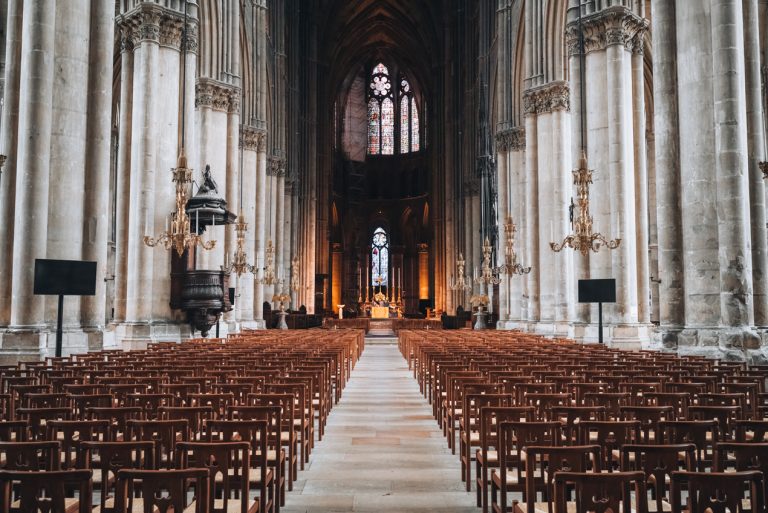

Reims has two very impressive cathedrals.
The first is the Notre-Dame de Reims. This UNESCO World Heritage Site is a masterpiece of Gothic architecture and is one of the most famous churches in the country.
In fact, in 498, King Clovis was baptized at the Reims Cathedral by the Bishop of Reims, Remi. And, from that moment on, every king of France was crowned here for a total of 33.
The second is the Basilique Saint-Remi. Here you’ll find stained-glass windows dating to the 12th century and the Musée Saint-Remi. It’s also where Saint-Remi was buried.
6. Con: Weather
Since Reims is in the northeastern part of France, the weather can be unpredictable, especially in winter.
It can get quite cold and rainy, which may not be ideal for outdoor activities.
Helpful Tip: The summer months are much nicer, and the weather is usually warm and pleasant.
But don’t let the potential for bad weather discourage you from visiting. The city has plenty of indoor attractions, such as museums, churches, and historical sites.
If you do happen to visit during the colder months, make sure to wear a warm jacket and bring an umbrella.
7. Pro: Lots of History

The history of Reims goes back thousands of years to the time of the Romans. But its role in the history of Europe began in the 5th century.
It was here that the kings of France were crowned. The most significant of these was King Charles VII, who was crowned in the presence of Joan of Arc in 1429.
Fast forward to the First World War, where Reims withstood bombings for almost four years.
Then, during the Second World War, Reims was again demolished. It held off German forces until May 1945, when Germany surrendered.
Today, you can travel to each of these moments in history through monuments and museums.
Highlights include La Porte de Mars, the Cryptoportique, the Reims Cathedral, and the Musée de la Reddition.
8. Con: Limited Nightlife
Reims isn’t known for its nightlife scene, especially when compared to Paris. This can be a disadvantage if that is something you’re looking for.
Otherwise, you’ll find Reims to be a nice break from the busier cities that always seem to have something going on.
It also means that Reims is safe to explore at night, and you won’t have to worry about partygoers or loud music keeping you up.
9. Pro: It’s Walkable
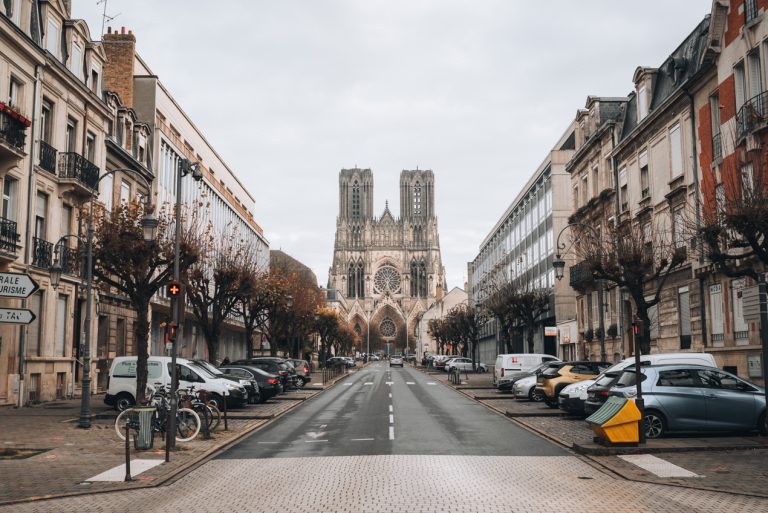
One thing I liked about Reims was that it was walkable.
Compared to cities like Paris, where sidewalks are narrow, Reims is the exact opposite.
Here, they are wide enough to fit more than one person, and crosswalks are well-marked, making it a very safe place to explore on foot.
Helpful Tip: If you have reduced mobility, Reims also has buses and trams available. Check out Grand Reims Mobilités for schedules and tickets.
Not only that, but most attractions are next to each other.
As an example, the Palais du Tau, the Reims Cathedral, and the Musée-Hôtel le Vergeur are within a five-minute walk of each other.
Helpful Tip: I recommend downloading Google Maps or Maps.me on your phone if it’s your first time visiting.
Reims’ Secrets Uncovered
Remove the stress of planning your trip to Reims with my free PDF travel guide.
10. Con: Limited Shopping Options

While there are charming boutiques, it’s not a major shopping destination. Most shops are small and specialize in local products, such as Champagne.
There is the Halles du Boulingrin. It’s an indoor market featuring fresh produce, meats, and cheeses, all of which come from local vendors.
But if you’re looking for high-end designer brands, Reims may not be the place to find them.
11. Pro: Affordable Luxury
Despite the number of lavish activities in Reims, it’s a surprisingly affordable place to visit.
From hotels to restaurants, there are plenty of options for those looking for an upscale vacation without breaking the bank.
As an example, many Champagne houses offer tastings and tours for under €30.
It includes a guided visit, a lesson on the different types of Champagne, and a tasting (usually three different varieties).
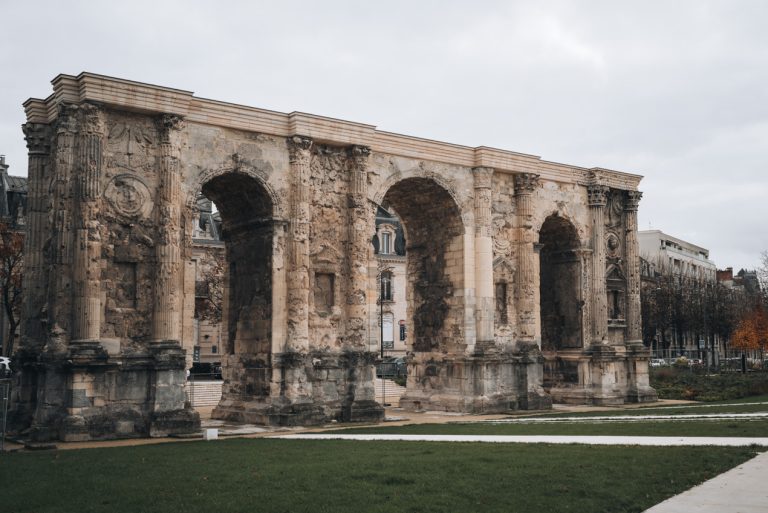
Several monuments, like the Porte de Mars and the Reims Cathedral, are also free to visit.
12. Con: Expensive Tastings
On the other hand, if you want to visit the more prestigious Champagne houses, be prepared to spend a bit more on tastings and tours.
These high-end experiences can cost upwards of €100 per person.
If you’re looking for an upscale tasting experience, it is worth the cost.
Some of the more expensive tastings are listed below:
13. Pro: Lots of Museums

I love museums, and the ones in Reims are some of the best in the country.
Below I’ve listed the best ones to visit:
Musée de la Reddition: This is the very site where Germany surrendered to the Allies in World War 2. It houses a wealth of artifacts, documents, and photographs that offer an inside look into this important moment.
Palais du Tau: This is where the banquets were held after the coronations. It’s a glimpse of the lavish lifestyle of French royalty from centuries ago.
Musée des Beaux-Arts: This museum houses paintings from the 16th century to the 20th century. Here you’ll find exhibits dedicated to European artists like Claude Monet and Pierre-Auguste Renoir.
Musée Historique Saint-Remi: Located in the Basilique Saint-Remi, this museum is most known for its art and archeological collections. But there are also several artifacts from Saint-Remi himself.
Musée-Hôtel le Vergeur: Once a hotel for wealthy merchants in the 13th century and later a private mansion owned by Nicolas Le Vergeur, it now houses a vast collection of art. The most impressive being Albrecht Dürer’s The Apocalypse and The Great Passion.
14. Con: Seasonal Closures
The only thing I don’t like about Reims is the seasonal closures (but this is true of most cities during the low season).
Some of the smaller museums and attractions may not be open during certain months, so it’s important to plan if you have specific places in mind that you want to visit.
But it’s not only reduced opening hours, but renovations are also often done during the low season. This can be a major disappointment if you were looking forward to seeing a particular exhibit or artwork.
So, make sure to do your research beforehand and check for any closures or renovations that may affect your trip.
Helpful Tip: I recommend checking out Reim’s official museum website for opening hours.
15. Pro: Home to the Biscuit Fossier Factory

Biscuits Fossier is the oldest biscuit maker in France, and its factory is in Reims.
Founded in 1756, these elegant treats were served at the coronation ceremony of Louis XVI.
They later became the sole producer of biscuits for the king.
Today, you can tour their facilities and learn all about the history of these pink treats. At the end of the tour, you’ll even get to sample a few.
While their original recipe is the most famous, they have several other flavors. I tried quite a few, and they were all delicious.
Helpful Tip: They also have a boutique in Reims. The address is 25 cours Jean-Baptiste Langlet.
16. Con: Language Barrier
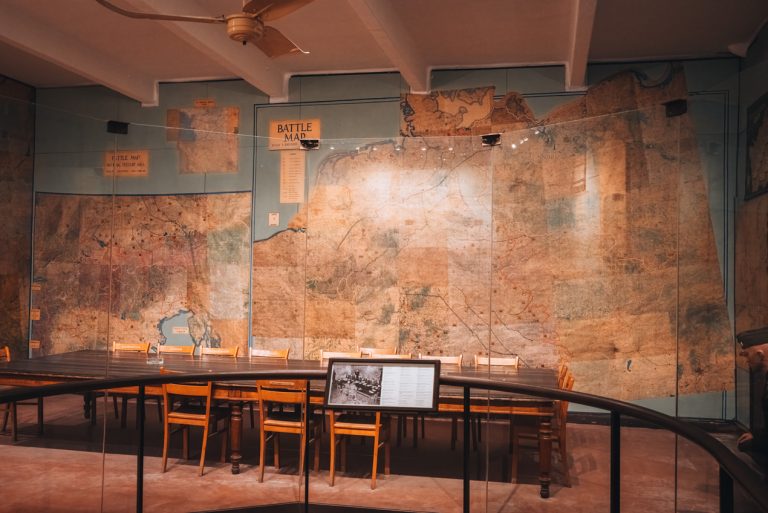
While many locals speak English, you’ll find that museums, wine tastings, and other attractions are mostly in French.
For museums, like the Musée de la Reddition, explanations are in French and English.
But for some Champagne houses, you’ll need a special tour if you want it in English, and those sell out much faster than the ones in French, so do your research beforehand.
17. Pro: Less Crowded
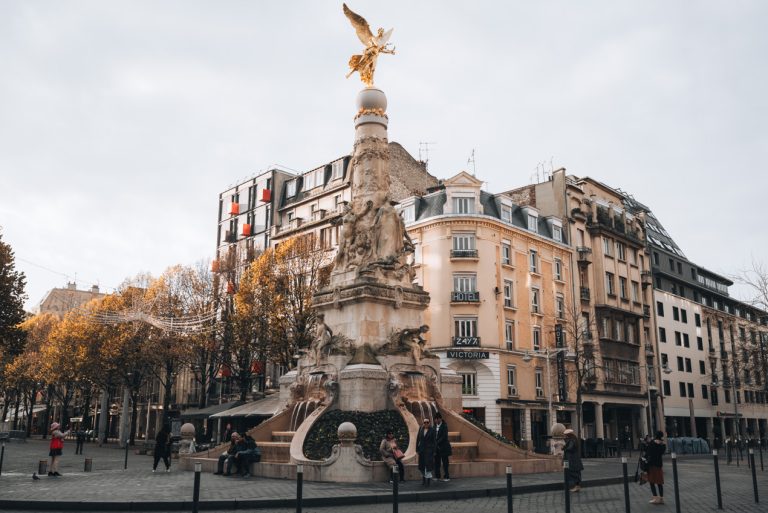
Compared to Paris or other major French cities, Reims feels less touristy and more relaxed.
There’s still plenty to see and do, but without the overwhelming crowds.
You can stroll through the streets without jostling for space with other tourists or enjoy a coffee or glass of Champagne without feeling rushed.
Reims’ Secrets Uncovered
Remove the stress of planning your trip to Reims with my free PDF travel guide.
Conclusion
Reims is a stunningly beautiful city with a ton of things to see and do. Some of my favorite sites are the Reims Cathedral and the Palais du Tau.
Of course, the Musée de la Reddition needs to be mentioned.
It’s a small town that doesn’t have the glamour of Paris, but that’s what I love about Reims.
There is history and culture around every corner, and you can see it all without having to fight through the crowds.
Now that you know more about Reims, why not check if Verdun is worth it?
Read More Articles
I hope you enjoyed my post and found it useful. Here are some other articles that I think you might find interesting.
- The Perfect Paris to Lyon Day Trip Itinerary (by a Local)
- The Perfect Paris to Amiens Day Trip Itinerary
- The Perfect Paris to Lille Day Trip (Local’s Guide)
