To me, Dijon is like an old friend—familiar, comforting, and endlessly fascinating. It’s not flashy or loud, and it doesn’t try to compete with the star power of Paris.
Instead, it quietly wins you over with captivating history, beautiful architecture, and engaging museums.
After nearly a decade of living in France, Dijon is one of those cities that keeps pulling me back time and time again.
In this article, I’m sharing some of my favorite photos of Dijon—moments that have inspired me and, I hope, will do the same for you too.
Free Printable Guide
Sign up for a free printable version of this guide. It’s 20 pages of tips, sample itineraries, and more.
1. Place de la Libération
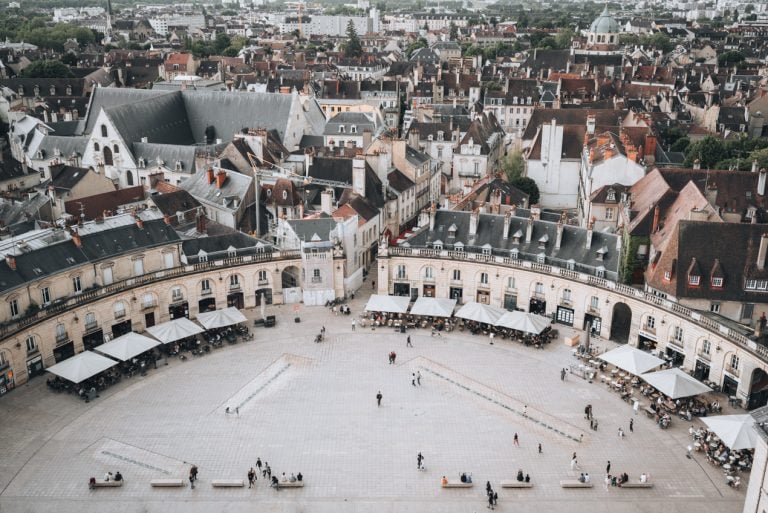
Place de la Libération was built in the 17th century, and today, it’s one of the most stunning squares in the Bourgogne-Franche-Comté region.
And what I love the most about it is the architecture surrounding the square.
On one side, there is the Palais des Ducs et des Etats de Bourgogne, and on the other, a series of white stone buildings.
The photo I took above was from the top of the Philippe le Bon tower, and, for a view like this, it’s one of the best reasons to visit.
2. Hôtel de Vogüé
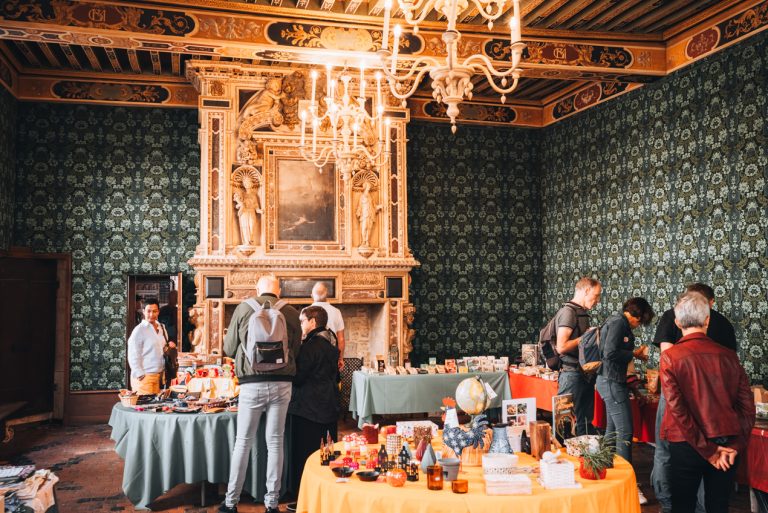
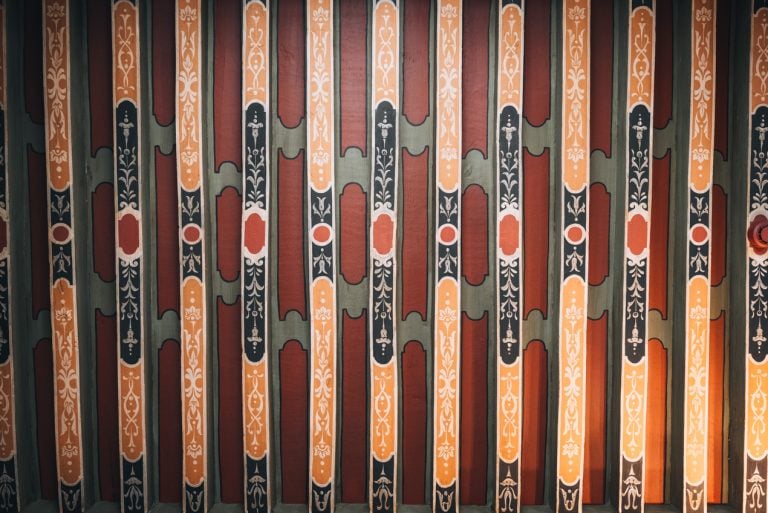
Hôtel de Vogüé was built in the early 17th century and was later purchased by the city of Dijon.
It’s most known for its refined decorations and elaborate ceiling, which you can see in the photos above.
3. Carmelites Chapel of Dijon
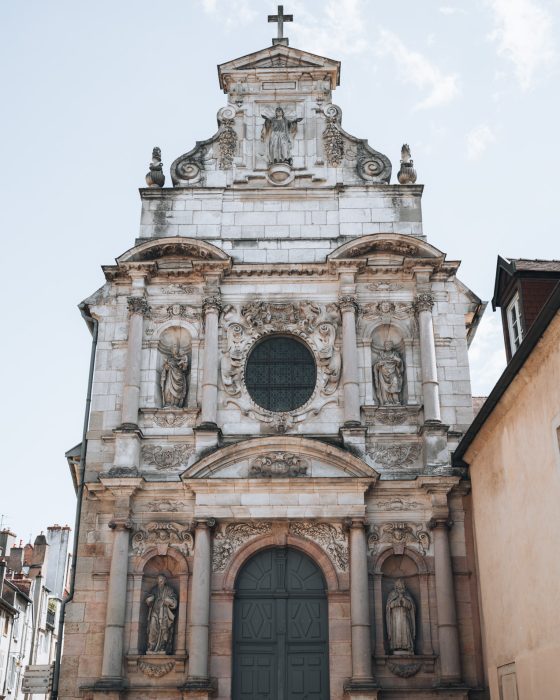
The Carmelite Chapel was once a chapel associated with the Carmelite convent of Dijon.
It was built in the early 17th century, and the chapel you see today is all that remains.
I think this is one of the most beautiful buildings in Dijon.
It’s also off the main tourist trail, so you won’t find any crowds here.
Helpful Tip: If you walk the Zola Circuit of the Dijon Owl Trail, you’ll pass the Carmelite Chapel.
4. La Poste Dijon Grangier
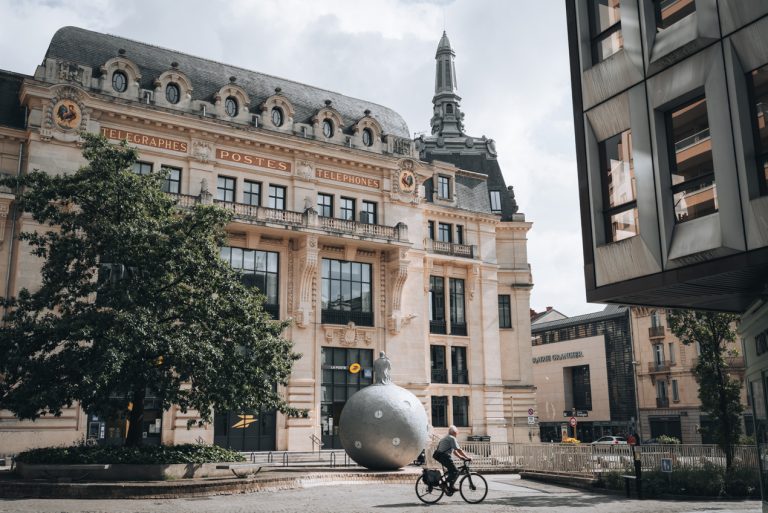
La Poste Dijon Grangier might seem like just an ordinary post office, but there is a little more to it.
First, it sits in a beautiful square that was named after a couple (Henri and Sophie Grangier) who donated their fortune to Dijon.
Second, it’s one of the most stunning examples of Art Nouveau architecture in the city.
The first time I came across it was when I walked Dijon’s Owl Trail. (It’s the fourth stop.)
5. 9-11 Rue Jean-Jacques Rousseau
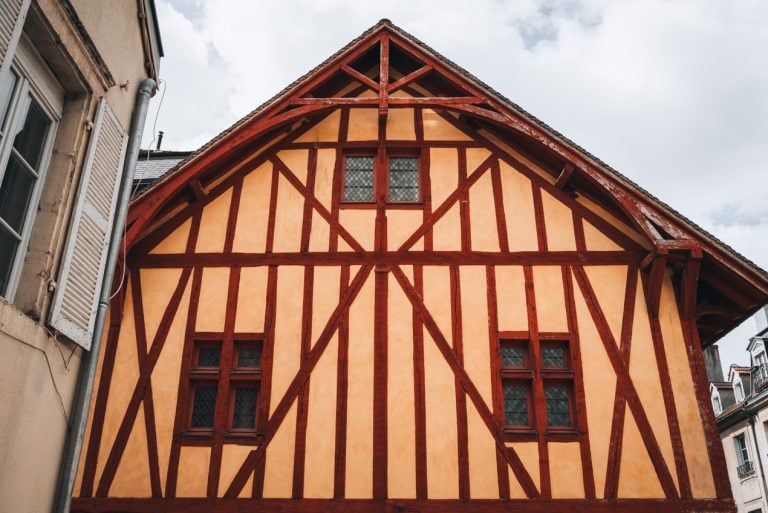
Dijon has quite a few half-timbered houses, nothing like the ones you’d find in Alsace, but still impressive.
The photo above is of a half-timbered house from the 15th century.
The dates were listed on the building, and other than that, there wasn’t much about its history.
6. Museum of Burgundian Life
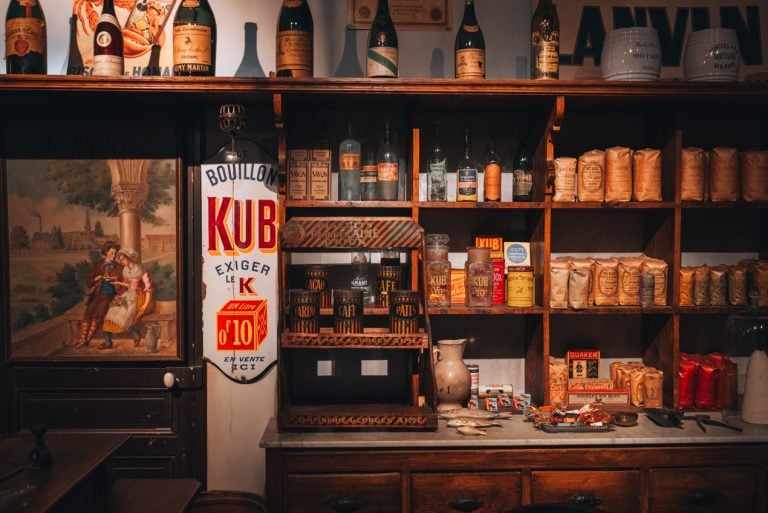
The Museum of Burgundian Life is my favorite museum in Dijon.
Helpful Tip: If you only have a single day in Dijon, I recommend visiting this museum first.
It showcases what life was like in Burgundy between the 19th and 20th centuries.
There are stores, houses, workshops, and even mannequins to give you an idea of the local culture.
The photo I took above was of a local grocery store.
7. Jardin Darcy
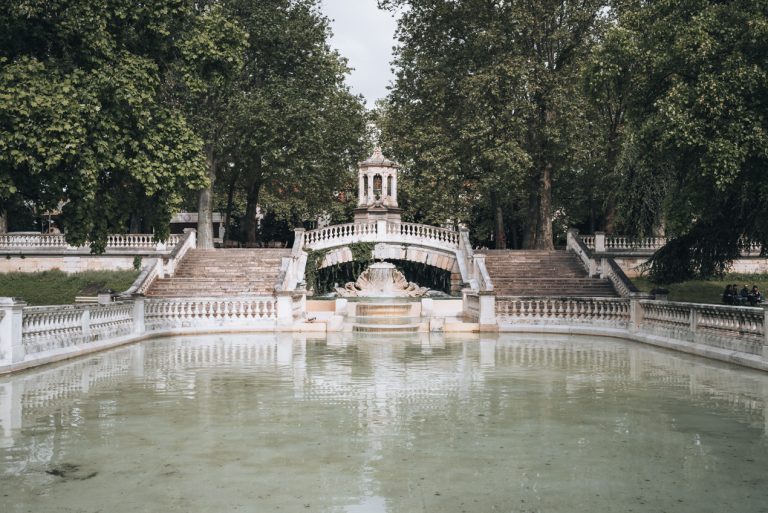
Jardin Darcy is always my first stop when I go to Dijon. It’s also the first stop on the Dijon Owl Trail.
It’s a quiet little garden with lots of trees, benches, and green space.
The photo I took above is my favorite view of the park.
8. View from the Philippe le Bon Tower
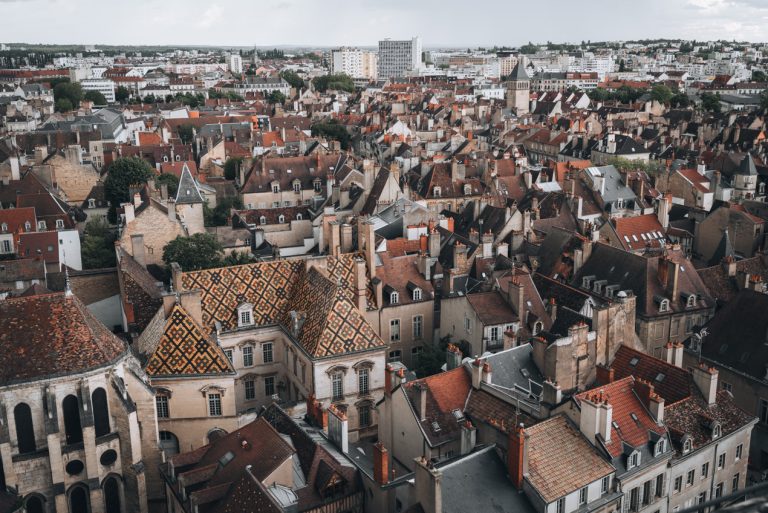
The Philippe le Bon Tower was built in the mid-15th century to showcase the success of Philippe le Bon.
Today, you can go to the top (only via a guided tour with the Tourist Office) for stunning views of the city.
This is easily one of my favorite attractions in Dijon.
Free Printable Guide
Sign up for a free printable version of this guide. It’s 20 pages of tips, sample itineraries, and more.
9. Maison Millière
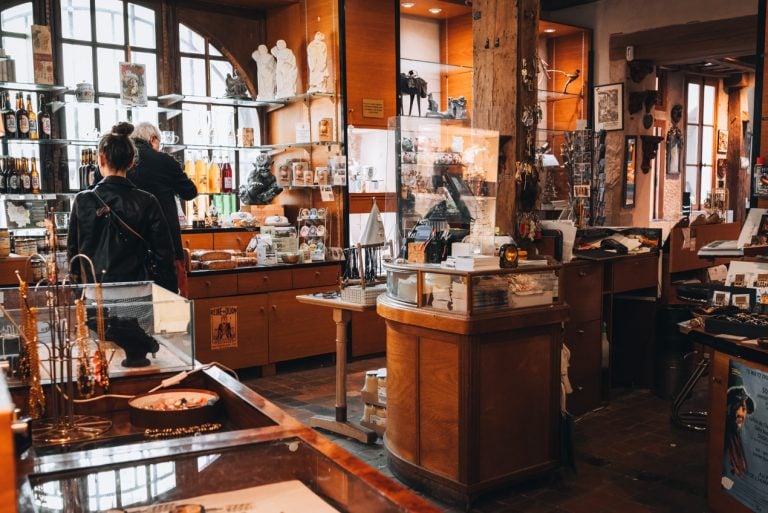
Maison Millière is a restaurant, a teahouse, and a boutique. It was built in the 15th century and still retains much of its charm.
My favorite part was the boutique (pictured above), where you can find a wide variety of locally crafted items.
10. Jardin Botanique de l’Arquebuse
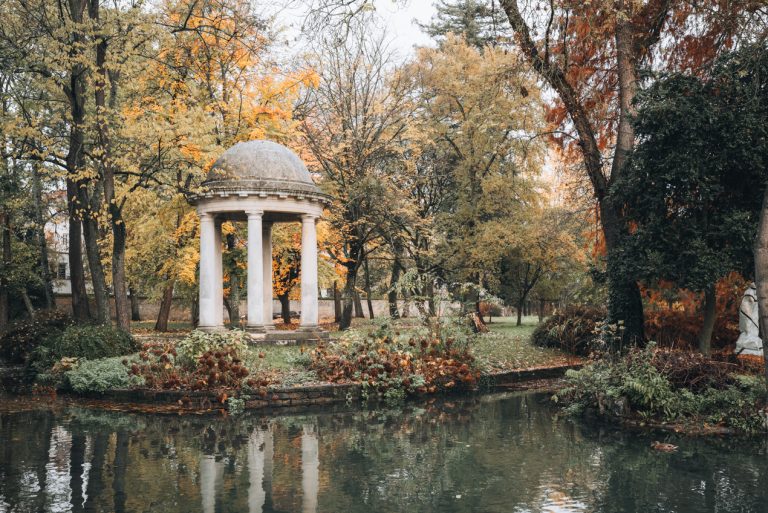
The Jardin Botanique de l’Arquebuse is yet another beautiful garden in Dijon. It’s near the train station, so you can stop by at either the start or the end of your visit.
I loved wandering around and taking photos of all the trees and plants. The photo above is from my first visit, and it’s my favorite so far.
Helpful Tip: Jardin Botanique de l’Arquebuse is also where you’ll find the Muséum d’Histoire Naturelle de Dijon and the Hubert Curien planetarium.
11. Rue Verrerie
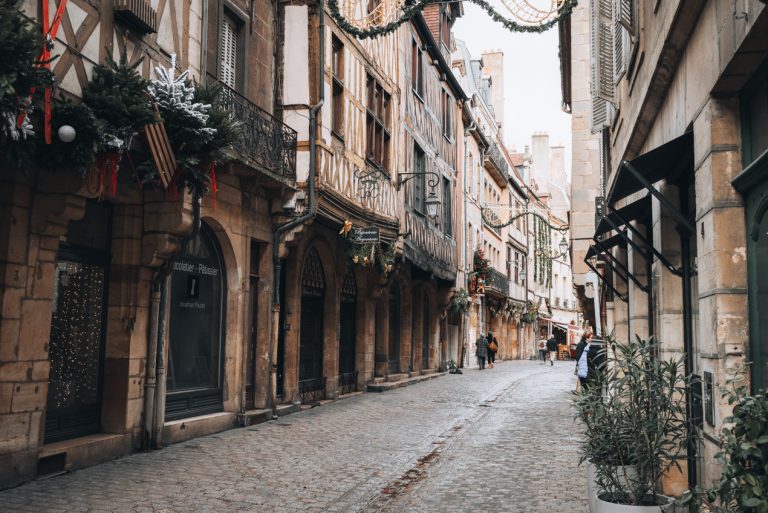
Rue Verrerie is one of the prettiest streets in Dijon, at least in my opinion. Its cobbled street is lined with half-timbered houses from the 15th and 16th centuries.
I always feel like I am taking a little step back in time, and I can never take enough photos.
12. Place Église Saint-Michel
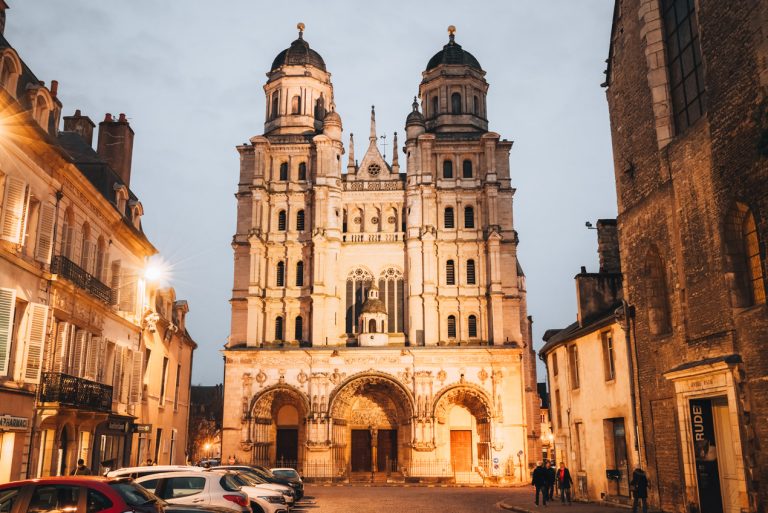
Place Église Saint-Michel is a small square that sits in the shadow of the more popular Place du Théâtre.
It’s home to Saint Michael’s Church, which was built in a Renaissance style during the 15th century.
While it is beautiful during the day. I think it’s more spectacular at night (pictured above).
13. Rue Porte aux Lions
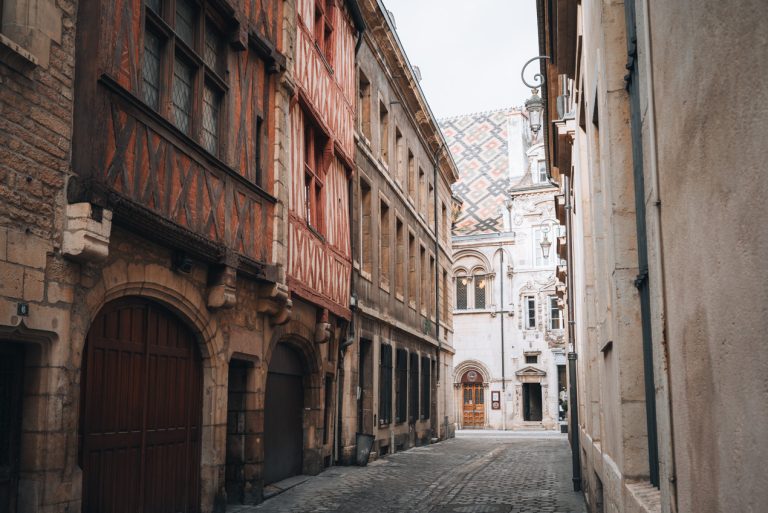
Rue Porte aux Lions runs perpendicular to Rue des Forges, one of the most famous streets in Dijon.
But I prefer Rue Porte aux Lions.
This lesser-known street is lined with old half-timbered houses.
Then, when I looked towards Rue des Forges, I had a beautiful view of a rooftop with glazed Burgundy tiles (pictured above).
14. Notre Dame Cathedral
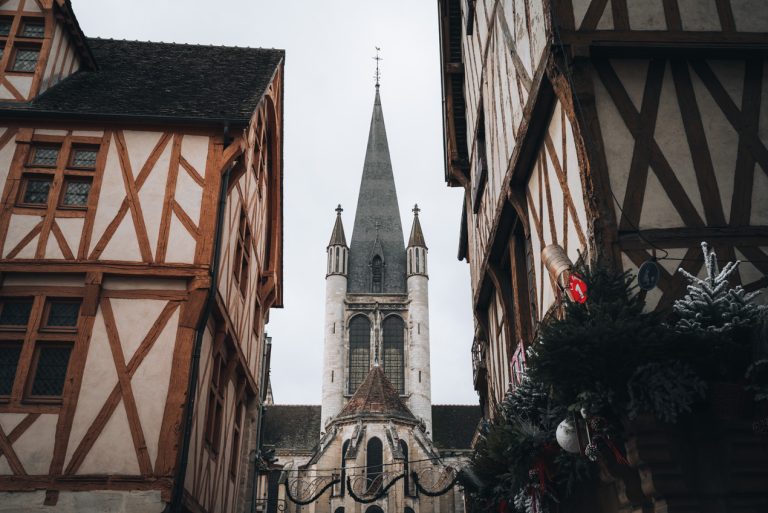
Dijon’s Notre Dame Cathedral is a masterpiece of Gothic architecture. But it is difficult to capture all its beauty in a single shot.
My favorite spot is at the corner of Rue de la Chouette and Rue Verrerie.
Here, two half-timbered houses frame the steeple to create a unique photo of the cathedral.
15. Au Moulin à Vent
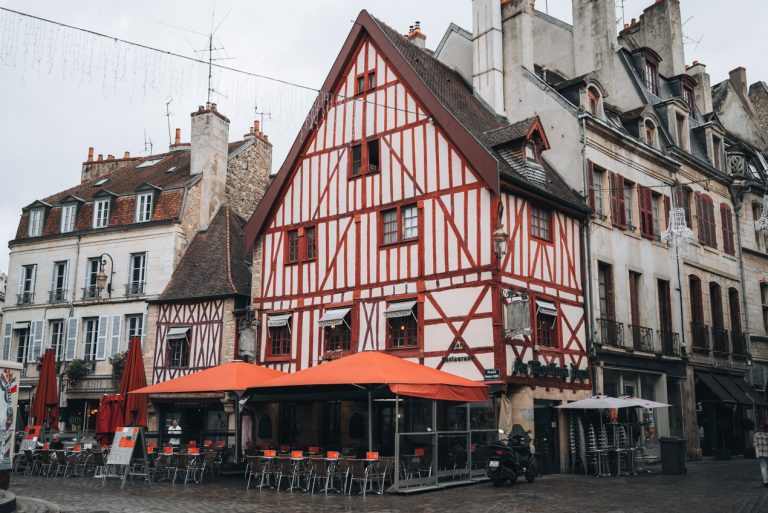
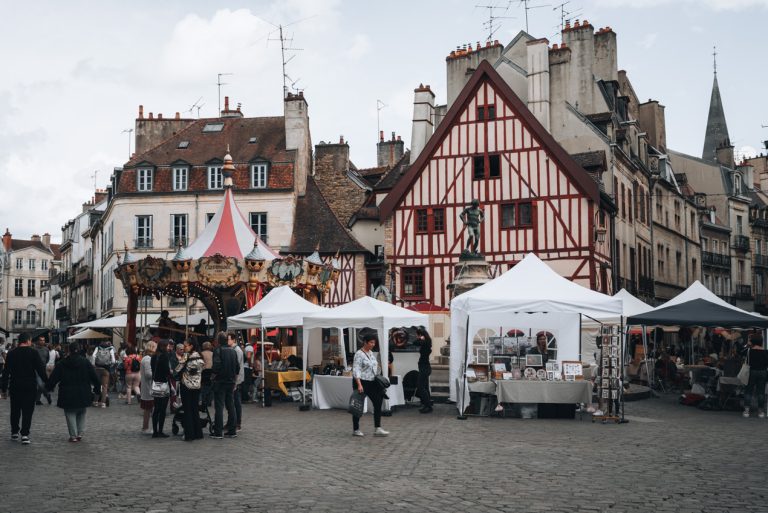
Au Moulin à Vent is the most photographed building in Dijon. It’s in Place François Rude, which is the first photo in this article.
But it’s such a beautiful building, I wanted it to be the only subject in the frame, which is what I did in the photo above.
16. 2 Rue Victor Dumay
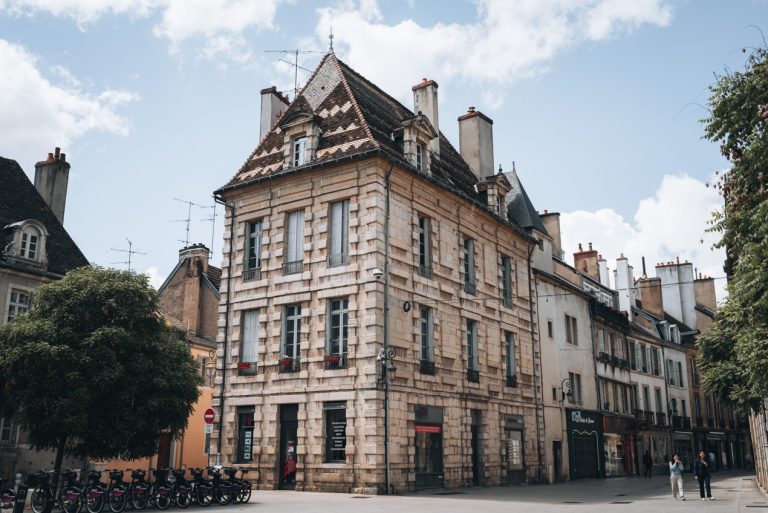
I came across Rue Victor Dumay on my second visit to Dijon.
It’s a cute street without tourists, and my favorite building was the one in the photo above.
17. Cathédrale Saint-Bénigne de Dijon
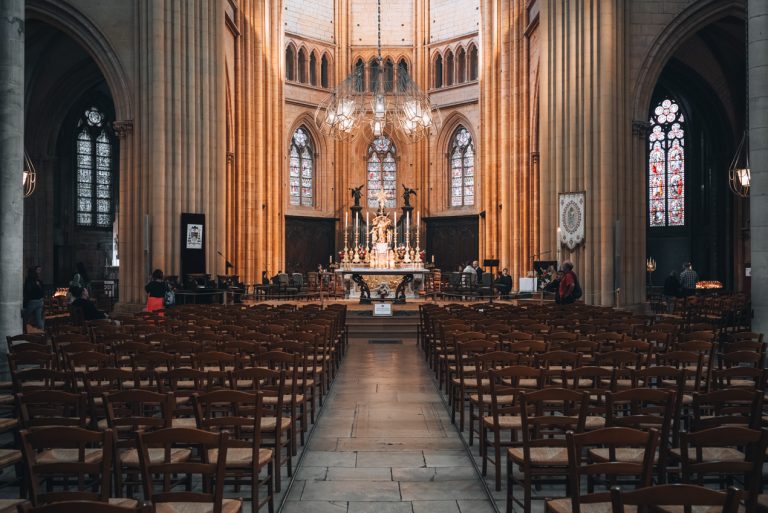
This Gothic-style cathedral was built in the 13th century. It’s also the last stop on the Dijon Owl Trail.
While the outside of the church is impressive, I prefer the interior.
As you can see in the photo I took above, the stained-glass windows and the altar are stunning.
Free Printable Guide
Sign up for a free printable version of this guide. It’s 20 pages of tips, sample itineraries, and more.
Conclusion
Dijon has become one of my favorite cities in eastern France. If you love learning about history and culture, it’s a must-add to your itinerary.
There are so many beautiful buildings, parks, and monuments to capture in Dijon. My goal was to show you the famous spots as well as some lesser-known ones.
Read More Articles
I hope you enjoyed my post and found it helpful. Here are some other articles that I think you might find interesting.
- A Local’s Guide to Getting Around France without a Car
- One Day in Beaune: The Perfect Itinerary
- 18 Incredible Things to Do in Beaune, France
