My first visit to Nancy was in 2023. I had read about its UNESCO World Heritage Site, Place Stanislas, and I wanted to check it out for myself.
After a quick visit, I stopped by the Musée des Beaux-Arts, and it was there that I realized there was more to this city than I thought.
It was here that I was first introduced to the Art Nouveau movement.
Since then, I’ve dived into the history and evolution of this art form. And, on my last visit, I completed the Parcours Art Nouveau.
In this guide, I’ll take you through the history of Art Nouveau in Nancy and show you how to experience this style of art in the city today.
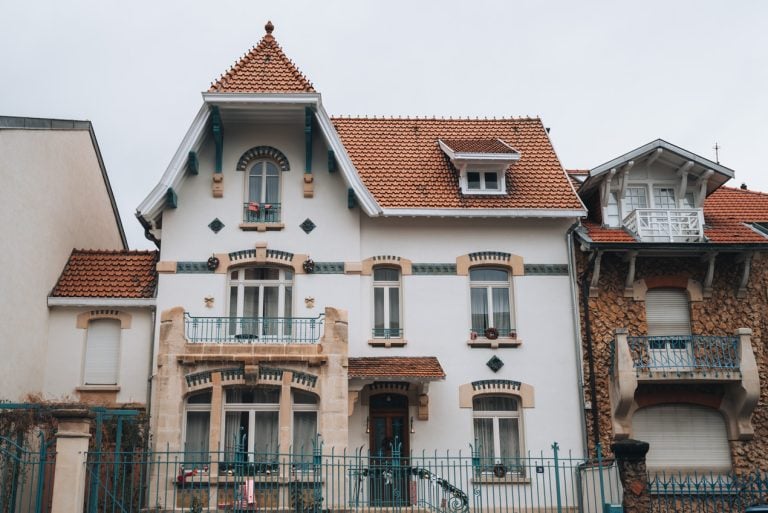
A Brief History
Art Nouveau, meaning “new art” in French, emerged as a reaction to industrialization and the repetition of historical styles in the late 19th and early 20th centuries.
Artists, architects, and designers sought to challenge the classic way of thinking about art and create something new and modern.
So, they turned to nature for inspiration. They used the colors and lines of flora and fauna to create organic, flowing designs.
And this style extended to all forms of visual expression, including architecture, furniture, and decorative objects like stained-glass windows.
In Nancy, Art Nouveau was championed by a group known as the École de Nancy, led by Émile Gallé.
This group of artists and craftsmen, including glassmakers, cabinetmakers, architects, and ironworkers, worked together to develop new techniques and styles that would become synonymous with Art Nouveau.
Some of the most well-known artists from the École de Nancy were Émile Gallé, the Daum brothers, Louis Majorelle, Victor Prouvé, Jacques Gruber, Emile André, and Lucien Weissenburger.
Today, you’ll find buildings, restaurants, etc. in Nancy that were designed by many of these artists.
Art Nouveau Architecture in the Streets
The influence of Art Nouveau architecture can be seen just about everywhere.
In fact, there are over 60 buildings around Nancy.
And, while each one is beautiful in its own way, if you are only in town for a day, you won’t be able to visit them all.
Below is a list of my favorite examples of Art Nouveau architecture:
Brasserie l’Excelsior
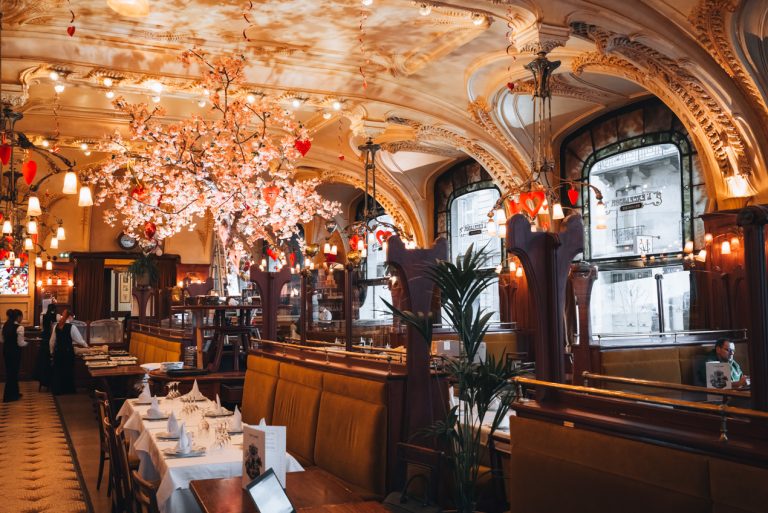
This brasserie has one of the most beautiful interiors in Nancy. I stopped by for breakfast so that I could see it for myself.
The food was really good (much better than I thought it would be), and the decorations were impressive.
Helpful Tip: Architects Lucien Weissenburger and Alexandre Mienville collaborated on the design. It also features stained glass by Jacques Gruber and sculptures by Léopold Wolf.
Address: 50 Rue Henri Poincaré, Date: 1910
Chambre de Commerce et d’Industrie
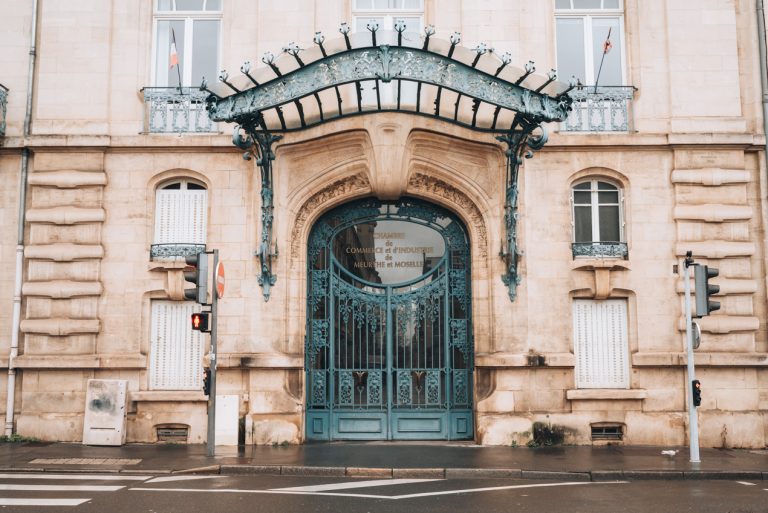
The Chambre de Commerce et d’Industrie is on the same street as Brasserie l’Excelsior. If you’re walking towards Place Stanislas, it will be on your left.
You can’t go inside, but you can see the ironwork from the street.
Helpful Tip: Designed by Émile Toussaint and Louis Marchal, it features ironwork by Louis Majorelle and stained-glass windows by Jacques Gruber.
Address: 40 Rue Henri-Poincaré, Date: 1908
Ancienne Graineterie Génin
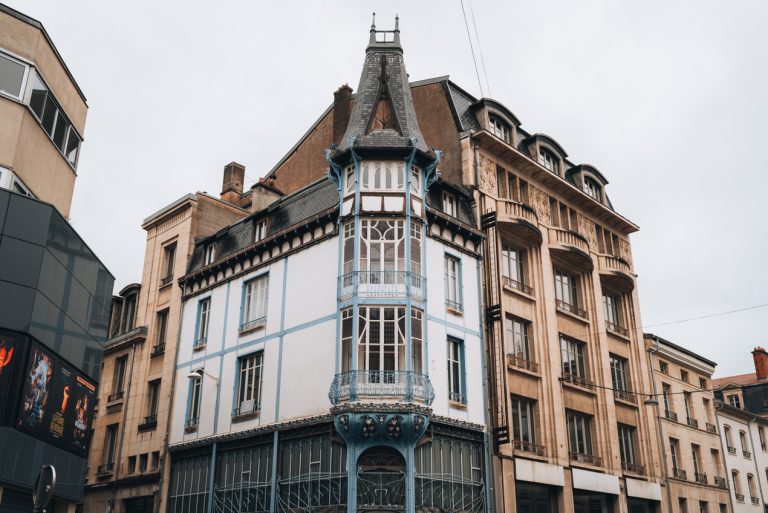
The Ancienne Graineterie Génin is easy to spot along Rue Bénit. The ironwork was the most noticeable to me.
Helpful Tip: It was designed by Henri Gutton and features stained-glass windows by Jacques Gruber.
Address: 2 Rue Bénit, Date: 1901
L’Est Républicain
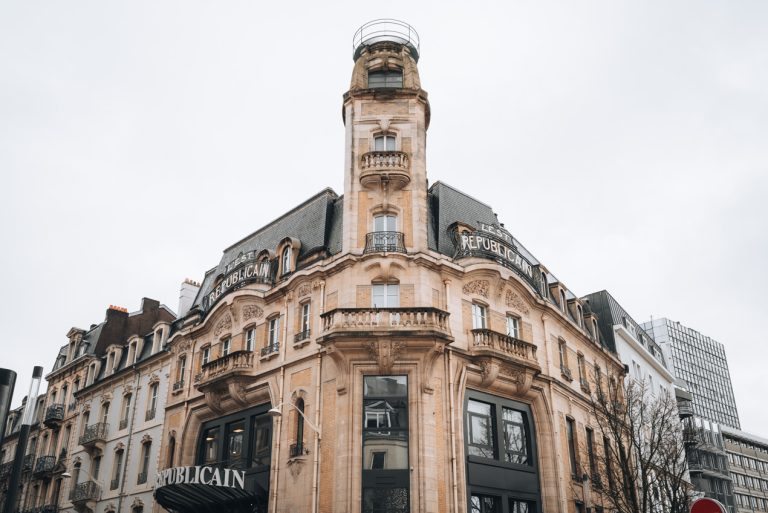
This beautiful building is really something to see. It takes up the entire corner, so make sure you walk all the way around.
Helpful Tip: It was designed by Pierre Le Bourgeois.
Address: 5 Bis Avenue Foch, Date: 1912
Ancien Magasin Goudchaux
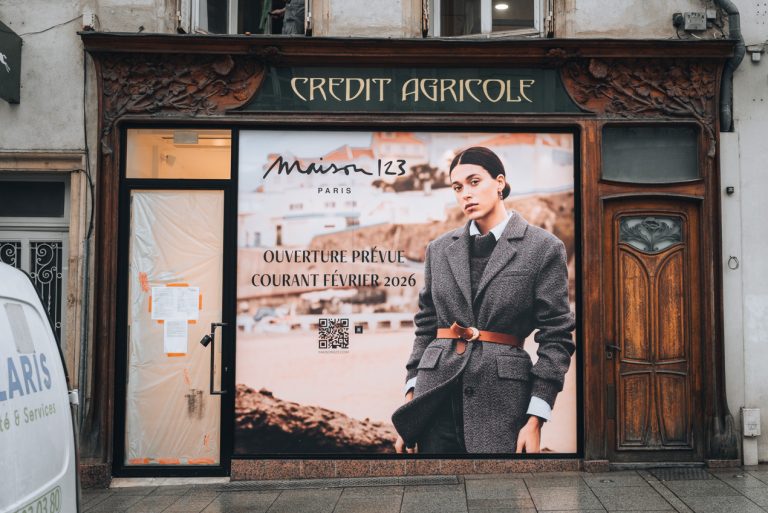
This building is next to Place Stanislas.
The entrance of the store is framed by a beautiful wooden Art Nouveau piece.
I recommend walking up close to the door frame so that you can see all the beautiful details.
Helpful Tip: The architect was Eugène Vallin.
Address: 4 Rue des Dominicains, Date: 1910
Rue Félix-Faure
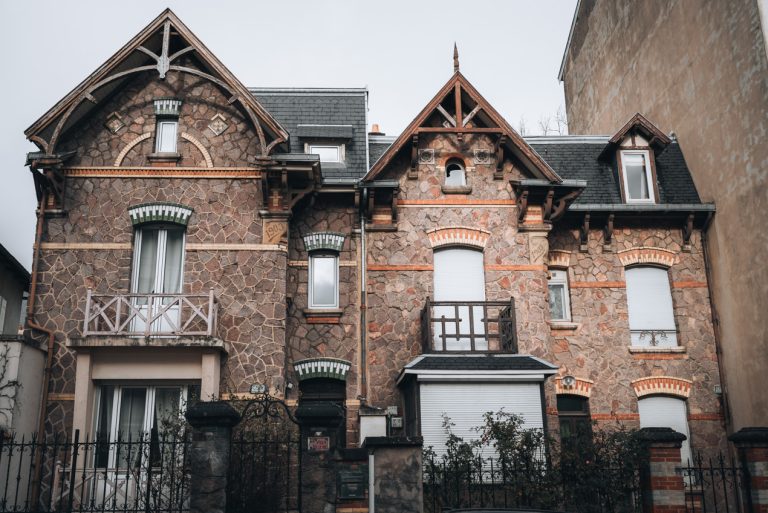
This entire street is lined with houses designed by César Pain in an Art Nouveau style.
They are all residential, but you can easily see the artistic style on each one. I recommend walking all the way down the street.
Date: 1900-1910
Museums with Art Nouveau Exhibits
Musée de l’École de Nancy
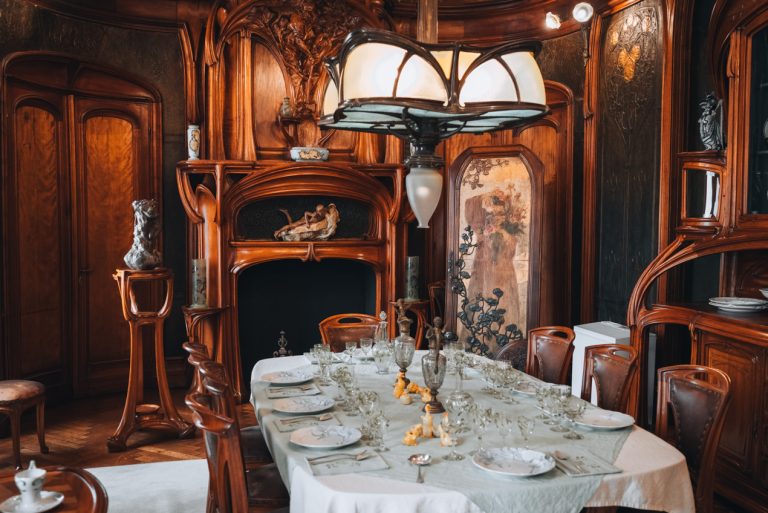
Of the museums in Nancy that you can visit to learn about the Art Nouveau movement, the Musée de l’École de Nancy is my favorite.
Inside, you can find an extensive collection of furniture, glassware, ceramics, and other decorative objects created by renowned artists from the École de Nancy.
And what I really like about this museum is the free self-guided audio tours.
You can download their app and choose how you want to learn about the Art Nouveau movement and visit the museum. (It made the experience that much more interesting, at least for me.)
Then, there is the museum itself, which is also a stunning example of Art Nouveau architecture.
Helpful Tip: The museum’s garden offers the best view of the building that houses the Musée de l’École de Nancy.
Musée des Beaux-Arts
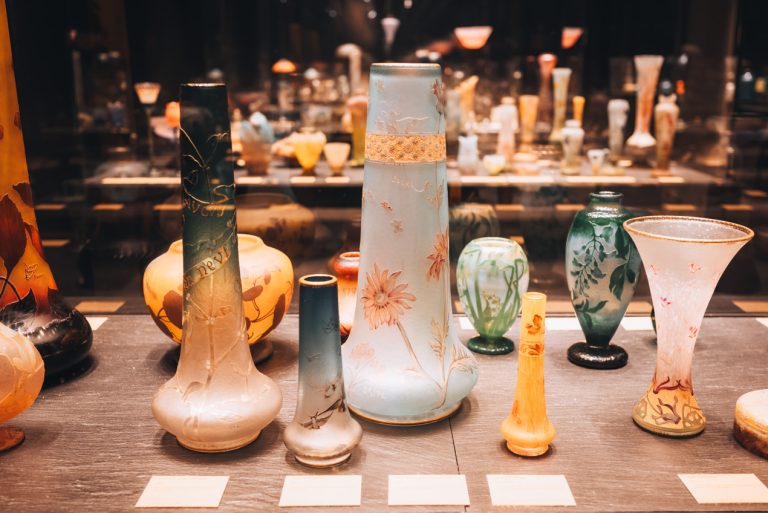
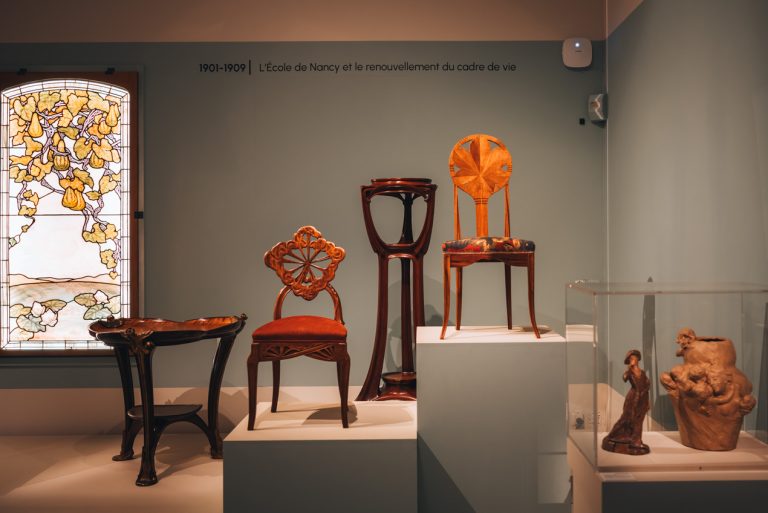
While primarily known for its collection of paintings, the Musée des Beaux-Arts in Nancy also has a section dedicated to Art Nouveau.
The most well-known exhibit is the Daum glassware collection.
There are 950 examples in total, and 300 of them are on display.
There’s also a section on decorative arts. It showcases the development and evolution of the Art Nouveau movement.
But it doesn’t go into as much detail as the Musée de l’École de Nancy.
Villa Majorelle
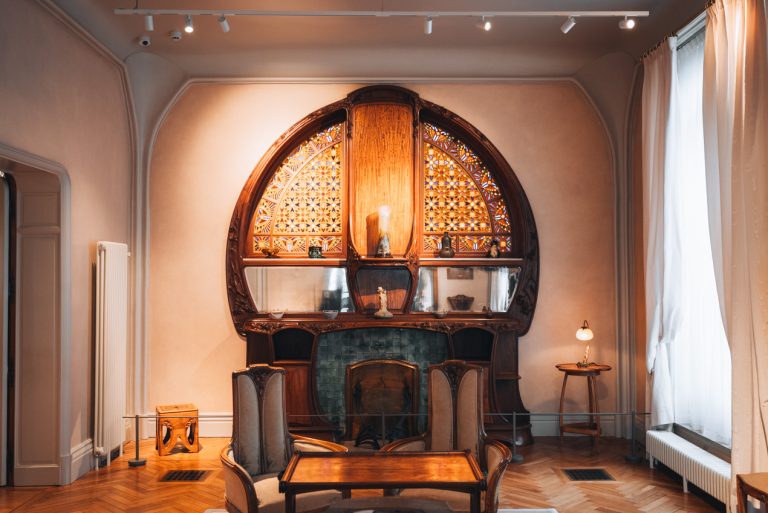
The Villa Majorelle was built in the early 20th century and designed in a typical Art Nouveau style.
It belonged to Louis Majorelle, who also made several of the pieces used to decorate the villa’s interior.
Helpful Tip: Henri Sauvage, along with Lucien Weissenburger, designed the infamous Villa Majorelle in Nancy.
I liked how each room displayed several objects with this style of art, and there were clear explanations along the way.
I don’t think it offers more insight into the Art Nouveau movement than the Musée de l’École de Nancy, but it’s still impressive to see in person.
Helpful Tip: Reservations are required to visit, and there are only a limited number of places per time slot.
Experiencing Art Nouveau Today
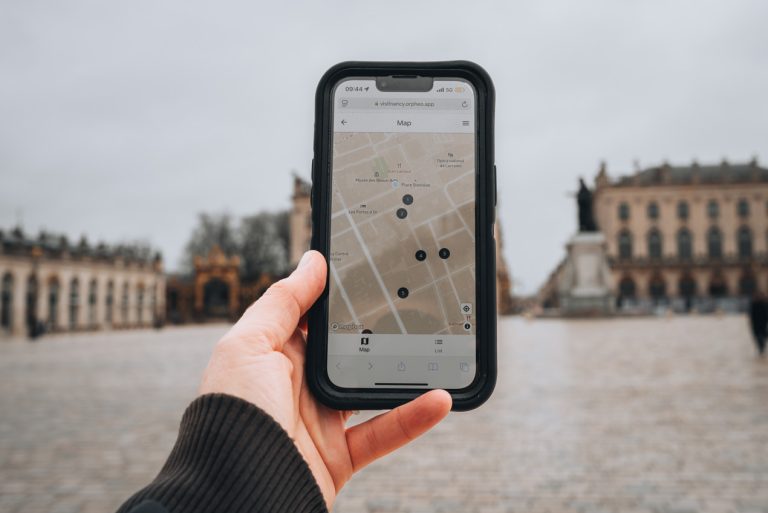
Today, there are several ways you can experience Art Nouveau in Nancy.
One of the most popular is to visit one of the museums I listed above. Each one highlights the history and development of this art style.
Otherwise, the tourist office has an excellent self-guided audio walking tour called Art Nouveau Heritage.
It’s easy to follow on your phone. There are also little symbols on the ground to help you avoid getting lost.
Helpful Tip: Along the way, you’ll sometimes see the tour written as Parcours Art Nouveau.
The tourist office also offers guided tours, but you’ll have to choose which area of Nancy to visit.
So, if you decide to do a guided tour, I recommend researching some of the Art Nouveau buildings ahead of time so you can choose the tour that highlights the ones you want to see.
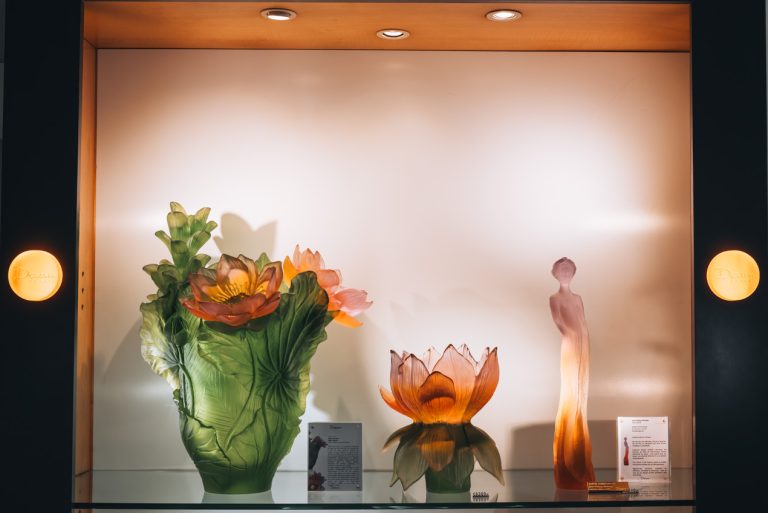
Finally, Daum has a store in Place Stanislas (14 Place Stanislas) where you can check out their latest creations.
There are three floors, and on the third, there’s a section dedicated to the history of Daum glassware as well as information about some of the artists.
Conclusion
There are a lot of reasons to visit Nancy, but one of the most compelling, in my opinion, is the Art Nouveau architecture.
If you really want to learn about this art style, I recommend following the Parcours Art Nouveau and stopping by at least one of the museums.
Now that you know a little more about this fascinating art movement and its presence in Nancy, why not plan the rest of your trip and check out where to stay?
Read More Articles
I hope you enjoyed my post and found it helpful. Here are some other articles that I think you might find interesting.
- Metz or Nancy: Which Should You Visit? (Local’s Guide)
- What to Do in Metz in One Day: 15 Amazing Activities
- Is Metz Worth It? 19 Pros and Cons to Consider
